Full Crown Restoration
An artificial crown matching natural tooth shape is made to cover the entire crown surface, restoring tooth form, function, and esthetics.
A full crown is a restoration that covers the entire tooth crown surface and restores form, function, and appearance. When a tooth has large defects caused by caries, trauma, root canal treatment, or other reasons and traditional filling or inlay cannot provide enough retention and protection, full crown restoration is needed. Whether a tooth after root canal treatment is prone to fracture mainly depends on remaining tooth structure, cusp and marginal ridge support, crack risk, and occlusal load. When indicated, a full crown can provide ferrule and more even force distribution, reducing fracture risk. Crown materials include metal crowns, porcelain-fused-to-metal crowns, and all-ceramic crowns such as zirconia or glass ceramic. All-ceramic crowns combine esthetics and strength and are commonly used for anterior and posterior restoration. Full crown restoration removes more tooth structure, about 1.5-2 mm, and usually requires 2 visits.
Quick Reference
Treatment
1 hours – 2 hours
Observation
0 mins – 1 days
Est. Cost
$100 – $1,200
Department
Prosthodontics
Who Is This For
Is Full Crown Restoration Right for You?
Good Candidates
- Large tooth defects that cannot be restored with filling or inlay
- Root canal treated teeth requiring fracture prevention
- Tooth fracture extending below the gingiva when remaining tooth structure can support a full crown
- Severe discoloration such as tetracycline staining, dental fluorosis, or non-vital tooth discoloration that cannot be improved by bleaching or veneers
- Abnormal tooth shape such as microdontia, peg-shaped teeth, or enamel hypoplasia
- Implant-supported superstructure restoration, implant crown
- Retainer for fixed bridge
- Occlusal reconstruction or changing tooth shape and position
May Not Be Suitable
- Tooth defect too large for remaining structure to support full crown retention, requiring post-and-core restoration before crown
- Uncontrolled active periodontitis or severe alveolar bone loss
- Very poor oral hygiene with high caries activity
- Metal allergy when choosing metal crown or porcelain-fused-to-metal crown
- Severe sleep bruxism requiring splint protection
- Adolescent permanent teeth with incomplete development, requiring postponement
Step-by-Step Process
How Full Crown Restoration Works
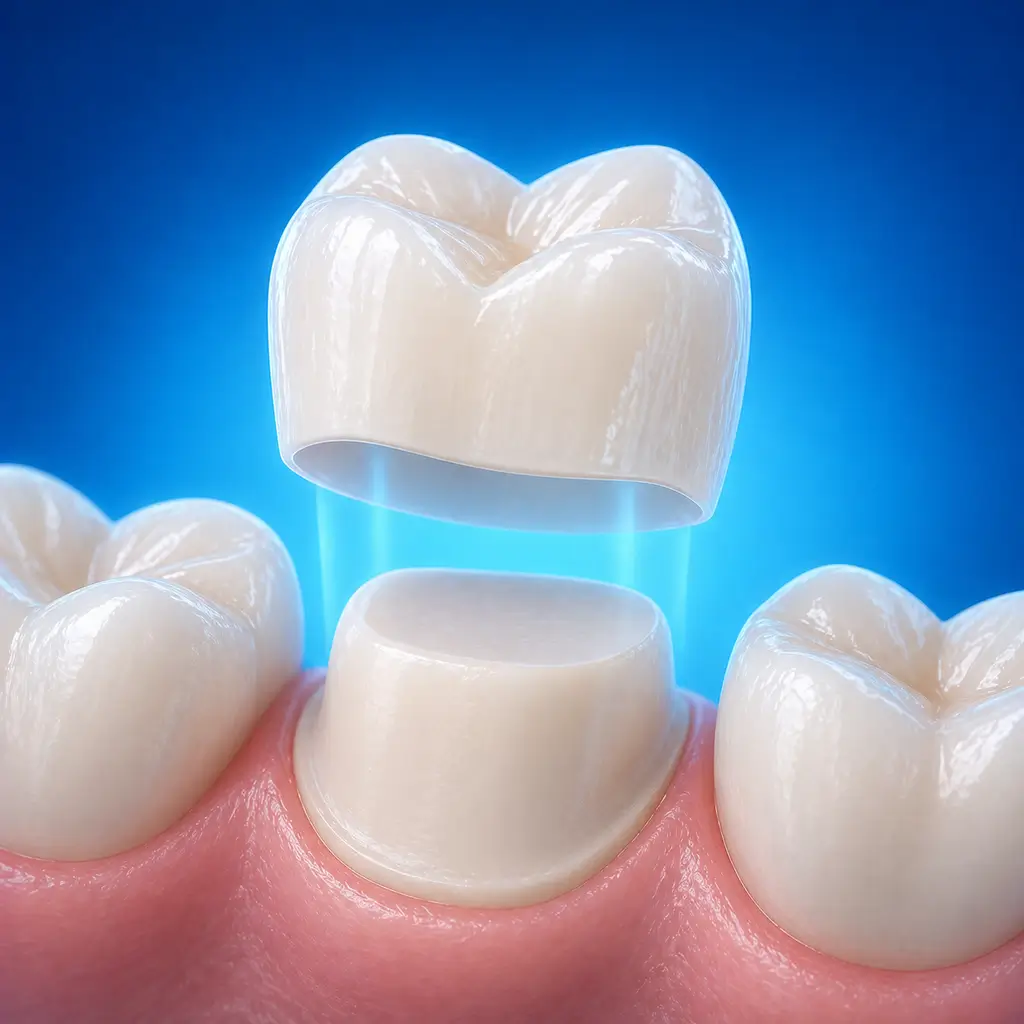
Tooth Preparation and Temporary Crown
At the first visit, local anesthesia is needed for vital teeth. According to full crown design, about 1.5-2 mm is removed from each tooth surface, and a rounded shoulder about 0.5-1 mm wide is prepared to create enough restorative space. Gingival retraction exposes the prepared margin, then a silicone impression or intraoral scan obtains a digital impression, occlusion is recorded, and a resin temporary crown is made to protect the prepared tooth and maintain appearance and function.
Laboratory Fabrication
Between visits, the model is sent to the dental laboratory to make the full crown, taking about 1-2 weeks.
Same-day Digital Fabrication
If digital restoration is used, fabrication can be completed on the same day.
Try-in and Cementation
At the second visit, the temporary crown is removed and the prepared tooth is cleaned. The full crown is tried in to check marginal fit, proximal contact, occlusal contact, and color match. After confirmation, resin cement or glass ionomer cement is used for cementation, excess cement is removed, occlusal high spots are adjusted, and polishing is completed.
Review and Maintenance
Regular follow-up is needed to evaluate crown marginal fit, periodontal status, and occlusion.
Usually 2-3 visits are needed, about 1-2 weeks apart. Digital full crowns can be completed in 1 visit when conditions are suitable, taking about 2-3 hours.
Cost Information
Cost Estimate for Full Crown Restoration
Estimated Price Range
$100 – $1,200
What's Included
Digital or plaster models, tooth preparation, materials such as resin-metal, porcelain-fused-to-metal, pressed ceramic, or zirconia, fabrication method, traditional or digital, and cementation.
Before Your Visit
What to Prepare
Required Tests & Examinations
If you already have recent valid test results, bring the reports. If not, these assessments can usually be completed in China before the procedure.
Clinical oral examination: assess defect extent, remaining tooth thickness, periodontal status, occlusion, and opposing teeth
X-ray examination: assess caries depth, root canal treatment quality, periapical lesions, alveolar bone height, and adjacent teeth
Pulp vitality testing to determine pulp status and whether root canal treatment is needed
Esthetic analysis for anterior teeth: assess tooth color, shape, alignment, and lip-tooth relationship
Impression or intraoral scan to make study models and analyze occlusion and proximal relationships
Documents & Materials to Bring
Required to Bring
Recent dental imaging, such as periapical radiograph, panoramic radiograph, or CBCT if available
Previous dental treatment records, especially root canal treatment, post-and-core, or temporary crown records
Existing restoration, occlusal, or esthetic design materials if available
Medication allergy history
General medical history information
Companion & Support
A dedicated companion is usually not needed. For children, older adults, pregnancy, underlying medical conditions, or when treatment may affect eating or travel afterward, having a family member accompany the patient is recommended.
After Treatment
Recovery & Follow-Up
During the temporary crown period, avoid biting hard objects with the restored tooth to prevent temporary crown loss.
Avoid chewing with the restored side for 24 hours after cementation.
Avoid biting hard objects with the restored tooth, such as bones, nuts, crab shells, or bottle caps.
Maintain oral hygiene and use floss to clean interdental spaces around the crown to prevent secondary caries and gingivitis.
Patients with bruxism need a splint to protect the crown and opposing teeth.
All-ceramic crowns have stable color and are not prone to staining.
Porcelain-fused-to-metal crowns should avoid easily staining foods.
Attend regular follow-up to check marginal fit, damage, or porcelain chipping.
Follow-Up Schedule
Review occlusion and proximal contacts 1 week after treatment. Regular follow-up every 6-12 months.
Related Conditions
Conditions This Procedure Treats
Ready to Plan Full Crown Restoration in China?
Let Carevia help you find the right hospital, coordinate your treatment, and arrange every detail of your medical trip.
Frequently Asked Questions
Need personalized guidance?
Our care coordinators can help you assess whether this procedure fits your situation.
Contact Us