Retinal Vein Occlusion (RVO)
A common retinal vascular disease caused by obstructed retinal venous blood flow, leading to hemorrhage and edema. The second most common retinal vascular disorder after diabetic retinopathy.
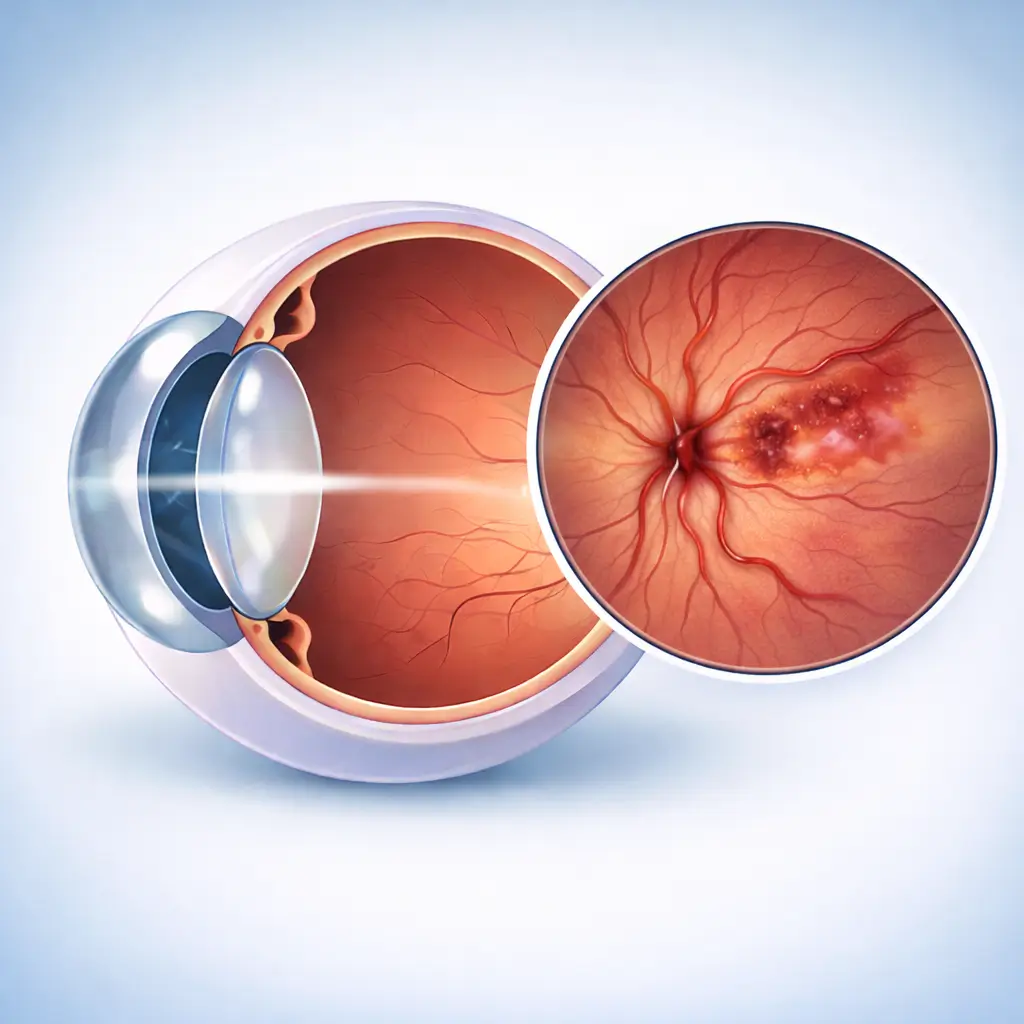
Common Symptoms
Recognizing Retinal Vein Occlusion (RVO)
Focus on the most useful decision cues first: common symptoms, the patients or situations that usually prompt review, and any signs that need faster assessment.
Common Symptoms
Signs patients often notice before evaluation
Sudden or gradual vision loss
Partial visual field obstruction or blurring
Metamorphopsia
When to Seek Evaluation
Typical patients and situations that warrant review
Adults over 50
Hypertension patients
Diabetes patients
Hyperlipidemia patients
Glaucoma patients
Sudden painless vision loss
Dark areas appearing in visual field
Urgent Assessment
Sudden painless vision loss requires prompt medical attention. Early treatment of macular edema is critical for visual prognosis.
Treatment Approaches
Treatment Directions for Retinal Vein Occlusion (RVO)
Anti-VEGF injection (first-line treatment for macular edema)
Retinal laser photocoagulation (for ischemic areas)
Intravitreal steroid injection (dexamethasone implant)
Systemic risk factor management (BP, glucose, lipid control)
What usually shapes the treatment plan
Clinical Assessment
Key Assessments for Retinal Vein Occlusion (RVO)
These are the main areas doctors usually review first. If you already have relevant test or imaging reports, bring them to speed up the assessment. They are helpful but not required, and the same workup can also be completed in China.
Dilated fundus examination
OCT (assess macular edema)
FFA (assess ischemic areas and neovascularization)
OCTA
Systemic workup (blood pressure, glucose, lipids)
Before You Travel
How to Prepare
Bring recent blood pressure, glucose, and lipid test reports
Bring previous fundus examination records
Planning Notes
Pre-Assessment Required
Fundus examination, OCT, and FFA are needed to assess RVO type and severity, alongside systemic risk factor screening.
Remote Pre-Assessment
OCT and fundus photographs can be submitted remotely for preliminary macular edema assessment and treatment recommendations.
Multidisciplinary Assessment
Often requires ophthalmology-cardiology/endocrinology collaboration to manage systemic vascular risk factors while treating ocular pathology.
Medical History Important
Hypertension, diabetes, and hyperlipidemia are closely linked to RVO development; treatment must address both systemic and ocular conditions.
Ready to Explore Treatment for Retinal Vein Occlusion (RVO)?
Let Carevia help you connect with the right specialists, compare hospitals, and plan your medical trip to China.