Pulpitis
Inflammation of the dental pulp caused by infection, physical irritation, or chemical irritation. Severe toothache is a prominent feature, and timely treatment is needed to preserve the affected tooth.
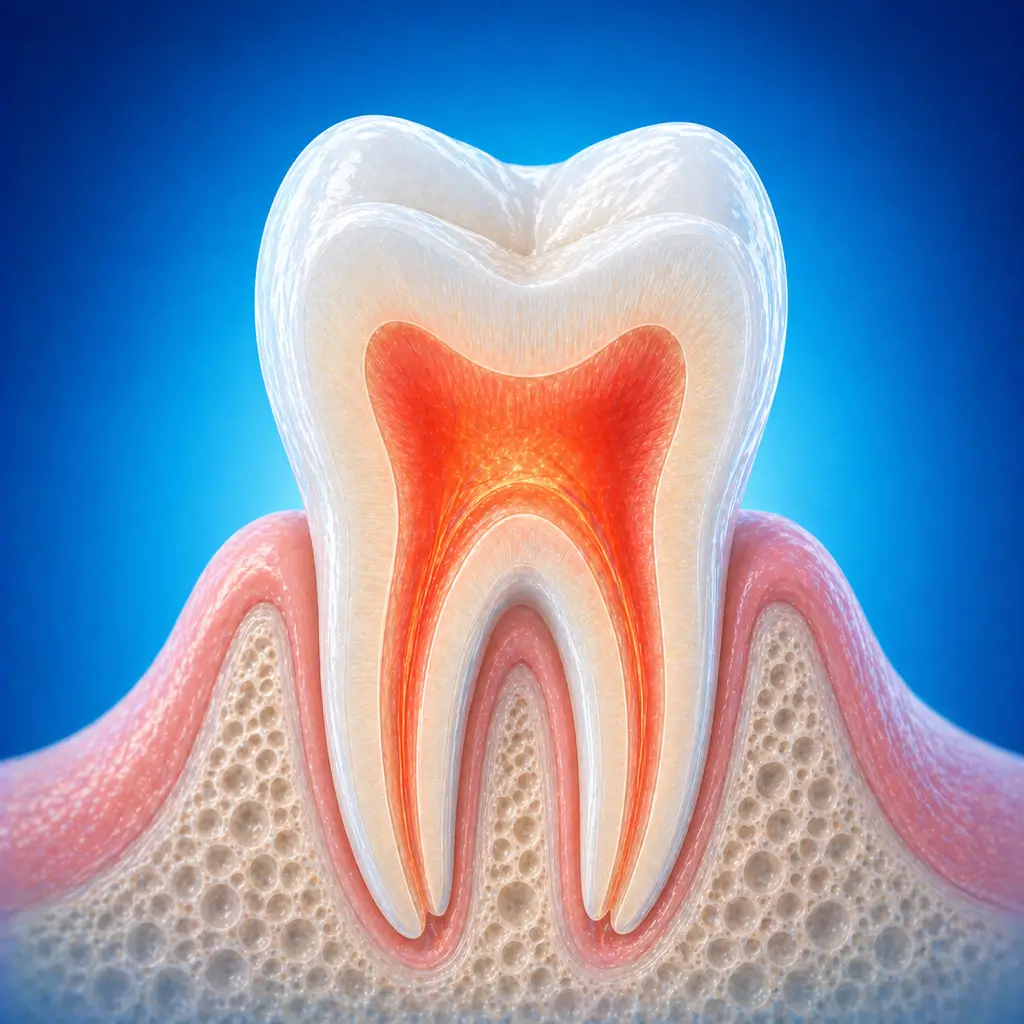
Common Symptoms
Recognizing Pulpitis
Focus on the most useful decision cues first: common symptoms, the patients or situations that usually prompt review, and any signs that need faster assessment.
Common Symptoms
Signs patients often notice before evaluation
Spontaneous pain, often worse at night
Radiating pain: pain may spread to the head, face, ear, or temple on the same side, and patients may have difficulty identifying the affected tooth
Temperature sensitivity: cold or heat, such as ice water or hot drinks, can trigger or worsen pain. Reversible pulpitis causes transient pain. In irreversible pulpitis, pain continues for several minutes after the stimulus is removed. Late suppurative pulpitis may show the special pattern of heat pain relieved by cold
Biting discomfort: late disease may cause chewing pain or a feeling that the tooth is loose
Tooth discoloration: after pulp necrosis, the tooth may gradually darken, turn gray, or turn black, indicating loss of pulp vitality
When to Seek Evaluation
Typical patients and situations that warrant review
Can occur at any age
Spontaneous or paroxysmal tooth pain without a clear external stimulus
Night pain that worsens and affects sleep
Pain lasting more than several seconds to minutes after cold or heat stimulation
Pain radiating to the head and face on the same side, making the affected tooth hard to locate
Tooth discoloration
Biting discomfort
Urgent Assessment
Seek dental evaluation as soon as possible if severe spontaneous pain, night pain, pain poorly relieved by analgesics, facial swelling, fever, or severe pain on biting occurs, to assess pulp and periapical status and prevent further spread of infection.
Treatment Approaches
Treatment Directions for Pulpitis
The principle is to preserve the affected tooth whenever possible using a stepwise treatment strategy
Reversible pulpitis can preserve pulp vitality by removing the irritant, protecting the pulp, and using sedative treatment
Irreversible pulpitis requires root canal treatment
What usually shapes the treatment plan
Clinical Assessment
Key Assessments for Pulpitis
These are the main areas doctors usually review first. If you already have relevant test or imaging reports, bring them to speed up the assessment. They are helpful but not required, and the same workup can also be completed in China.
Type of pulp inflammation, reversible or irreversible
Extent of inflammation, whether limited to the coronal pulp or involving the root pulp
Whether pulp necrosis is present
Whether periapical disease is present
Whether the affected tooth can be retained
Overall health status, especially diabetes or coagulation disorders
Before You Travel
How to Prepare
Organize previous dental records, especially radiographs and root canal treatment records
If pain is severe, a nonsteroidal anti-inflammatory drug may be taken temporarily
Planning Notes
Pre-Assessment Required
An oral specialist should perform an intraoral examination and, as appropriate, periodontal probing, pulp vitality testing, periapical radiographs, panoramic radiographs, or CBCT before determining the treatment plan. Key checks include visual examination for deep caries, restorations, cracks, attrition, and other findings; probing to assess cavity depth and pulp exposure; percussion to assess periapical inflammation; and pulp vitality temperature testing with cold and heat. In reversible pulpitis, pain disappears immediately after the stimulus is removed; in irreversible pulpitis, pain continues for several minutes. Bring radiographs, such as periapical or panoramic images, to assess caries depth, periapical status, and root canal anatomy; pulp vitality test records, including thermal and electric pulp test results; and, if there is a history of root canal treatment, previous treatment records and postoperative radiographs.
Remote Pre-Assessment
Intraoral photos, the course of pain/swelling, previous dental records, and imaging can be submitted remotely for preliminary triage, urgency assessment, and an estimated treatment direction. Final diagnosis still requires in-person intraoral examination and necessary imaging.
Multidisciplinary Assessment
Medical History Important
Previous dental treatment history, imaging, allergy history, anticoagulant/bisphosphonate use, diabetes, and immune-related diseases can affect diagnosis, anesthesia, bleeding and infection risk, and treatment selection.
Ready to Explore Treatment for Pulpitis?
Let Carevia help you connect with the right specialists, compare hospitals, and plan your medical trip to China.