Myopia (Refractive Error)
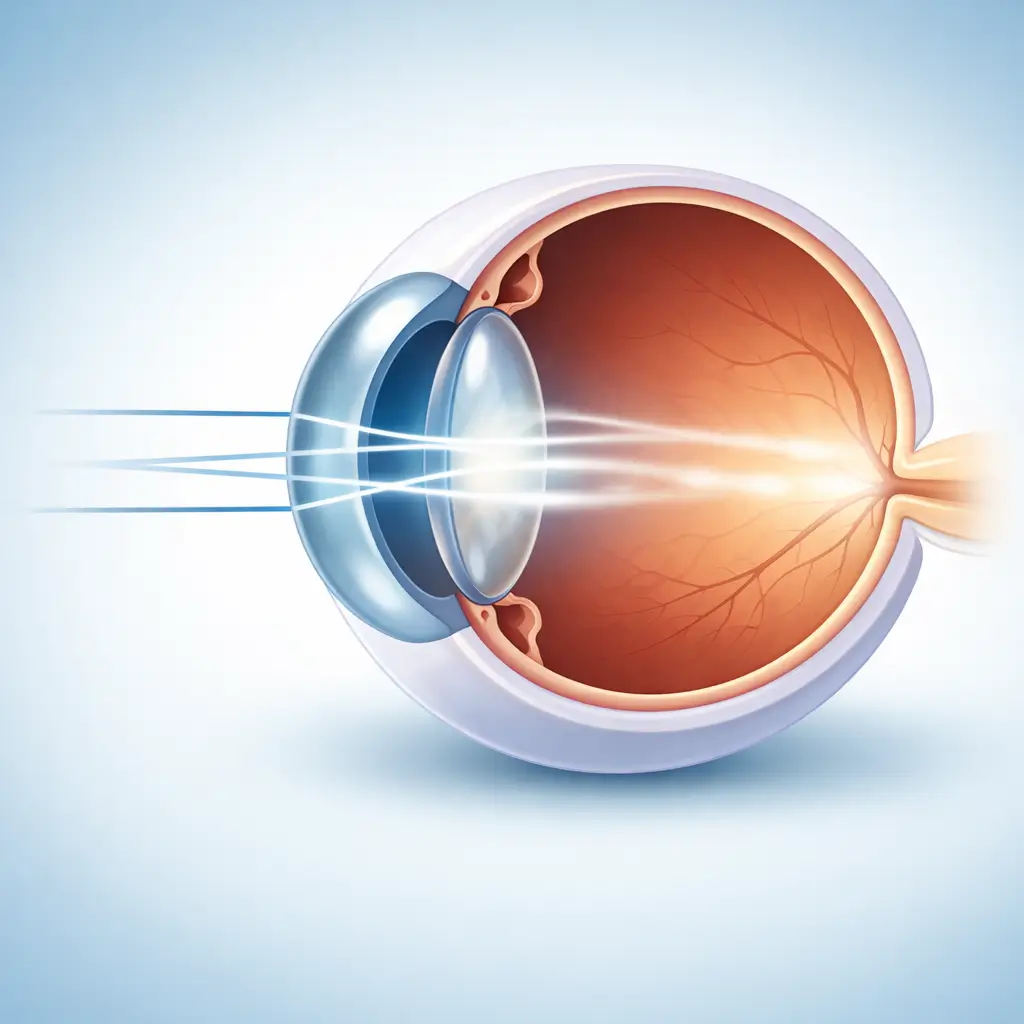
A common refractive condition where distant objects appear blurry due to excessive axial length or corneal refractive power.
Common Symptoms
Recognizing Myopia (Refractive Error)
Focus on the most useful decision cues first: common symptoms, the patients or situations that usually prompt review, and any signs that need faster assessment.
Common Symptoms
Signs patients often notice before evaluation
Distant objects appear blurry
Squinting to see clearly
Needing to move closer for reading or near work
Poor night vision
Eye fatigue
When to Seek Evaluation
Typical patients and situations that warrant review
Adolescents and young adults
Those with prolonged near-work habits
Individuals with myopic parents (genetic factor)
High myopia patients (>-6.00D)
Desire to eliminate dependence on glasses or contact lenses through surgery
Rapidly increasing myopia progression (adolescents)
Occupational requirements for unaided visual acuity (pilots, military personnel)
Treatment Approaches
Treatment Directions for Myopia (Refractive Error)
Corneal laser surgery (SMILE, Femtosecond LASIK, TransPRK)
Implantable Collamer Lens (ICL, suitable for high myopia or when corneal conditions are not ideal for laser)
Spectacles and contact lenses (non-surgical correction)
What usually shapes the treatment plan
Clinical Assessment
Key Assessments for Myopia (Refractive Error)
These are the main areas doctors usually review first. If you already have relevant test or imaging reports, bring them to speed up the assessment. They are helpful but not required, and the same workup can also be completed in China.
Cycloplegic refraction (accurate prescription measurement)
Corneal topography and pachymetry
Axial length measurement
Pupil diameter assessment (scotopic conditions)
Dry eye evaluation
Fundus examination (especially for high myopia to rule out retinal changes)
Before You Travel
How to Prepare
Discontinue soft contact lenses for at least 1 week, RGP lenses for at least 1 month, and orthokeratology lenses for at least 3 months before examination
Bring refraction records from the past 2 years to demonstrate prescription stability
No eye makeup or perfume on examination day
Arrange accompaniment (vision will be blurred temporarily after pupil dilation)
Planning Notes
Pre-Assessment Required
Over 20 preoperative tests are required before refractive surgery, including cycloplegic refraction, corneal topography, corneal thickness, anterior chamber depth, axial length, pupil size, and tear function tests. These comprehensively assess surgical eligibility and determine the optimal procedure. The examination takes approximately 2-3 hours.
Remote Pre-Assessment
Recent refraction reports and basic eye examination records can be submitted remotely for preliminary assessment of surgical feasibility and procedure recommendation. However, the final plan requires completing the full preoperative examination on-site.
Multidisciplinary Assessment
Medical History Important
History of autoimmune diseases, keloid tendency, dry eye, and previous eye surgeries may affect surgical approach selection and postoperative recovery.
Ready to Explore Treatment for Myopia (Refractive Error)?
Let Carevia help you connect with the right specialists, compare hospitals, and plan your medical trip to China.