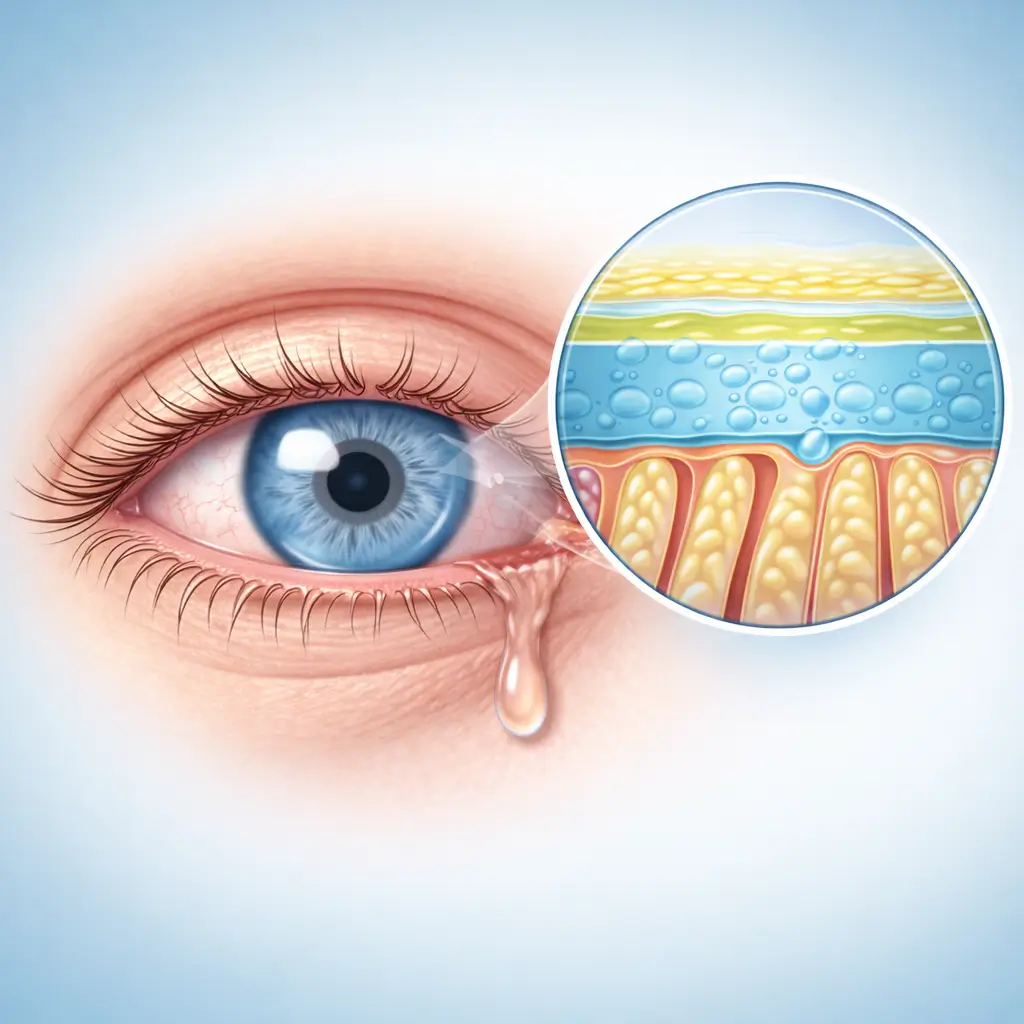
Dry Eye Disease
A common chronic eye condition caused by insufficient tear production or excessive evaporation, leading to ocular surface damage and discomfort.
Common Symptoms
Recognizing Dry Eye Disease
Focus on the most useful decision cues first: common symptoms, the patients or situations that usually prompt review, and any signs that need faster assessment.
Common Symptoms
Signs patients often notice before evaluation
Dryness and foreign body sensation
Itching and burning sensation
Eye fatigue and fluctuating blurred vision
Light sensitivity
Eye redness
Eyelid sticking upon waking
Reflex tearing (triggered by dryness irritation)
When to Seek Evaluation
Typical patients and situations that warrant review
Prolonged electronic screen users
Long-term contact lens wearers
Perimenopausal and postmenopausal women
Those working in dry environments (air-conditioned rooms, aircraft)
Previous eye surgery patients (e.g., post-LASIK)
Long-term users of certain medications (antihistamines, antidepressants)
Symptoms persist for over 2 weeks with inadequate relief from artificial tears
Symptoms worsen significantly after screen work
Discomfort while wearing contact lenses
Dry eye assessment before refractive surgery
Treatment Approaches
Treatment Directions for Dry Eye Disease
Artificial tears and ocular surface lubrication
Basic lid-margin and meibomian gland care (warm compresses, massage, lid hygiene)
Anti-inflammatory therapy (cyclosporine eye drops)
Punctal plugs for selected patients
Physical therapies such as IPL or thermal pulsation as optional adjuncts for selected patients
Lifestyle modifications (reduce screen time, increase humidity)
What usually shapes the treatment plan
Clinical Assessment
Key Assessments for Dry Eye Disease
These are the main areas doctors usually review first. If you already have relevant test or imaging reports, bring them to speed up the assessment. They are helpful but not required, and the same workup can also be completed in China.
Tear secretion test (Schirmer test)
Tear film break-up time (BUT)
Ocular surface fluorescein staining
Meibomian gland function assessment (infrared meibography)
Tear osmolarity testing
Inflammatory marker testing (MMP-9)
Before You Travel
How to Prepare
Stop artificial tears at least 2 hours before examination (affects test results)
Record daily symptom frequency and severity
Bring a list of currently used eye drops
Planning Notes
Pre-Assessment Required
A comprehensive dry eye evaluation is required, including Schirmer test, tear film break-up time, ocular surface staining, and infrared meibography. These determine the dry eye type and severity to guide targeted treatment planning.
Remote Pre-Assessment
Symptoms can be described remotely and previous dry eye test reports submitted for preliminary assessment and treatment direction. Precise classification requires on-site examination.
Multidisciplinary Assessment
Medical History Important
Autoimmune diseases (e.g., Sjogren's syndrome) can cause severe dry eye; systemic medications (antihistamines, steroids) may worsen dry eye; refractive surgery history is an important dry eye trigger.
Ready to Explore Treatment for Dry Eye Disease?
Let Carevia help you connect with the right specialists, compare hospitals, and plan your medical trip to China.