Intense Pulsed Light (IPL) Dry Eye Treatment
Broad-spectrum intense pulsed light targets periocular skin to improve meibomian gland function through photothermal effects, relieving symptoms of evaporative dry eye and meibomian gland dysfunction.
Intense Pulsed Light (IPL) dry eye treatment is an emerging physical therapy for evaporative dry eye disease (DED) and meibomian gland dysfunction (MGD). Broad-spectrum light (typically 500-1200 nm) applied to the periocular zone (lower eyelid to zygomatic region) selectively destroys abnormally dilated telangiectatic vessels that deliver pro-inflammatory mediators to the lid margin; simultaneously, the photothermal effect liquefies solidified meibomian gland secretions and stimulates glandular cell activity, addressing the root cause of lipid-deficient tear film in MGD. A standard treatment course comprises 3-4 IPL sessions spaced 3-4 weeks apart. Coupling each session with meibomian gland expression (manual expression of liquefied secretions) substantially amplifies efficacy. Clinical data show that approximately 80% of patients with MGD-related dry eye achieve significant symptomatic relief after a complete IPL + meibomian expression course. Leading devices in China include the Lumenis M22 OPT (Optimal Pulse Technology) and similar platforms, used predominantly at premium private ophthalmology centers and combined ophthalmology-aesthetic medicine clinics. IPL also offers ancillary benefits including reduction of periocular pigmentation and Demodex mite burden.
Quick Reference
Treatment
15 mins – 30 mins
Observation
0 mins
Est. Cost
$300 – $1,000
Department
Ophthalmology
Who Is This For
Is Intense Pulsed Light (IPL) Dry Eye Treatment Right for You?
Good Candidates
- Evaporative dry eye with shortened non-invasive tear break-up time (NIBUT) and meibomian gland dysfunction
- Meibography-confirmed meibomian gland atrophy or secretory abnormality
- Persistent dry eye symptoms refractory to frequent artificial tear use
- Dry eye in patients with periocular telangiectasia (rosacea, facial flushing)
- Fitzpatrick skin type I-IV (darker skin types require careful parameter adjustment)
May Not Be Suitable
- Fitzpatrick skin types V-VI (high risk of burns and post-inflammatory hyperpigmentation)
- Recent periocular sunburn, active acne, or eczema in the treatment area
- Concurrent use of photosensitizing medications (tetracyclines, isotretinoin)
- Tattoos or permanent eyeliner in the treatment zone
- Pregnancy
Step-by-Step Process
How Intense Pulsed Light (IPL) Dry Eye Treatment Works
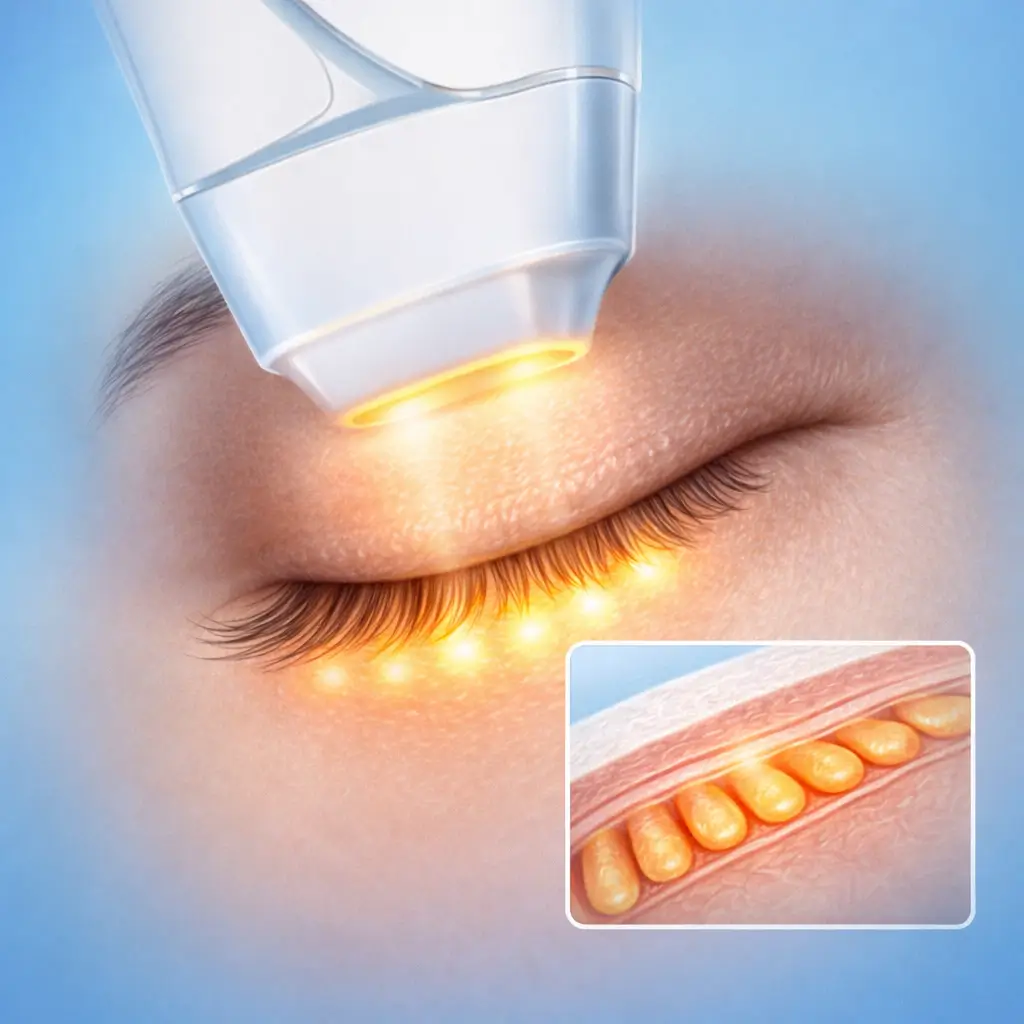
Skin Preparation and Eye Protection
Periocular skin is thoroughly cleansed of all makeup and skincare products. Opaque eye shields are placed over the patients' eyes to protect against direct IPL exposure. The treating clinician also wears protective eyewear.
Coupling Gel Application and Parameter Setting
Chilled coupling gel is applied evenly over the treatment area (bilateral lower eyelids to zygomatic region, nasal bridge sides). IPL energy parameters are set according to the patient's Fitzpatrick type and MGD severity (typically 12-18 J/cm²).
IPL Pulse Delivery
The treatment handpiece is pressed firmly against the skin at a safe distance from the corneal limbus. Three to four pulses are delivered sequentially across the lower lid and malar area, covering approximately 3-5 spots per side. Gentle warmth is the expected sensation; sharp pain indicates excessive energy and warrants adjustment.
Warm Compress and Meibomian Gland Expression (Combined Therapy)
Immediately after IPL, heated compresses (ocular spa or warming pad at 40-42°C) are applied for 5-10 minutes to further liquefy glandular secretions. The clinician then performs standardized meibomian gland expression of both lids, expressing the liquefied abnormal secretions from gland orifices to restore glandular patency.
Cleaning and Discharge
Coupling gel is removed and the periocular area is cleaned. Lubricating drops are instilled and the lids and cornea are checked for any adverse reactions before the patient is discharged with aftercare instructions.
Standard course: 3-4 IPL sessions, each 3-4 weeks apart. After significant symptom relief, maintenance treatments every 3-6 months help prevent recurrence.
Cost Information
Cost Estimate for Intense Pulsed Light (IPL) Dry Eye Treatment
Estimated Price Range
$300 – $1,000
What's Included
Public tier-3A hospitals (eye centers offering IPL): approximately ¥2,000-3,500 per session, three-session course package approximately ¥6,000-10,000; premium private eye or aesthetic eye centers: approximately ¥3,000-7,000 per session, three-session package approximately ¥9,000-18,000 (including meibomian gland expression and complete dry eye evaluation each visit); some premium facilities use the Lumenis M22 IPL system.
Before Your Visit
What to Prepare
Required Tests & Examinations
If you already have recent valid test results, bring the reports. If not, these assessments can usually be completed in China before the procedure.
Tear break-up time (non-invasive NIBUT or fluorescein BUT)
Infrared meibography (assess gland atrophy and dropout)
Dry eye questionnaire score (OSDI or SPEED)
Corneal fluorescein staining (assess epithelial integrity)
Fitzpatrick skin type classification (determines IPL suitability and parameter selection)
Documents & Materials to Bring
Required to Bring
Recent dry eye examination reports (tear film tests, meibography)
List of current eye drops and oral medications (to rule out photosensitizing drugs)
Passport and valid visa
Discontinue topical retinoid preparations at least 2 weeks before treatment
After Treatment
Recovery & Follow-Up
Mild periocular redness may occur after treatment and typically resolves within a few hours; cool compresses can provide relief
Avoid direct sun exposure to the periocular skin for 48 hours after treatment; use SPF 30+ sunscreen when outdoors
Avoid irritating skincare products (acids, actives) on the treated area for at least 24 hours post-treatment
Daily warm eyelid compresses (40-42°C, 10 minutes) and lid hygiene between sessions reinforce and maintain treatment benefits
Continue physician-recommended artificial tears and consider omega-3 fatty acid supplementation as adjuncts
Follow-Up Schedule
Dry eye symptom reassessment 1-2 weeks after each IPL session; comprehensive efficacy evaluation 1 month after completing the full course.
Related Conditions
Conditions This Procedure Treats
Ready to Plan Intense Pulsed Light (IPL) Dry Eye Treatment in China?
Let Carevia help you find the right hospital, coordinate your treatment, and arrange every detail of your medical trip.
Frequently Asked Questions
Need personalized guidance?
Our care coordinators can help you assess whether this procedure fits your situation.
Contact Us