Meibomian Gland Expression Therapy
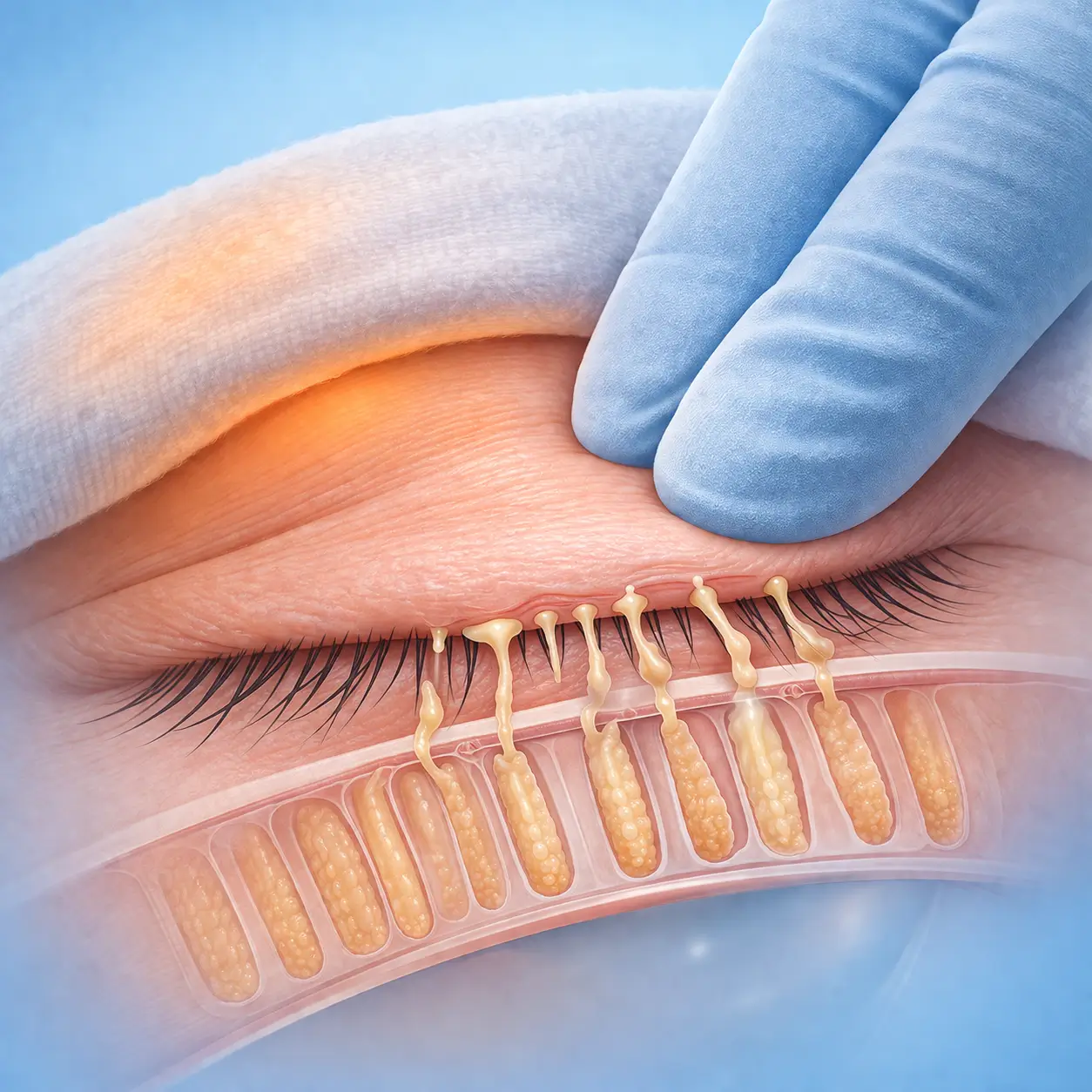
Warm compresses soften inspissated meibomian gland secretions, followed by professional expression to clear blocked ducts and restore normal lipid-layer secretion — the foundational in-office treatment for MGD-related dry eye.
Meibomian gland dysfunction (MGD) is the leading cause of evaporative dry eye. The core pathology is obstruction of meibomian gland orifices and stagnation of secretions, leading to a deficient lipid layer and accelerated tear evaporation. Meibomian gland expression therapy directly addresses this mechanism through physical means. Treatment consists of two key steps. First, warm compresses heat the eyelids to 40-45°C for 8-10 minutes, softening and liquefying inspissated or degraded meibum. Second, a trained clinician applies directional pressure along the meibomian gland axis using a cotton-tipped applicator or dedicated expression paddle, expelling softened lipid through the gland orifices. Tier-3A public hospitals in China's first-tier cities typically offer standardized warm compress plus manual expression. Some premium private ophthalmology clinics also provide adjunct options such as IPL or thermal pulsation, but whether these are worthwhile depends on examination findings, symptom severity, and budget. MGD is a chronic condition; a single session provides short-term relief, but most patients require maintenance therapy every 1-3 months alongside daily home warm compresses and lid hygiene.
Quick Reference
Treatment
20 mins – 30 mins
Observation
0 mins
Est. Cost
$74 – $400
Department
Ophthalmology
Who Is This For
Is Meibomian Gland Expression Therapy Right for You?
Good Candidates
- Confirmed MGD with symptoms of ocular dryness, burning, or foreign-body sensation
- Evaporative dry eye with thin lipid layer on interferometry
- Inspissated, turbid, or toothpaste-like meibomian secretions on expression
- Dry eye with inadequate response to artificial tears alone
- Contact lens wearers with MGD-related discomfort or reduced wearing time
May Not Be Suitable
- Acute hordeolum (stye) or active suppurative eyelid infection
- Active ocular viral infection (e.g., active herpes simplex keratitis)
- Significant ocular surface trauma or recent eye surgery (within 1 month)
- Patients unable to tolerate eyelid manipulation due to age or cooperation issues
Step-by-Step Process
How Meibomian Gland Expression Therapy Works
Lid Margin Cleaning
The clinician cleans the upper and lower lid margins with a specialized lid-scrub pad or diluted baby shampoo to remove accumulated sebum, scales, and bacterial biofilm, preparing the lids for effective treatment.
Warm Compress Application
A temperature-controlled warm compress mask (electric or steam-based) is applied at 40-45°C for 8-10 minutes. Maintaining consistent temperature is critical for effective meibum softening; temperatures below 38°C are insufficient.
Meibomian Gland Expression
Immediately after warming, the clinician uses a glass rod, cotton swab, or dedicated expression paddle to apply directional pressure from the gland base toward the orifice, expelling softened secretions from each gland. Both upper and lower lids are treated; expressed material ranges from clear oil to yellow or toothpaste-consistency plugs depending on severity.
Secretion Removal and Re-cleaning
Expressed lipid material is cleared from the lid margin with cotton applicators, followed by a second gentle lid-margin cleaning to prevent residual degraded meibum from irritating the ocular surface.
Medication and Patient Education
Topical anti-inflammatory drops (e.g., low-dose cyclosporine A or corticosteroid) or preservative-free artificial tears are instilled as indicated. The clinician demonstrates home warm compress technique and establishes a personalized daily lid-hygiene regimen.
Professional in-office therapy is recommended every 1-3 months. Daily home warm compresses (10 minutes per session) and lid hygiene are essential adjuncts. Patients with severe MGD may benefit from more frequent sessions (every 2-4 weeks) initially. Long-term management is required as MGD is a chronic condition.
Cost Information
Cost Estimate for Meibomian Gland Expression Therapy
Estimated Price Range
$74 – $400
What's Included
Public tier-3A general self-pay: approximately ¥500-1,500 per session (including meibomian gland assessment); premium private eye centers: approximately ¥1,500-2,500 per session (including personalized plan, warm compress, expression, and post-treatment care guidance). Multiple sessions typically needed (3-6).
Before Your Visit
What to Prepare
Required Tests & Examinations
If you already have recent valid test results, bring the reports. If not, these assessments can usually be completed in China before the procedure.
Slit-lamp biomicroscopy (assess lid margin morphology, gland orifice status, and secretion quality)
Meibography or infrared meibomian gland imaging (quantify gland dropout)
Tear film break-up time (TBUT) measurement
Schirmer tear secretion test (differentiate aqueous-deficient from evaporative dry eye)
Ocular surface fluorescein staining (assess corneal epithelial integrity)
Documents & Materials to Bring
Required to Bring
Recent ophthalmology examination report (including slit-lamp findings)
Current list of eye drops or ointments in use
Prior diagnosis records for dry eye or eyelid conditions (if any)
Companion & Support
This is an outpatient physical therapy session performed without anesthesia; patients can leave independently afterward. A companion is not required but is recommended for elderly or mobility-impaired patients.
After Treatment
Recovery & Follow-Up
Mild eyelid redness or a sense of fullness immediately after treatment is normal and typically resolves within a few hours
Avoid rubbing the eyes on the day of treatment; contact lens wear should be deferred for at least 4 hours
Daily home warm compresses are key to sustaining results — ideally performed each morning for a minimum of 8 minutes
Take regular breaks from screens; follow the 20-20-20 rule and make a conscious effort to blink fully
Minimize heavy eye makeup, particularly eyeliner applied inside the lash line, which can block gland orifices
If significant eye pain, vision change, or increased discharge develops after treatment, seek prompt medical review
Follow-Up Schedule
First follow-up at 2-4 weeks post-treatment to assess response and meibomian secretion quality. Once stable, review every 1-3 months.
Related Conditions
Conditions This Procedure Treats
Ready to Plan Meibomian Gland Expression Therapy in China?
Let Carevia help you find the right hospital, coordinate your treatment, and arrange every detail of your medical trip.
Frequently Asked Questions
Need personalized guidance?
Our care coordinators can help you assess whether this procedure fits your situation.
Contact Us