Partial tooth loss
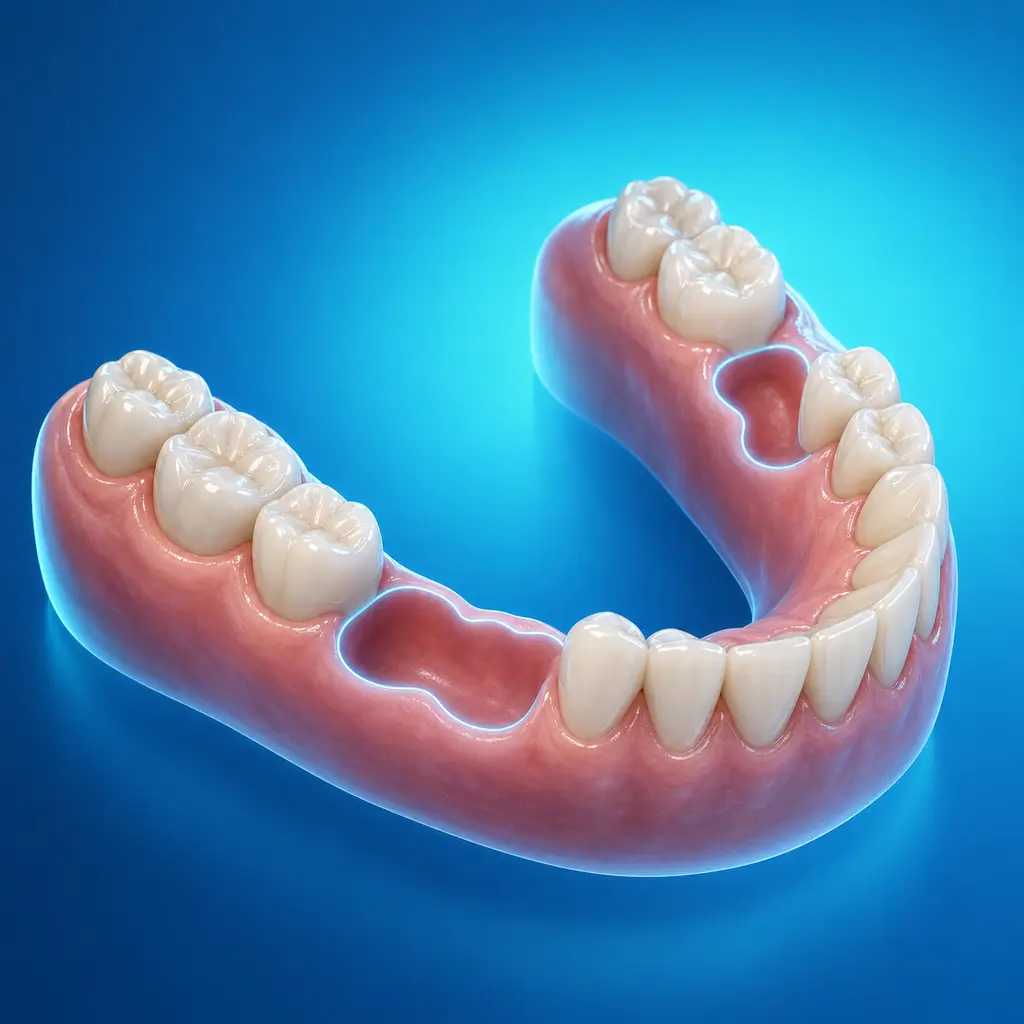
Partial tooth loss means loss of some teeth in the mouth, interrupting the continuity of the dental arch. It can affect chewing, appearance, speech, and adjacent tooth health, and is one of the most common oral conditions.
Common Symptoms
Recognizing Partial tooth loss
Focus on the most useful decision cues first: common symptoms, the patients or situations that usually prompt review, and any signs that need faster assessment.
Common Symptoms
Signs patients often notice before evaluation
Some teeth are missing, leaving spaces in the dental arch
Chewing efficiency decreases, and unilateral chewing habits develop
Adjacent teeth tilt and shift into the missing-tooth space, causing food impaction and cleaning difficulty
Opposing teeth overerupt, causing occlusal interference and possibly biting the opposing gum
Alveolar bone atrophy and gum collapse in the missing-tooth area
Anterior tooth loss affects facial appearance and speech
Long-term one-sided chewing may cause facial asymmetry, temporomandibular joint clicking, or pain
Remaining teeth bear increased load, leading to excessive wear and mobility
When to Seek Evaluation
Typical patients and situations that warrant review
Can occur at any age, but is more common in middle-aged and older adults
Spaces appear in the dental arch
Chewing efficiency decreases, and unilateral chewing habits develop
Adjacent teeth tilt and shift into the missing-tooth space, causing food impaction and cleaning difficulty
Opposing teeth overerupt, causing occlusal interference and possibly biting the opposing gum
Alveolar bone atrophy and gum collapse in the missing-tooth area
Anterior tooth loss affects facial appearance and speech
Long-term one-sided chewing may cause facial asymmetry, temporomandibular joint clicking, or pain
Remaining teeth bear increased load, leading to excessive wear and mobility
Treatment Approaches
Treatment Directions for Partial tooth loss
Fixed bridge: uses teeth on both sides of the missing space as abutments to create a connected bridge. Advantages include comfort, stability, good functional recovery, and no need for removal
Disadvantages: requires preparation of healthy adjacent teeth, higher cost, and narrow indications, usually few missing teeth with healthy adjacent teeth
Removable partial denture: retained on remaining teeth with clasps and a base and can be removed by the patient. Advantages include less tooth reduction, broad applicability, and lower cost
Disadvantages: foreign-body sensation, speech effects, slightly lower stability, and need for daily removal and cleaning
Implant-supported prosthesis: implant placed in the missing-tooth area and connected to a crown. Advantages include no damage to adjacent teeth, best functional recovery, good appearance, and preservation of alveolar bone
Disadvantages: high cost, long treatment cycle of 3-6 months, surgery required, and high bone volume requirements
What usually shapes the treatment plan
Clinical Assessment
Key Assessments for Partial tooth loss
These are the main areas doctors usually review first. If you already have relevant test or imaging reports, bring them to speed up the assessment. They are helpful but not required, and the same workup can also be completed in China.
Position of missing teeth
Number
Distribution in the dental arch
Alveolar bone height in the missing-tooth area
Width
Density
Health of adjacent and opposing teeth, including caries, pulp disease, periodontal disease, tilting, or overeruption
Occlusal relationship of remaining teeth
Oral hygiene status
Patient restorative needs, including function, appearance, and cost
Overall health status, such as diabetes, osteoporosis, and smoking
Before You Travel
How to Prepare
Bring previous imaging records and dental treatment history
Planning Notes
Pre-Assessment Required
An oral specialist should perform an intraoral examination and, as appropriate, periodontal probing, pulp vitality testing, periapical radiographs, panoramic radiographs, or CBCT before determining the treatment plan. Key checks include specialist oral examination: visual recording of missing tooth positions and number; probing adjacent teeth for caries and periodontal pockets; percussion to assess adjacent tooth pulp status; and occlusal examination for interference. Bring specialist oral examination records and systemic medical history if available.
Remote Pre-Assessment
Intraoral photos, the course of pain/swelling, previous dental records, and imaging can be submitted remotely for preliminary triage, urgency assessment, and an estimated treatment direction. Final diagnosis still requires in-person intraoral examination and necessary imaging.
Multidisciplinary Assessment
Medical History Important
Previous dental treatment history, imaging, allergy history, anticoagulant/bisphosphonate use, diabetes, and immune-related diseases can affect diagnosis, anesthesia, bleeding and infection risk, and treatment selection.
Ready to Explore Treatment for Partial tooth loss?
Let Carevia help you connect with the right specialists, compare hospitals, and plan your medical trip to China.