Complete Denture Restoration
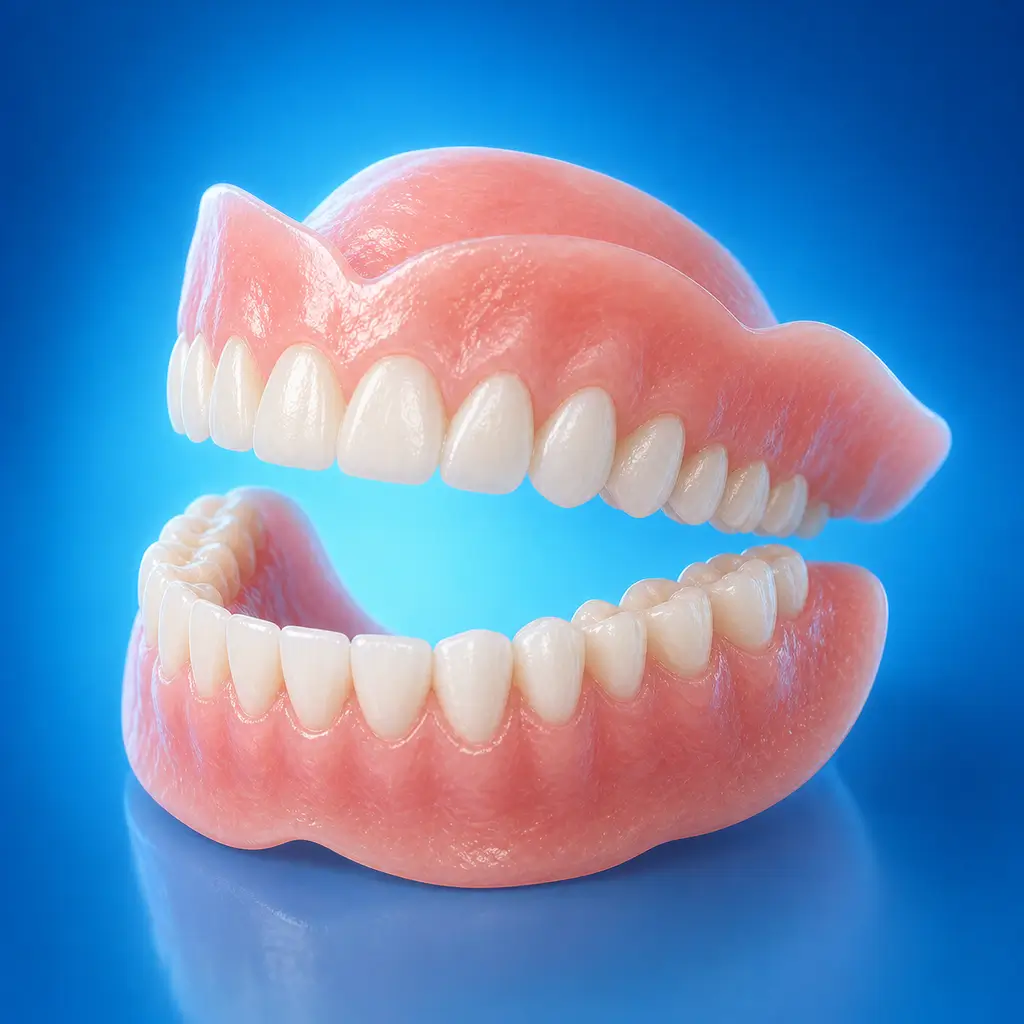
A full removable denture made for edentulous patients uses adhesion and atmospheric pressure to retain itself on the alveolar ridge and restore chewing, speech, and facial contour.
A complete denture is a removable denture made for patients with complete tooth loss, or edentulous jaws. It consists of artificial teeth and a base. Unlike removable partial dentures, which rely on remaining teeth for retention, complete dentures rely entirely on adhesion and atmospheric pressure between the base and oral mucosa, requiring highly accurate impressions, jaw relation records, and laboratory fabrication. After complete denture restoration, patients need a relatively long adaptation period, usually 1-3 months, because the sensation changes from having no teeth to having teeth. The average service life is about 5-8 years. As the alveolar ridge continues to resorb, regular relining or remaking is needed. In recent years, implant-supported overdentures have greatly improved retention and stability, but traditional complete dentures remain the first choice for many edentulous patients because of lower cost.
Quick Reference
Treatment
1 hours – 2 hours
Observation
0 mins – 1 days
Est. Cost
$600 – $5,900
Department
Prosthodontics
Who Is This For
Is Complete Denture Restoration Right for You?
Good Candidates
- Complete tooth loss, with all natural teeth lost or extracted
- After extraction for 3-6 months, when the alveolar ridge has healed and stabilized; immediate dentures can be inserted immediately after extraction but require later relining
- Severe alveolar ridge resorption, inability to tolerate implant surgery, or limited finances
- General health unable to accept implant surgery, such as uncontrolled diabetes, severe heart disease, or osteoporosis
- Normal oral mucosa and saliva secretion, without severe dry mouth
May Not Be Suitable
- Unhealed extraction sites, except immediate dentures
- Severely irregular alveolar ridge with sharp bony prominences or spicules not yet reshaped, requiring alveoloplasty first
- Oral mucosal disease, such as active pemphigus or lichen planus
- Severe dry mouth with very low saliva secretion affecting denture retention
- Severe psychological disorder, Parkinson disease, or other inability to cooperate with fabrication and wearing
- Allergy to denture base materials
Step-by-Step Process
How Complete Denture Restoration Works
Preliminary Impression and Custom Tray
At the first visit, an initial edentulous impression is made with alginate material, covering the entire alveolar ridge and mucobuccal fold. A primary cast is poured and a custom tray is made for the final impression.
Preliminary Impression and Custom Tray
At the second visit, a custom tray is used to take the final impression. Border molding records accurate mucosal form, including alveolar ridge shape, mucobuccal folds, and frenum notches, which is critical for base fit. After the final cast is poured, it is sent to the laboratory to make the record base and wax rim.
Jaw Relation Record
The third visit determines jaw relations. Wax rims on record bases are used to record vertical dimension and centric relation. Vertical dimension refers to the distance between upper and lower alveolar ridges when the mandible is in physiologic rest position, usually determined with reference to facial proportions, speech, and swallowing.
Centric Relation Confirmation
Centric relation is the relationship of the upper and lower jaws when the condyles are in a physiologic position and is the foundation for arranging artificial teeth. This is the core step of complete denture fabrication. Incorrect jaw relation records can cause occlusal disorder, disharmony of the lower facial third, unnatural appearance, chewing and speech discomfort, and temporomandibular joint discomfort.
Trial Tooth Arrangement
The fourth visit is trial setup. Artificial teeth are arranged anatomically on the wax base and tried in the mouth to check tooth position, occlusion, midline, smile line height, facial fullness, and esthetics. Adjustments are made if needed before final denture processing in the laboratory.
Initial Denture Delivery and Adjustment
The fifth visit is initial delivery. The finished denture is tried in to check seating, border length, base fit, occlusal contacts, and esthetics. Occlusal high spots and overextended base borders are adjusted, and the patient is instructed on insertion, removal, cleaning, and wearing precautions.
Follow-up Maintenance
The sixth visit is review and adjustment. Follow-up is performed 1 week, 1 month, and 3 months after initial wear to assess adaptation, pressure pain, or ulcers, relieve base pressure points, and check retention and occlusion. Long-term wear requires regular follow-up, with relining or remaking when alveolar ridge resorption is obvious.
Usually 5-6 visits are needed, with a total course of about 1-2 months including laboratory fabrication time. Immediate dentures can be made before extraction and inserted immediately after extraction, but often require relining or remaking after 3-6 months.
Cost Information
Cost Estimate for Complete Denture Restoration
Estimated Price Range
$600 – $5,900
What's Included
Plaster models, base material such as resin, cast metal, or pure titanium, artificial tooth material such as resin teeth, reinforced acrylic teeth, or porcelain teeth, and fabrication method, traditional or digital.
Before Your Visit
What to Prepare
Required Tests & Examinations
If you already have recent valid test results, bring the reports. If not, these assessments can usually be completed in China before the procedure.
Clinical oral examination: assess alveolar ridge height, width, shape, mucosal thickness and elasticity, frenum attachment, palatal vault form, and saliva volume and quality
General condition assessment: systemic diseases such as diabetes, hypertension, and heart disease, and ability to tolerate multiple visits and denture wearing
X-ray examination: panoramic radiograph when needed to assess remaining alveolar bone and residual roots, cysts, or other lesions
Preliminary impression: make an initial edentulous impression and custom tray
Psychological assessment: understand expectations and predicted adaptation to complete dentures
Documents & Materials to Bring
Required to Bring
Previous extraction, alveolar ridge reshaping, or denture restoration records
Existing complete dentures or old dentures if available
Recent oral examination and imaging if available
General medical history
Medication allergy history
Current medication list
Companion & Support
An adult companion is recommended for postoperative pickup and observation. For general anesthesia, sedation, larger procedures, child patients, or patients with limited mobility, arrange accompaniment according to hospital requirements.
After Treatment
Recovery & Follow-Up
Foreign-body sensation, increased saliva, nausea, unclear speech, and chewing difficulty are obvious at first, and most patients need 1-3 months to adapt.
Start with soft foods such as steamed egg, tofu, or soft noodles, and gradually transition to a normal diet while avoiding very hard or sticky foods.
Practice chewing simultaneously with both posterior sides to avoid denture tipping from one-sided chewing.
Practice pronunciation by reading aloud or counting; vowel sounds such as a and o can help during adaptation.
Pressure points and mucosal ulcers are normal at first. Return for adjustment promptly and do not sand the denture yourself.
Remove and rinse the denture after each meal, rinse the mouth, and then reinsert it.
Remove the denture before sleep, clean it, and soak it in cold water. Do not use hot water to avoid deformation.
Clean the denture daily with a soft toothbrush, not toothpaste, and soak it with denture cleaning tablets 1-2 times per week.
Brush and massage the edentulous alveolar ridge gently with a soft toothbrush to promote circulation.
Long-term non-wearing accelerates alveolar ridge resorption, so daily wear for at least 8 hours is recommended.
Follow-Up Schedule
Review and adjustment at 1 week, 1 month, and 3 months after initial wear, then regular follow-up every 6-12 months. Obvious alveolar ridge resorption requires assessment for relining, usually every 2-3 years, or remake after about 5-8 years.
Related Conditions
Conditions This Procedure Treats
Ready to Plan Complete Denture Restoration in China?
Let Carevia help you find the right hospital, coordinate your treatment, and arrange every detail of your medical trip.
Frequently Asked Questions
Need personalized guidance?
Our care coordinators can help you assess whether this procedure fits your situation.
Contact Us