Abdominal aortic aneurysm
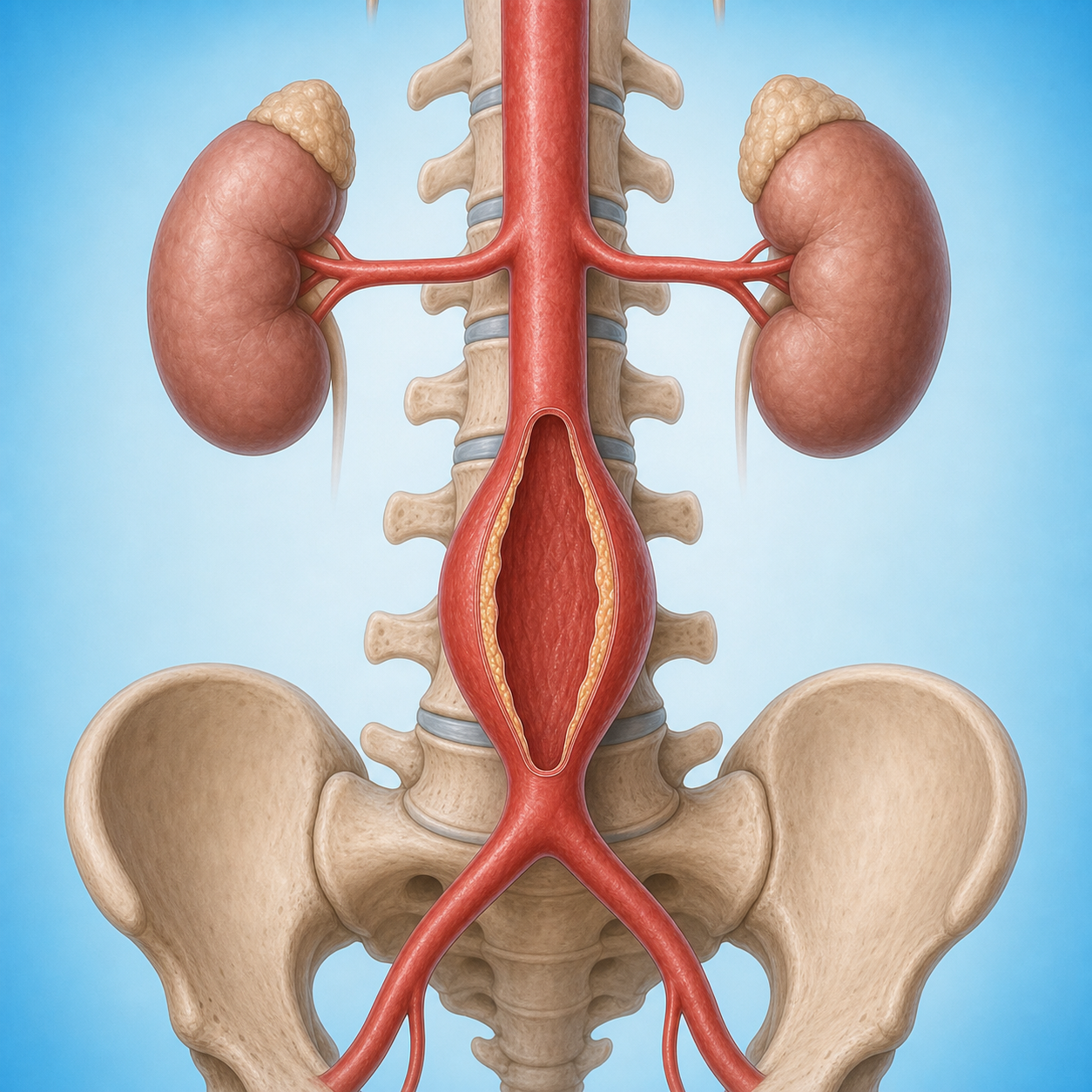
An abdominal aortic aneurysm usually means a maximum abdominal-aortic diameter of 3.0 cm or an enlargement of about 50% above the diameter expected to be normal for that person. Most cause no symptoms, but they may enlarge and rupture.
Common Symptoms
Recognizing Abdominal aortic aneurysm
Focus on the most useful decision cues first: common symptoms, the patients or situations that usually prompt review, and any signs that need faster assessment.
Common Symptoms
Signs patients often notice before evaluation
Usually no symptoms, or only a pulsating sensation in the abdomen
Persistent discomfort in the abdomen, flank, groin, or back
When to Seek Evaluation
Typical patients and situations that warrant review
Older current or former smokers, especially men
People with a first-degree relative who has an abdominal aortic aneurysm or another aortic disease
People with coronary disease, peripheral artery disease, hypertension, or another manifestation of atherosclerosis
Prevalence is lower in women, but rupture risk at the same diameter may differ, so assessment must not simply apply one threshold to everyone
People with certain connective-tissue or unusual arterial diseases require a specialist aortic assessment pathway
Screening or another test unexpectedly finds enlargement of the abdominal aorta, requiring confirmation of diameter, measurement method, and follow-up plan
A known abdominal aortic aneurysm requires comparison of previous original images, assessment of growth rate, and review of new related symptoms
The aneurysm is approaching the repair criteria in local guidance, is growing rapidly, or has complex anatomy, requiring vascular specialist assessment
Endovascular and open repair are being compared, requiring assessment of aortic and iliac anatomy, heart, lung, and kidney function, and ability to maintain long-term follow-up
For sudden severe abdominal, flank, or back pain with fainting, cold sweat, collapse, or low blood pressure, call local emergency services immediately
Urgent Assessment
If severe abdominal, flank, or back pain starts suddenly and is accompanied by fainting, collapse, cold sweat, weakness, or very low blood pressure, call local emergency services immediately. A suspected ruptured abdominal aortic aneurysm is life-threatening.
Treatment Approaches
Treatment Directions for Abdominal aortic aneurysm
For a small asymptomatic aneurysm below repair criteria, use regular imaging surveillance, smoking cessation, and overall cardiovascular risk management
No medication has been reliably shown to shrink an abdominal aortic aneurysm; blood-pressure and lipid control primarily reduce overall risk
When aneurysm-related symptoms, rapid growth, or local guideline criteria for repair are present, a vascular team should assess intervention
Compare endovascular and open repair in terms of perioperative risk, anatomic suitability, durability, reintervention, and lifelong follow-up requirements
If rupture is suspected, activate emergency care immediately and transfer to a capable center; do not wait for outpatient review or cross-border travel
What usually shapes the treatment plan
Clinical Assessment
Key Assessments for Abdominal aortic aneurysm
These are the main areas doctors usually review first. If you already have relevant test or imaging reports, bring them to speed up the assessment. They are helpful but not required, and the same workup can also be completed in China.
Confirm the maximum diameter using a consistent imaging plane and boundary method and directly compare previous original images and growth rate
Ask about new persistent abdominal, flank, groin, or back pain and distinguish an asymptomatic aneurysm from possibly related symptoms
Assess smoking, blood pressure, lipids, other atherosclerotic disease, and clues to familial or connective-tissue disease
When repair is considered, use CT angiography to assess the proximal aneurysm neck, branches, iliac arteries, and access anatomy
Combine kidney function, cardiac and pulmonary risk, frailty, expected lifespan, suitability for open or endovascular repair, and ability to undergo lifelong imaging
Before You Travel
How to Prepare
Bring reports and original images, together with a complete list of medicines, supplements, and allergies.
Record symptoms and related home measurements, and note previous reactions, pregnancy status, implanted devices, and hospital admissions.
Planning Notes
Pre-Assessment Required
Before selecting a plan, confirm the diagnosis and severity, review current medications and test results, and identify factors that change benefit or risk.
Remote Pre-Assessment
Records and symptoms can be reviewed remotely, but diagnosis or treatment decisions may still require examination, laboratory tests, imaging, or an in-person specialist assessment.
Multidisciplinary Assessment
Complex invasive or device decisions should be reviewed by the relevant multidisciplinary cardiovascular team.
Medical History Important
Cardiovascular medicines, anticoagulants, liver and kidney function, interactions, allergies, and previous adverse reactions may change the safest plan.
Ready to Explore Treatment for Abdominal aortic aneurysm?
Let Carevia help you connect with the right specialists, compare hospitals, and plan your medical trip to China.