Open abdominal aortic aneurysm repair
Open repair uses an abdominal or retroperitoneal incision to clamp the aorta and replace or bypass the aneurysmal segment with a prosthetic graft, for a person who meets repair criteria and can tolerate major surgery.
Open repair may be considered when anatomy is unsuitable for EVAR, connective-tissue disease is present, or long-term durability favors an open strategy. Major risks include death, cardiopulmonary complications, bleeding, kidney injury, bowel ischemia, lower-limb ischemia, wound or graft infection, effects on sexual function, and incisional hernia. Long-term aortic imaging remains necessary after open repair; follow-up does not end permanently. Open repair clamps the aorta and replaces the aneurysmal segment with a prosthetic graft. Its early physiological burden is usually greater than that of standard EVAR, but it can provide a durable reconstruction when anatomy is unsuitable for a stent graft. Planning must account for clamp position, kidney and bowel perfusion, previous abdominal surgery, and transfusion needs, and must explain intensive care, recovery of bowel function, and incision rehabilitation in advance.
Quick Reference
Treatment
2 hours – 4 hours
Observation
0.5 months – 1.4 months
Department
General Surgery
Who Is This For
Is Open abdominal aortic aneurysm repair Right for You?
Good Candidates
- Meeting repair criteria and able to tolerate major surgery, with anatomy unsuitable for EVAR or a lifetime strategy and expected durability that favor open repair.
- Selected people with connective-tissue disease or younger people with long life expectancy, after individualized vascular-team assessment supports an open approach.
- A person with adequate cardiopulmonary and kidney reserve and rehabilitation support who understands the tradeoff between early risk, longer recovery, and potential long-term durability.
May Not Be Suitable
- No indication for repair, or severe cardiopulmonary or kidney disease, frailty, poor nutrition, or limited life expectancy that makes the risk of major surgery exceed expected benefit.
- Anatomy suitable for EVAR when its early risk advantage is more important, or inability to accept open abdominal recovery when a reasonable alternative exists.
- Uncorrectable severe malnutrition, active infection, or organ failure that makes open aortic clamping and recovery unacceptably risky.
Step-by-Step Process
How Open abdominal aortic aneurysm repair Works
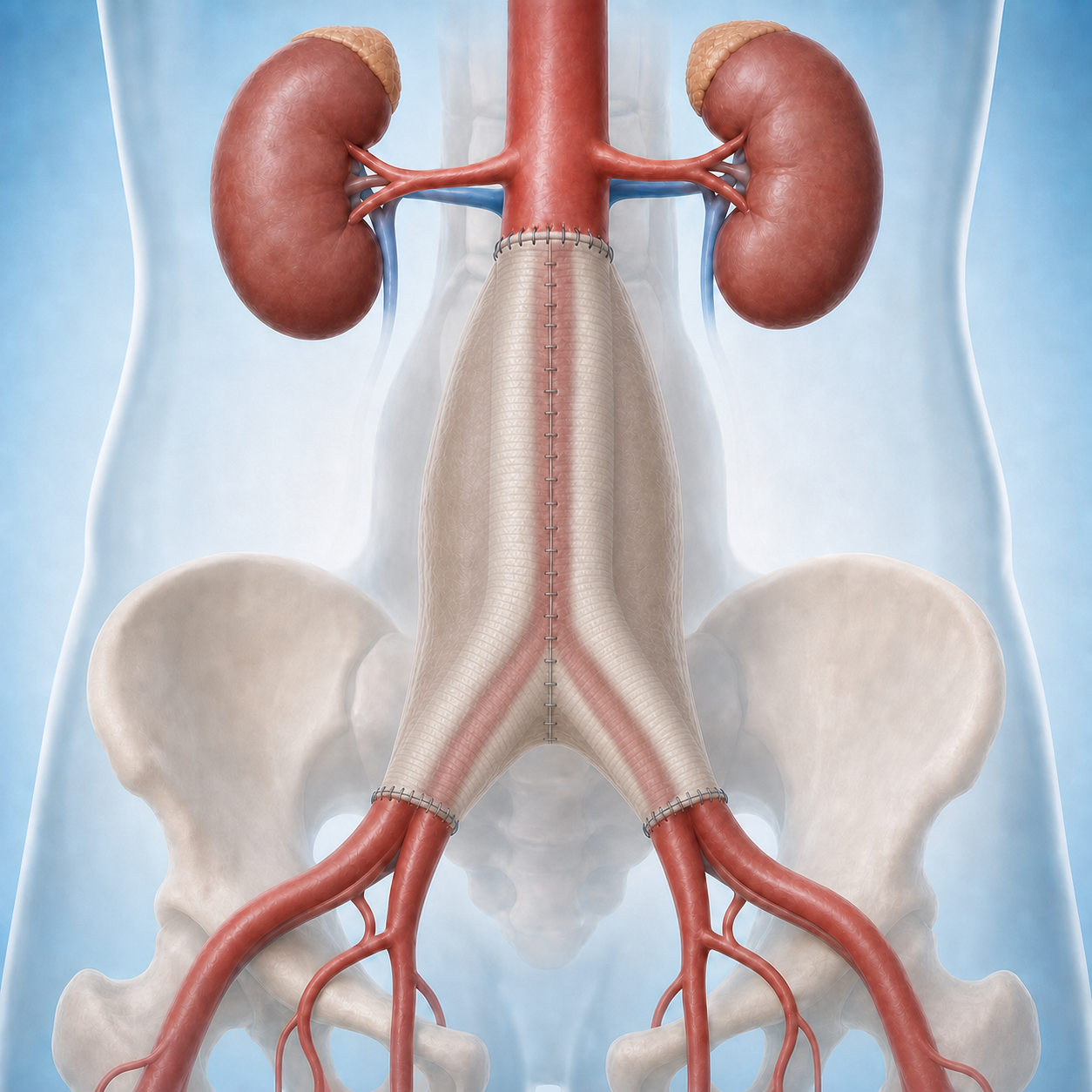
Plan clamping and reconstruction
Confirm the indication for repair, compare EVAR, and plan the aortic clamp site, branch protection, prosthetic graft, and blood management.
Replace the aneurysmal segment by open surgery
Expose the aorta through an abdominal or retroperitoneal approach, sew in a prosthetic graft after clamping, restore flow, and check kidney, bowel, and lower-limb perfusion.
Provide intensive care and staged recovery
Monitor cardiopulmonary, kidney, bowel, bleeding, and limb complications, and provide incision care, nutrition, thrombosis prevention, and phased rehabilitation.
Continue long-term aortic and incision follow-up
After recovery, continue surveillance for anastomotic and other aortic-segment disease, graft infection, and incisional hernia, and manage smoking and cardiovascular risk long term.
Open repair usually requires intensive care and a longer hospital stay, and recovery of fitness and the abdominal incision takes weeks to months. Complications can substantially prolong rehabilitation.
Cost Information
Cost Estimate for Open abdominal aortic aneurysm repair
What's Included
Costs are quoted in Chinese yuan (RMB). For full self-payment without Chinese medical insurance, the quotation should be based on aneurysm anatomy, prosthetic-graft type, and planned operative complexity. It should itemize preoperative imaging, prosthetic graft, surgery and anesthesia, intensive care, ward stay, blood transfusion, drugs, and postoperative follow-up. Organ complications, repeat surgery, and prolonged hospitalization are charged separately.
Before Your Visit
What to Prepare
Required Tests & Examinations
If you already have recent valid test results, bring the reports. If not, these assessments can usually be completed in China before the procedure.
CT angiography to assess the aneurysm, renal and visceral branches, iliac arteries, and the planned clamp and graft reconstruction.
Complete blood count, kidney and liver function, coagulation and crossmatching, plus cardiopulmonary, infection, nutrition, frailty, anesthesia, and intensive-care assessment.
Assess how the clamp level will affect kidney, bowel, and spinal-cord perfusion; a complex juxtarenal or suprarenal aneurysm needs an organ-protection plan from a center with relevant experience.
Documents & Materials to Bring
Required to Bring
Original CT angiography and previous growth information, plus records of prior abdominal and vascular surgery.
All medications and allergies, antithrombotic and bleeding history, cardiopulmonary and kidney results, and home and rehabilitation support after discharge.
The planned clamp, prosthetic-graft, and branch-reconstruction strategy, blood-product and intensive-care plan, and the person's preferences regarding major complications and intensity of rescue treatment.
Companion & Support
A responsible adult should accompany the person for surgery or discharge and during early recovery; follow local transport, driving, and overnight-supervision rules.
After Treatment
Recovery & Follow-Up
Increase activity gradually as instructed, protect the abdominal incision, and attend to nutrition and bowel movements; do not lift heavy objects or drive until cleared.
Open repair is durable but anastomotic or other aortic-segment disease, graft infection, and incisional hernia can still occur and require long-term follow-up.
Persistent fever, abdominal or back pain, gastrointestinal bleeding, foot ischemia, or incision bulging or drainage after discharge may indicate a serious late problem and requires prompt medical care.
Follow-Up Schedule
Review the incision, cardiopulmonary and kidney function, bowel function, and lower-limb perfusion early, followed by long-term aortic imaging according to guidance. Abdominal or back pain, fainting, fever, an abnormal incision, or lower-limb ischemia needs urgent assessment.
Related Conditions
Conditions This Procedure Treats
Ready to Plan Open abdominal aortic aneurysm repair in China?
Let Carevia help you find the right hospital, coordinate your treatment, and arrange every detail of your medical trip.
Frequently Asked Questions
Need personalized guidance?
Our care coordinators can help you assess whether this procedure fits your situation.
Contact Us