Submandibular Gland Excision
Complete surgical removal of the submandibular gland is an effective treatment for benign tumors, duct stones, and chronic inflammation of the gland.
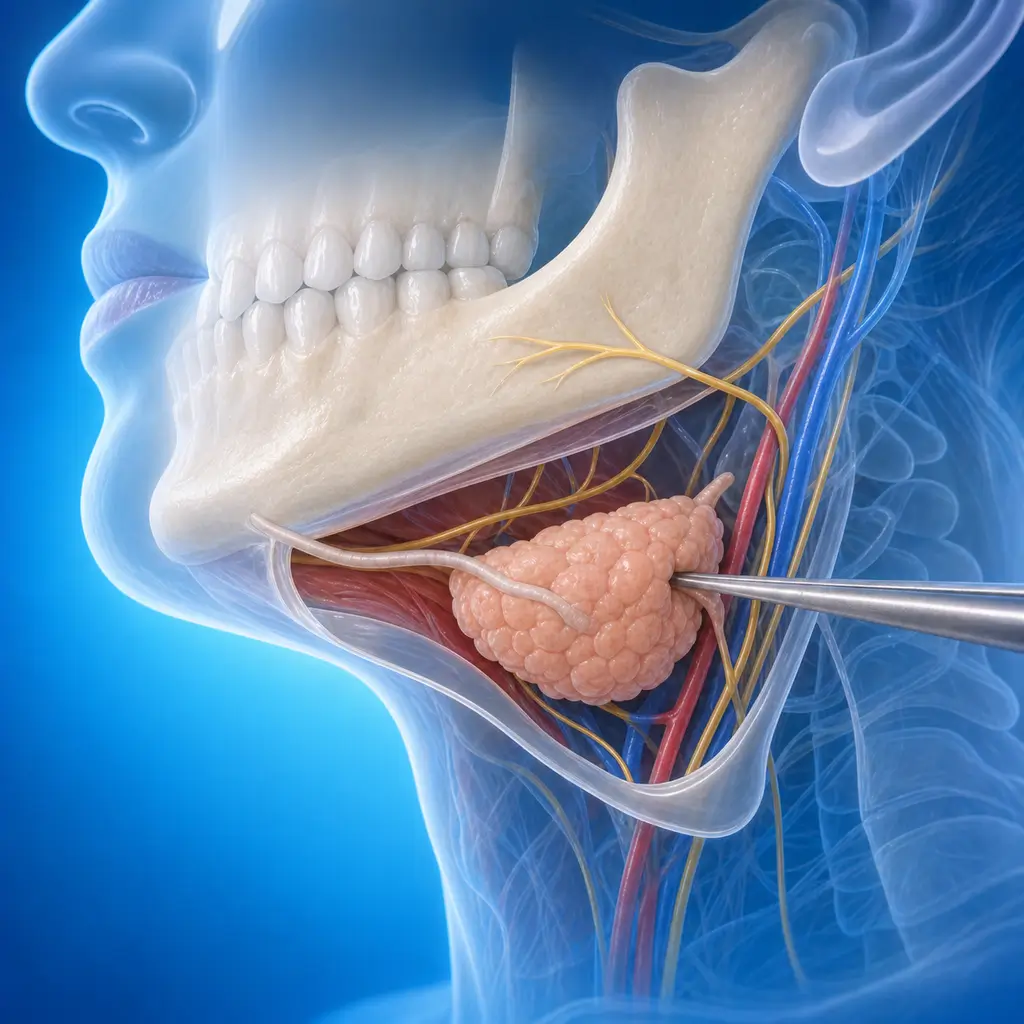
The submandibular gland lies below the mandible on both sides and is the body's second largest salivary gland. It produces saliva and drains it into the mouth through a duct. When benign tumors, duct stones causing recurrent infection, or chronic inflammation ineffective with conservative treatment occur, surgical excision of the gland is needed. The surgery is performed under general anesthesia through a neck incision to expose and completely remove the gland, while carefully protecting important structures such as the marginal mandibular branch of the facial nerve, lingual nerve, and hypoglossal nerve.
Quick Reference
Treatment
1 hours – 2 hours
Observation
1 days – 2 days
Est. Cost
$1,500 – $2,900
Department
Oral and Maxillofacial Surgery
Who Is This For
Is Submandibular Gland Excision Right for You?
Good Candidates
- Benign submandibular gland tumors such as pleomorphic adenoma that have not broken through the gland capsule
- Submandibular duct stones that cannot be removed by conservative or minimally invasive methods
- Recurrent chronic submandibular sialadenitis with fibrotic, nonfunctional gland
- Malignant submandibular gland tumor, requiring removal of surrounding tissue and lymph nodes as well
- Submandibular gland cyst or chronic infection ineffective with conservative treatment
May Not Be Suitable
- Uncontrolled acute inflammation, which requires anti-infective treatment first
- General condition unable to tolerate anesthesia and surgery
Step-by-Step Process
How Submandibular Gland Excision Works
Preoperative Preparation
The surgery is usually performed under general anesthesia. Prophylactic antibiotics are decided according to infection risk, stones or inflammation, and perioperative protocols.
Incision Design and Lesion Excision
An incision about one fingerbreadth below the lower border of the mandible is made on the affected side, about 5 cm long, while protecting the marginal mandibular branch of the facial nerve. Skin, subcutaneous tissue, and platysma are dissected layer by layer to expose the submandibular gland. Tissues around the gland are separated, branches of the external maxillary artery and anterior facial vein are ligated, and the gland and lesion are completely removed. For tumors, intact removal without rupture is required.
Repositioning and Suturing
Layered suturing is performed and a drain is placed in the wound cavity.
Usually completed in one surgery, with postoperative observation in hospital for about 1-2 days and suture removal review at about 7 days.
Cost Information
Cost Estimate for Submandibular Gland Excision
Estimated Price Range
$1,500 – $2,900
What's Included
General anesthesia, inpatient tests, imaging examinations, submandibular gland excision, additional fees for endoscopic removal if used, and postoperative care.
Before Your Visit
What to Prepare
Required Tests & Examinations
If you already have recent valid test results, bring the reports. If not, these assessments can usually be completed in China before the procedure.
Clinical oral examination: palpate the submandibular area for enlargement or tenderness and check the intraoral duct opening for redness, swelling, or pus discharge
Imaging: ultrasound to assess gland size, shape, and stone location
CT to assess tumor extent and relationship to surrounding structures
Puncture examination for cysts to determine nature
Documents & Materials to Bring
Required to Bring
Recent oral or maxillofacial imaging, such as X-ray, CBCT, CT, or MRI if available
Previous dental or maxillofacial treatment records
Medication allergy history
General medical history
Current medication list, especially anticoagulants, diabetes medications, antihypertensives, or immunosuppressants
Recent preoperative test results such as complete blood count, coagulation function, blood glucose, or ECG if completed
Companion & Support
An adult companion is recommended for postoperative pickup and observation. For general anesthesia, sedation, larger procedures, child patients, or patients with limited mobility, arrange accompaniment according to hospital requirements.
After Treatment
Recovery & Follow-Up
Apply ice within 24 hours after surgery to reduce swelling.
Eat warm or cool liquid or semi-liquid food for 1 week after surgery, avoiding very hot, spicy, or acidic foods.
Keep the incision dry and avoid water contact for 24-48 hours after surgery.
Avoid strenuous exercise for 1 week after surgery.
Take pain medication as instructed if needed.
Return promptly if fever, incision redness or drainage, lower-lip deviation, tongue numbness, or other abnormalities occur.
Follow-Up Schedule
Suture removal and review about 7 days after surgery, with recovery assessment at 1 month. If a tumor is present or pathology suggests high risk, long-term follow-up is needed as instructed.
Related Conditions
Conditions This Procedure Treats
Ready to Plan Submandibular Gland Excision in China?
Let Carevia help you find the right hospital, coordinate your treatment, and arrange every detail of your medical trip.
Frequently Asked Questions
Need personalized guidance?
Our care coordinators can help you assess whether this procedure fits your situation.
Contact Us