Wisdom Tooth Pericoronal Abscess Incision and Drainage
A localized abscess caused by wisdom tooth pericoronitis is incised, drained, and irrigated to quickly control infection, swelling, and pain.
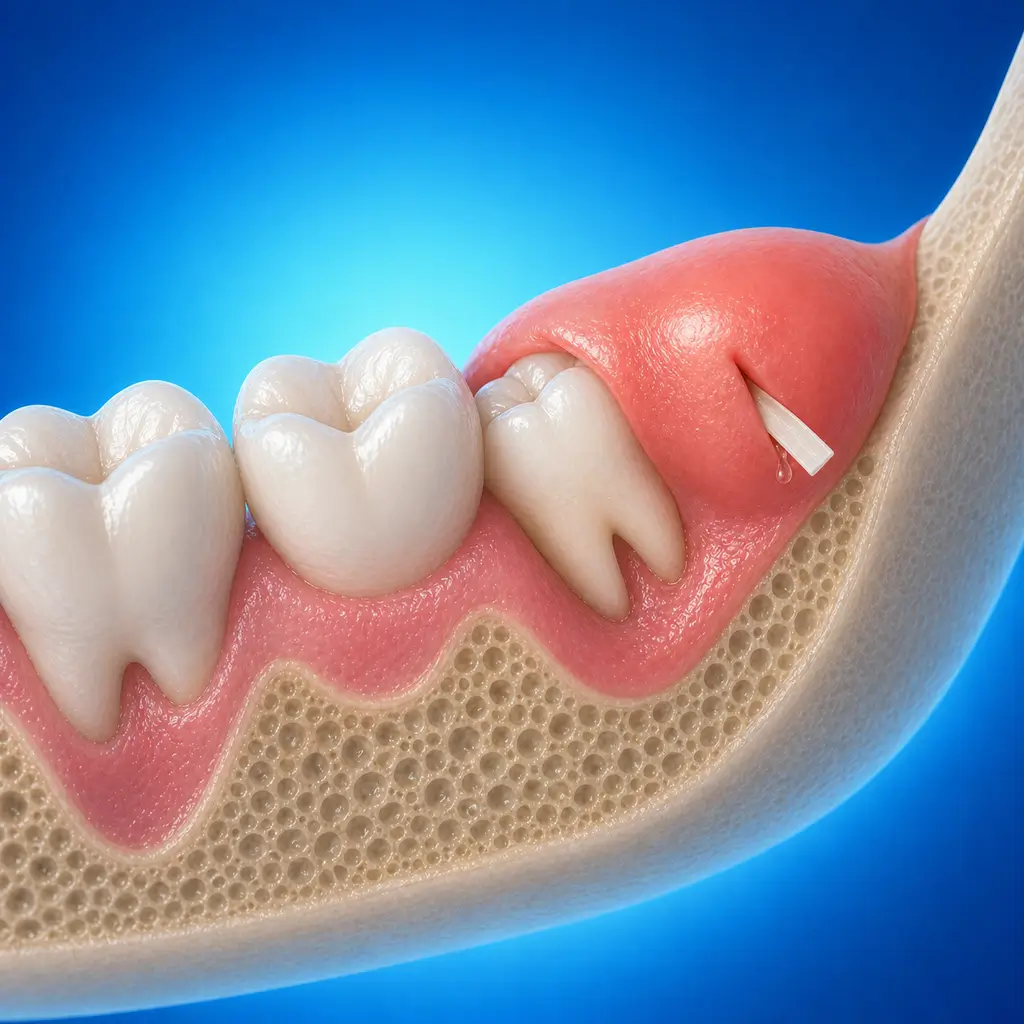
Wisdom tooth pericoronal abscess incision and drainage is used when pericoronitis has formed a localized abscess and irrigation alone cannot adequately drain pus. Under local anesthesia, the dentist incises the area with obvious fluctuation or pus collection, drains and irrigates the pus, and places a drain when needed, while providing anti-infective care, pain control, and oral hygiene guidance. The main goal is to control acute infection. After inflammation improves, the impacted wisdom tooth still needs evaluation for possible extraction to reduce recurrence risk.
Quick Reference
Treatment
12 mins – 1 hours
Observation
3 days – 4 days
Est. Cost
$30 – $74
Department
Oral and Maxillofacial Surgery
Who Is This For
Is Wisdom Tooth Pericoronal Abscess Incision and Drainage Right for You?
Good Candidates
- Patients with a wisdom tooth pericoronal abscess, presenting with local redness, swelling, tenderness, fluctuation, with or without systemic symptoms such as fever
May Not Be Suitable
- Simple inflammatory swelling without abscess formation
- Severe uncorrected coagulation disorder
Step-by-Step Process
How Wisdom Tooth Pericoronal Abscess Incision and Drainage Works
Anesthesia
Local infiltration anesthesia or topical anesthesia is used to ensure a painless procedure.
Incision
A linear incision is made at the lowest point of the abscess along skin creases or the gingival direction, and a hemostat is used for blunt dissection to enlarge the opening, enter the abscess cavity, and drain pus.
Irrigation and Drainage
The abscess cavity is thoroughly irrigated with sterile saline; the dentist may choose another appropriate irrigant when needed. A rubber drain or iodoform gauze strip is then placed to keep drainage open.
Postoperative Management
The need for anti-infective treatment is determined based on fever, spread of swelling, limited mouth opening, and overall health. Pain medication may be prescribed when needed, and next-day follow-up for dressing change is advised.
Usually only one incision and drainage procedure is needed. After surgery, dressing changes are required daily or every other day. The drain is removed after pus disappears, usually after 2-3 dressing changes.
Cost Information
Cost Estimate for Wisdom Tooth Pericoronal Abscess Incision and Drainage
Estimated Price Range
$30 – $74
What's Included
Local anesthesia, abscess incision and drainage, medication irrigation, drainage material, and suture fixation.
Before Your Visit
What to Prepare
Required Tests & Examinations
If you already have recent valid test results, bring the reports. If not, these assessments can usually be completed in China before the procedure.
Oral examination confirming abscess signs such as fluctuation
X-ray when needed to assess wisdom tooth position and rule out other lesions
Documents & Materials to Bring
Required to Bring
Recent wisdom tooth or maxillofacial imaging, such as panoramic radiograph or CBCT if available
Medication allergy history
General medical history, especially diabetes, coagulation disorders, or immunosuppression-related information
Current medication list
Recent temperature, complete blood count, or infection-related test results if already completed
Companion & Support
A dedicated companion is usually not needed. For children, older adults, pregnancy, underlying medical conditions, or when treatment may affect eating or travel afterward, having a family member accompany the patient is recommended.
After Treatment
Recovery & Follow-Up
Eat a light diet
Attend follow-up on time
If the doctor prescribes antibiotics, use them as instructed and do not increase the dose or stop them on your own
Do not irritate the affected area
Follow-Up Schedule
Daily dressing-change follow-up is usually needed after surgery, about 2-3 times. Seek care earlier if fever, spreading swelling, limited mouth opening, or worsening pain occurs.
Related Conditions
Conditions This Procedure Treats
Ready to Plan Wisdom Tooth Pericoronal Abscess Incision and Drainage in China?
Let Carevia help you find the right hospital, coordinate your treatment, and arrange every detail of your medical trip.
Frequently Asked Questions
Need personalized guidance?
Our care coordinators can help you assess whether this procedure fits your situation.
Contact Us