Crown Lengthening Surgery
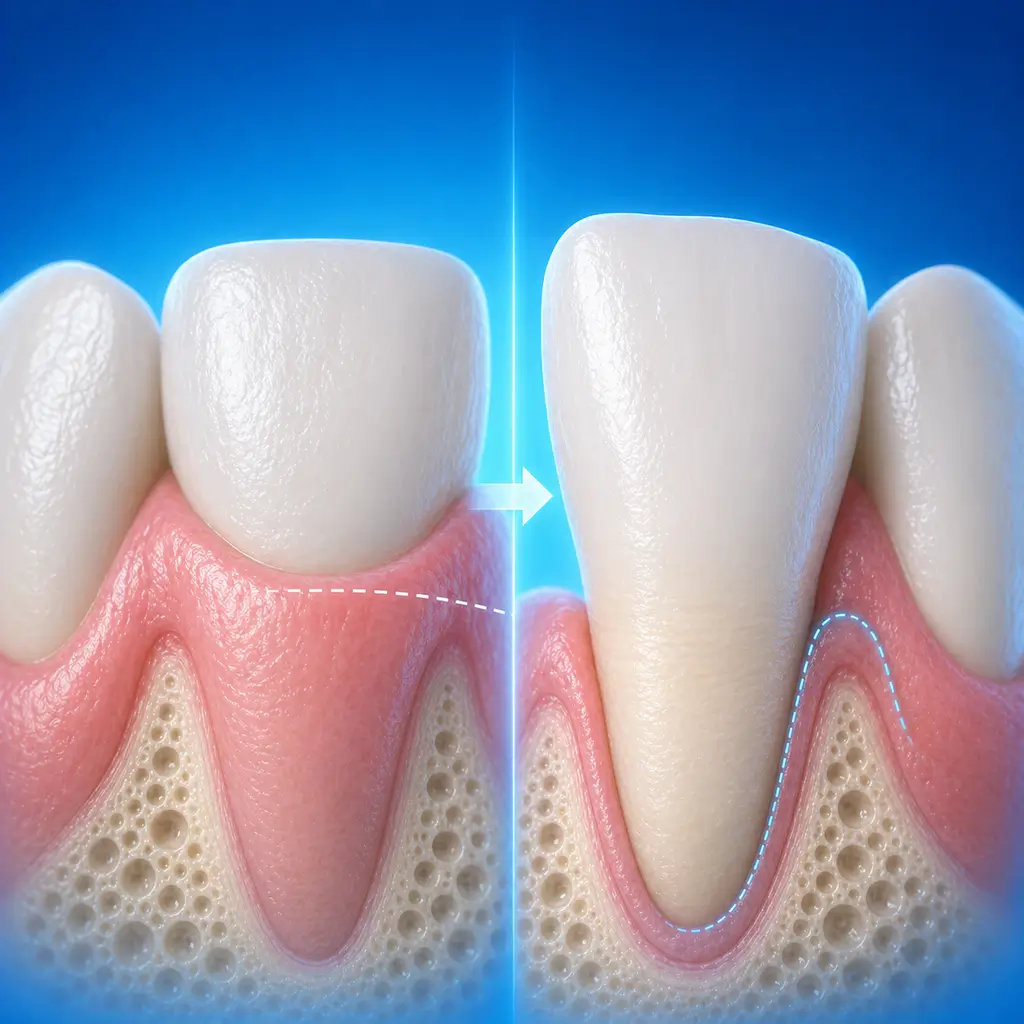
Gingival and alveolar bone reshaping exposes more healthy tooth structure, often creating restorative conditions for teeth with subgingival defects or insufficient restorative space.
Crown lengthening surgery reshapes gingiva and/or alveolar bone to expose more healthy tooth structure. It is often used for subgingival caries, crown fractures, short clinical crowns, or restoration margins that cannot obtain enough retention. The treatment goal is to establish appropriate biological width and restorative space for later filling, inlay, or full crown restoration. In the anterior esthetic zone, the gingival contour, crown proportions, and harmony with adjacent teeth also need evaluation.
Quick Reference
Treatment
1 hours – 2 hours
Observation
0 mins – 1 days
Est. Cost
$100 – $300
Department
Periodontology
Who Is This For
Is Crown Lengthening Surgery Right for You?
Good Candidates
- Caries or tooth fracture extending below the gingiva and affecting restoration
- External root resorption involving the cervical one-third but still worth preserving
- Short abutment teeth with poor retention requiring clinical crown lengthening to increase retention
- Old restorations invading biological width and causing gingival inflammation and alveolar bone loss, requiring remake
- Short clinical crowns in the anterior region or gummy smile requiring esthetic improvement
May Not Be Suitable
- Poor crown-root ratio, roots that are too short, or abnormal root morphology
- Defects extending subgingivally where postoperative periodontal support would be insufficient
- Postoperative periodontal tissue expected to be obviously disharmonious with adjacent teeth
- Severe soft tissue defects
- Existing periodontal inflammation without basic periodontal therapy
- General health unsuitable for surgery
Step-by-Step Process
How Crown Lengthening Surgery Works
Anesthesia and Isolation
Intraoral and extraoral disinfection is performed, followed by local infiltration anesthesia.
Flap Elevation and Bone Reshaping
The gingival margin is reshaped, a flap is elevated to expose bone, and bone is removed and contoured. The alveolar crest should be at least 3 mm from the tooth cervical margin to satisfy biological width, with a smooth transition toward adjacent alveolar crests.
Gingival Flap Reshaping
The position, shape, and thickness of the gingival flap are adjusted, then it is repositioned at the alveolar crest and sutured.
Hemostasis and Protection
Periodontal dressing is placed and pressure is applied for hemostasis.
Completed in one surgery. Sutures are removed in 10-14 days. Permanent restoration, such as crown fabrication, should wait until periodontal tissues are fully stable, generally requiring 3-6 months of healing.
Cost Information
Cost Estimate for Crown Lengthening Surgery
Estimated Price Range
$100 – $300
What's Included
Local anesthesia, crown lengthening surgery, suturing, periodontal dressing, with additional fees for laser excision or ultrasonic bone surgery if used.
Before Your Visit
What to Prepare
Required Tests & Examinations
If you already have recent valid test results, bring the reports. If not, these assessments can usually be completed in China before the procedure.
Basic periodontal therapy must be completed before surgery to control inflammation, with a comprehensive oral clinical examination
X-ray or CBCT to assess root length, alveolar bone height, and bone volume
Diagnostic models for esthetic design when needed
Documents & Materials to Bring
Required to Bring
Recent dental imaging, such as periapical radiograph, panoramic radiograph, or CBCT if available
Previous treatment records for the tooth to be restored, such as filling, root canal treatment, or temporary crown if available
General medical history, especially diabetes-related information
Current medication list, especially anticoagulants
Medication allergy history
Companion & Support
A dedicated companion is usually not needed. For children, older adults, pregnancy, underlying medical conditions, or when treatment may affect eating or travel afterward, having a family member accompany the patient is recommended.
After Treatment
Recovery & Follow-Up
Apply an ice pack intermittently to the surgical side of the face within 24 hours after surgery to reduce swelling.
Brush and rinse after 24 hours.
Avoid very hot, very cold, or spicy foods, and avoid chewing on the surgical side.
Avoid strenuous exercise for 1 week after surgery to reduce bleeding risk.
Avoid smoking and alcohol after surgery to prevent wound irritation and delayed healing.
Follow-Up Schedule
Review and suture removal about 1 week after surgery to assess wound healing. Review at 6-8 weeks to assess soft tissue stability. Periodontal status is then checked every 6-12 months.
Related Conditions
Conditions This Procedure Treats
Ready to Plan Crown Lengthening Surgery in China?
Let Carevia help you find the right hospital, coordinate your treatment, and arrange every detail of your medical trip.
Frequently Asked Questions
Need personalized guidance?
Our care coordinators can help you assess whether this procedure fits your situation.
Contact Us