Age-related Macular Degeneration (AMD)
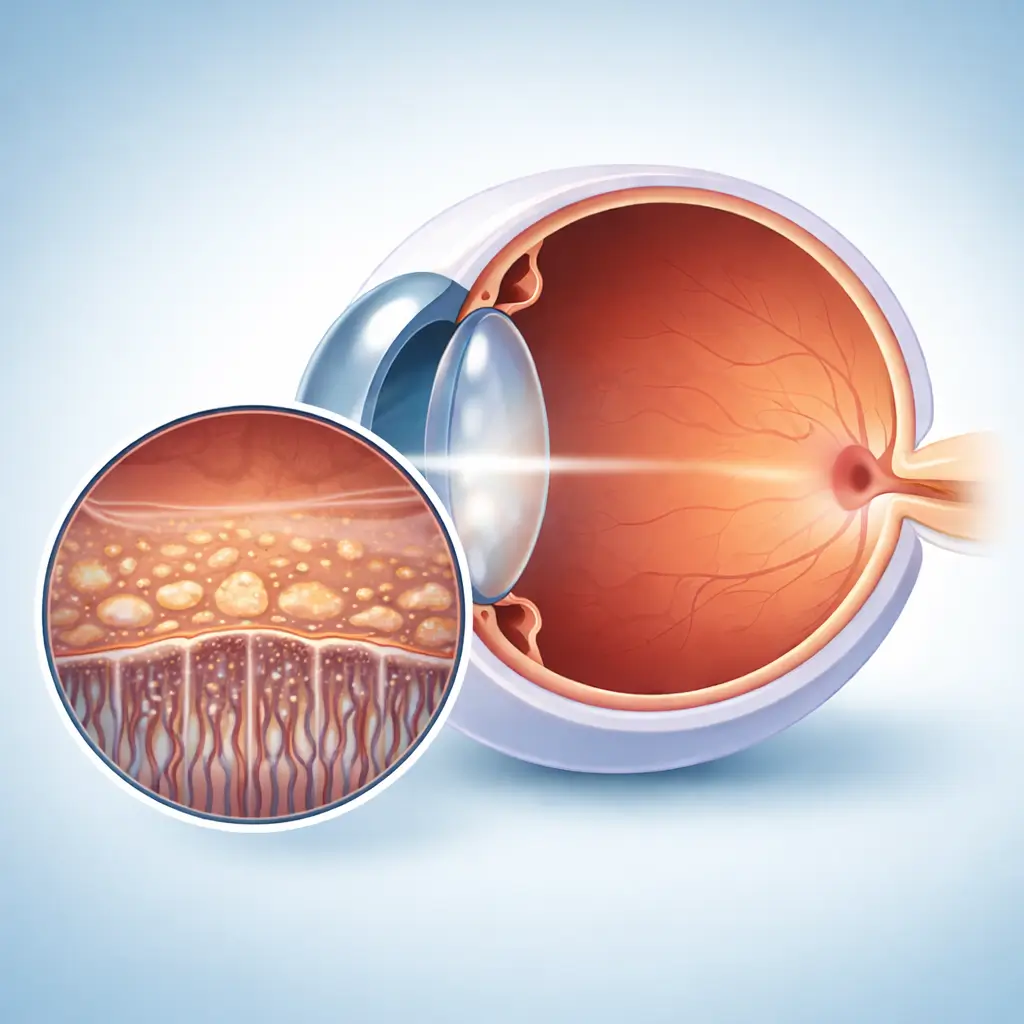
A degenerative retinal disease affecting the macula that causes central vision loss, one of the leading causes of vision impairment in older adults.
Common Symptoms
Recognizing Age-related Macular Degeneration (AMD)
Focus on the most useful decision cues first: common symptoms, the patients or situations that usually prompt review, and any signs that need faster assessment.
Common Symptoms
Signs patients often notice before evaluation
Central vision loss (blurriness in the center of vision)
Metamorphopsia (straight lines appear wavy, abnormal Amsler grid test)
Reading difficulty
Decreased contrast sensitivity
Central scotoma (dark spot in central vision)
When to Seek Evaluation
Typical patients and situations that warrant review
Adults over 50
Those with family history of AMD
Long-term smokers (2-3x increased risk)
Obese and hypertensive patients
Those with prolonged UV exposure
Sudden central vision loss or metamorphopsia (possible active wet AMD, seek care promptly)
Blurred or missing text while reading
Abnormalities detected on Amsler grid self-test
Urgent Assessment
Sudden central vision loss or metamorphopsia may indicate active wet AMD. Seek prompt fundus and OCT examination to initiate timely anti-VEGF treatment and preserve vision.
Treatment Approaches
Treatment Directions for Age-related Macular Degeneration (AMD)
Wet AMD: Anti-VEGF intravitreal injection (first-line, requires multiple injections)
Dry AMD: Lutein/zeaxanthin supplementation, regular monitoring
Photodynamic therapy (PDT) for specific subtypes
Lifestyle modifications (smoking cessation, UV protection, balanced diet)
What usually shapes the treatment plan
Clinical Assessment
Key Assessments for Age-related Macular Degeneration (AMD)
These are the main areas doctors usually review first. If you already have relevant test or imaging reports, bring them to speed up the assessment. They are helpful but not required, and the same workup can also be completed in China.
Fundus examination (dilated fundus photography)
OCT (detect macular edema and neovascular activity)
OCTA (non-invasive choroidal neovascularization assessment)
Fluorescein angiography (FFA) and indocyanine green angiography (ICG)
Visual acuity and contrast sensitivity testing
Before You Travel
How to Prepare
Bring previous fundus examination reports and OCT images
List anti-VEGF injection history (count, medication names)
Prepare systemic medical history (especially cardiovascular history)
Planning Notes
Pre-Assessment Required
Comprehensive fundus evaluation required including OCT, OCTA, FFA/ICG to determine AMD classification, neovascular activity, and lesion extent for treatment and follow-up planning.
Remote Pre-Assessment
OCT images, fundus photographs, and previous treatment records can be submitted remotely for preliminary disease activity assessment and treatment recommendations. First visit and angiography require on-site completion.
Multidisciplinary Assessment
Medical History Important
Cardiovascular history requires assessment for anti-VEGF treatment safety; previous treatment history (injection count, drug type, response) directly influences subsequent treatment planning.
Ready to Explore Treatment for Age-related Macular Degeneration (AMD)?
Let Carevia help you connect with the right specialists, compare hospitals, and plan your medical trip to China.