Tuina for temporomandibular disorders with jaw exercise
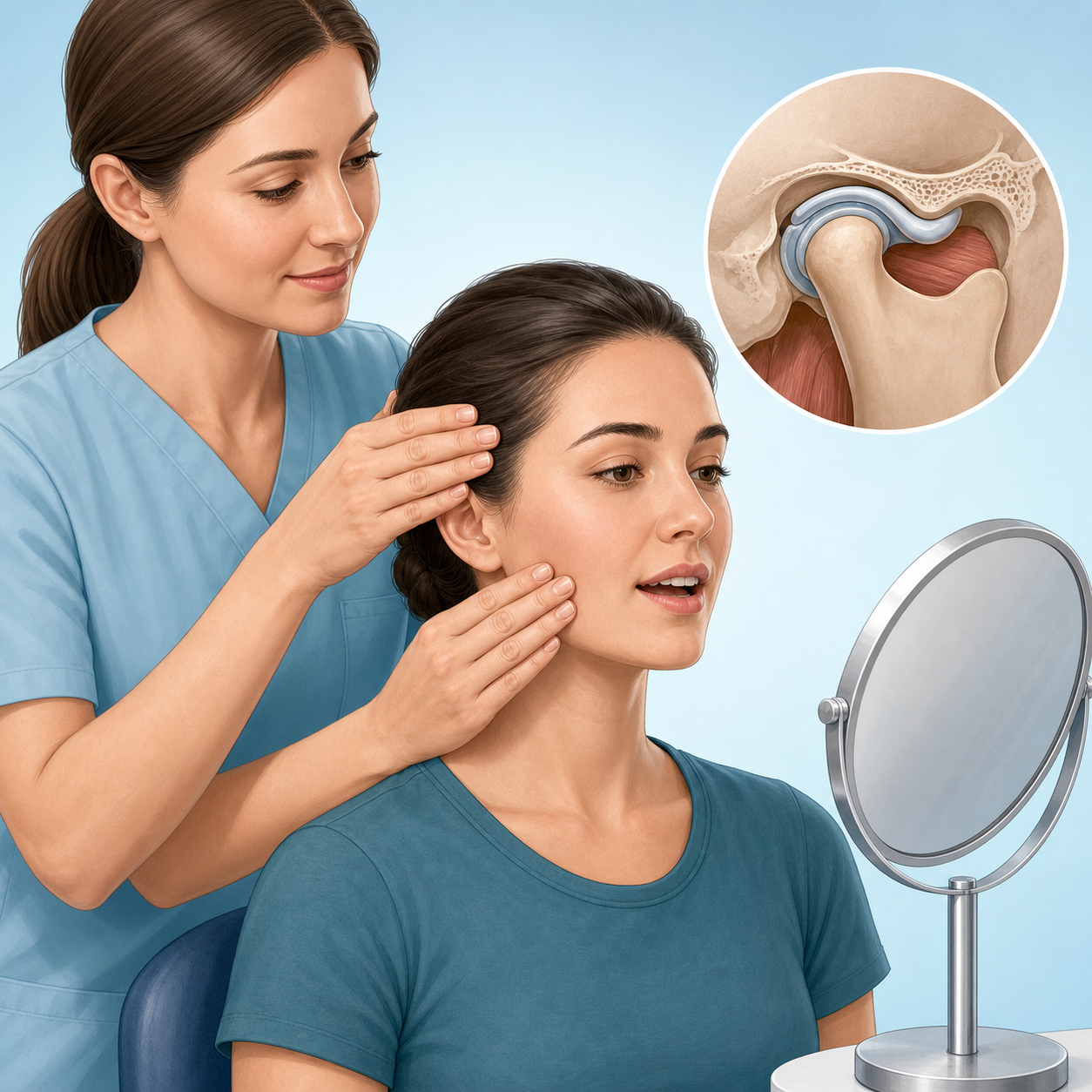
For temporomandibular disorders, Tuina release of the masseter, temporalis, and other masticatory muscles is combined, as needed, with relaxation of the upper trapezius and sternocleidomastoid, then followed by supervised mouth-opening, lateral-movement, and posture exercises. A 2026 public specialty pathway from Shenzhen Traditional Chinese Medicine Hospital directly lists release of the masseter, temporalis, and related head and neck muscles. A 2023 BMJ guideline strongly recommends manual trigger-point therapy and supervised jaw exercise. This treatment uses the Tuina-to-active-exercise components supported by both sources and excludes irreversible occlusal changes.
This treatment applies only to reversible conservative manual therapy and exercise used after classification of chronic painful temporomandibular disorders. It includes Tuina release of the masseter, temporalis, and other masticatory muscles; relaxation of the upper trapezius and sternocleidomastoid as needed; and supervised mouth-opening, lateral-movement, and posture exercises. Force, range of movement, and progression criteria must be adjusted according to the day's neurovascular status, fracture stability, tissue healing, and symptom response. The procedure does not pursue joint sounds or forceful manipulation. It cannot replace education, self-management, treatment of dental or structural joint causes, or orofacial-pain specialist follow-up. A 2026 public specialty pathway from Shenzhen Traditional Chinese Medicine Hospital directly lists release of the masseter, temporalis, and related head and neck muscles. A 2023 BMJ guideline strongly recommends manual trigger-point therapy and supervised jaw exercise. This treatment uses the Tuina-to-active-exercise components supported by both sources and excludes irreversible occlusal changes.
Quick Reference
Treatment
30 mins – 50 mins
Observation
1 days – 0.2 months
Department
Traditional Chinese Medicine Tuina
Who Is This For
Is Tuina for temporomandibular disorders with jaw exercise Right for You?
Good Candidates
- Confirmed muscular or other chronic painful temporomandibular disorder suitable for conservative mobilization, with mouth opening and jaw function documented
- A reversible conservative manual-therapy and exercise combination after classification of chronic painful temporomandibular disorders
- Ability to report symptoms actively and participate in movement training
- Completed screening for fracture, dislocation, severe neurovascular injury, and other contraindications
May Not Be Suitable
- Unexcluded acute dislocation, fracture, infection, ankylosis, tumor, or structural disease requiring oral and maxillofacial surgical care
- Unexcluded fracture, dislocation, infection, tumor, severe osteoporosis, or progressive neurovascular compression
- Marked acute swelling, broken skin, or inability to tolerate a gentle assessment
- A request for forceful realignment, pursuit of joint sounds, or refusal of active rehabilitation
Step-by-Step Process
How Tuina for temporomandibular disorders with jaw exercise Works
Confirm the stage and contraindications
Differentiate muscular from joint-related TMD and record the mouth-opening trajectory, joint sounds, tenderness, and differential assessment for dental and neuropathic causes.
Record a reproducible functional baseline
Record pain, range of movement, strength, task tolerance, and neurovascular status.
Apply low-risk soft-tissue techniques
Use tolerable, stoppable Tuina release around the masseter, temporalis, and other masticatory muscles and, as needed, relax the upper trapezius and sternocleidomastoid before supervised mouth-opening, lateral-movement, and posture exercise.
Link to assisted movement and active exercise
Proceed within safe limits to joint movement, isometric exercise, or task training. Do not use passive manual therapy to replace active rehabilitation.
Adjust according to the 24-hour response
Review pain and function and continue education, self-management, treatment of dental or structural joint causes, and orofacial-pain specialist follow-up. Reduce or stop treatment if the response continues to worsen.
Usually begin with 1 to 2 assessment sessions and use the 24-hour response to determine intensity. Any subsequent treatment must remain tied to active-exercise goals, with manual therapy discontinued periodically if it provides no benefit.
Cost Information
Cost Estimate for Tuina for temporomandibular disorders with jaw exercise
What's Included
Actual costs should be understood as uninsured full self-pay for a person not resident in China in a standard outpatient clinic. They depend on the treatment area, session duration, techniques or materials used, number of sessions, and hospital billing method. Registration, tests, and combined treatments may be charged separately; the final cost is determined by the actual plan and the treating hospital's charges.
Before Your Visit
What to Prepare
Required Tests & Examinations
If you already have recent valid test results, bring the reports. If not, these assessments can usually be completed in China before the procedure.
Differentiate muscular from joint-related TMD and record the mouth-opening trajectory, joint sounds, tenderness, and differential assessment for dental and neuropathic causes.
Baseline pain, range of motion, strength, neurovascular status, and function
Imaging and surgical or immobilization information as indicated by the disease and stage
Documents & Materials to Bring
Required to Bring
Disease diagnosis, classification, and stage information
Baseline pain and function measures
Complete medication, anticoagulant, and fracture-risk list
Movement records for reviewing home exercise
Companion & Support
A companion is usually unnecessary for a standard outpatient visit. One is advisable for older age, fall risk, severe pain, recent trauma, or a first cross-border visit.
After Treatment
Recovery & Follow-Up
Avoid forceful self-stretching, manipulation, or repeated high-load movement on the day of treatment.
Continue education, self-management, treatment of dental or structural joint causes, and orofacial-pain specialist follow-up.
Brief soreness after treatment may be observed, but persistent worsening or new neurovascular symptoms are not normal.
Follow-Up Schedule
Record pain and function for 24 hours after every treatment. Stop treatment and seek reassessment immediately for persistent worsening, new weakness or numbness, marked swelling, fever, or neurovascular abnormality.
Related Conditions
Conditions This Procedure Treats
Ready to Plan Tuina for temporomandibular disorders with jaw exercise in China?
Let Carevia help you find the right hospital, coordinate your treatment, and arrange every detail of your medical trip.
Frequently Asked Questions
Need personalized guidance?
Our care coordinators can help you assess whether this procedure fits your situation.
Contact Us