Temporomandibular disorders
Temporomandibular disorders are musculoskeletal conditions affecting the temporomandibular joint, masticatory muscles, and related structures, mainly presenting with joint-area pain, clicking, and limited mouth opening.
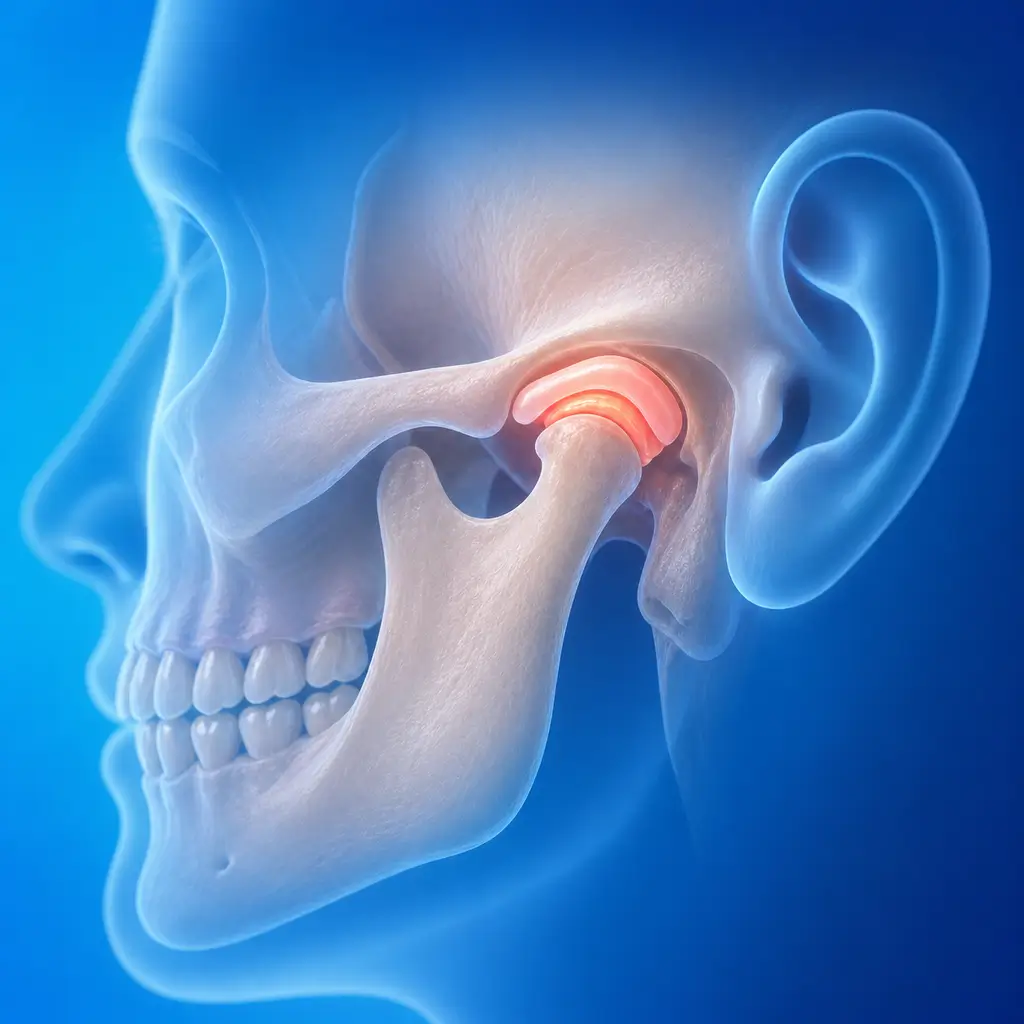
Common Symptoms
Recognizing Temporomandibular disorders
Focus on the most useful decision cues first: common symptoms, the patients or situations that usually prompt review, and any signs that need faster assessment.
Common Symptoms
Signs patients often notice before evaluation
Abnormal mandibular movement, including abnormal mouth opening range, too large or too small, abnormal opening path with deviation or deflection, and transient intermittent joint locking during opening and closing
Pain occurs in the joint area or surrounding muscle groups during mouth opening and chewing, generally without spontaneous pain
Clicks and noises include three types: clicking, a clicking sound during opening, often single and sometimes double, seen with reducible anterior disc displacement; crepitus, a crackling sound during opening, often double or multiple, seen with disc perforation, rupture, or displacement; and friction sound, a continuous sound like crumpling cellophane during opening, seen when bone or cartilage surfaces are rough in osteoarthrosis
Other symptoms may include headache, ear symptoms such as tinnitus or hearing decrease, eye symptoms, swallowing difficulty, speech difficulty, and chronic generalized fatigue
When to Seek Evaluation
Typical patients and situations that warrant review
High incidence in young adults aged 20-30
Women are affected 2-4 times more often than men
People with anxiety, depression, stress, tension, or perfectionistic personality traits
People with bruxism or clenching habits
People with occlusal interference, malocclusion, missing posterior teeth, or poorly fitting dentures
People with a history of maxillofacial trauma
People with habits of wide mouth opening or biting hard objects
Preauricular pain lasting more than 1 week and affecting eating, speaking, or mouth opening
Joint clicking or friction sounds during opening, closing, or chewing, with or without pain
Limited mouth opening or mandibular deviation during opening
Catching or locking during mouth opening requiring sideways movement to continue opening
Long-term unexplained headache or ear pain
Joint discomfort or limited mouth opening after orthodontic or restorative treatment
Treatment Approaches
Treatment Directions for Temporomandibular disorders
Treatment follows conservative, reversible, and multidisciplinary principles
Patient education: explain the benign and self-limited nature of TMD, reduce anxiety and fear, avoid wide mouth opening, avoid hard or tough foods, change harmful habits, and keep the joint area warm
Conservative treatment: warm compresses over the joint, physical therapy, occlusal splint therapy, and intra-articular hyaluronic acid injection to lubricate the joint and reduce friction
Irreversible conservative treatment: occlusal adjustment and orthodontic treatment
Irreversible treatment: for very few patients with clearly diagnosed joint disease, ineffective appropriate reversible non-surgical treatment, and significant quality-of-life impact, joint surgery or occlusal reconstruction may be considered
What usually shapes the treatment plan
Clinical Assessment
Key Assessments for Temporomandibular disorders
These are the main areas doctors usually review first. If you already have relevant test or imaging reports, bring them to speed up the assessment. They are helpful but not required, and the same workup can also be completed in China.
Joint-area assessment: pain location
Nature
Duration
Triggers, such as opening, chewing, or speaking
Presence of joint clicking or friction sounds
Presence of locking
Mandibular movement assessment: maximum mouth opening
Opening pattern
Range of motion
Masticatory muscle assessment: hypertrophy
Tenderness
Spasm
Occlusal assessment: occlusal interference
Malocclusion
Deep overbite
Deep overjet
Missing posterior teeth
High spots on restorations
Psychological assessment
Before You Travel
How to Prepare
Bring previous dental treatment history
Planning Notes
Pre-Assessment Required
An oral specialist should perform an intraoral examination and, as appropriate, periodontal probing, pulp vitality testing, periapical radiographs, panoramic radiographs, or CBCT before determining the treatment plan. Key checks include specialist oral examination: facial symmetry, mouth opening range and pattern, joint clicking and friction sounds, preauricular and masticatory muscle tenderness, and intraoral assessment for occlusal interference, premature contacts, and stability of intercuspation. Imaging may include panoramic radiographs to preliminarily assess condylar shape, bone, and symmetry, and TMJ MRI to assess disc position and shape. Bring specialist oral examination information and TMJ MRI if available.
Remote Pre-Assessment
Intraoral photos, the course of pain/swelling, previous dental records, and imaging can be submitted remotely for preliminary triage, urgency assessment, and an estimated treatment direction. Final diagnosis still requires in-person intraoral examination and necessary imaging.
Multidisciplinary Assessment
Depending on the condition, joint evaluation by oral and maxillofacial surgery, endodontics, periodontics, prosthodontics, orthodontics, imaging, anesthesia, or other related disciplines is recommended, especially for complex infection, tumors, trauma, jaw lesions, or high systemic disease risk.
Medical History Important
Previous dental treatment history, imaging, allergy history, anticoagulant/bisphosphonate use, diabetes, and immune-related diseases can affect diagnosis, anesthesia, bleeding and infection risk, and treatment selection.
Ready to Explore Treatment for Temporomandibular disorders?
Let Carevia help you connect with the right specialists, compare hospitals, and plan your medical trip to China.