Ankle Tuina with movement and stability training
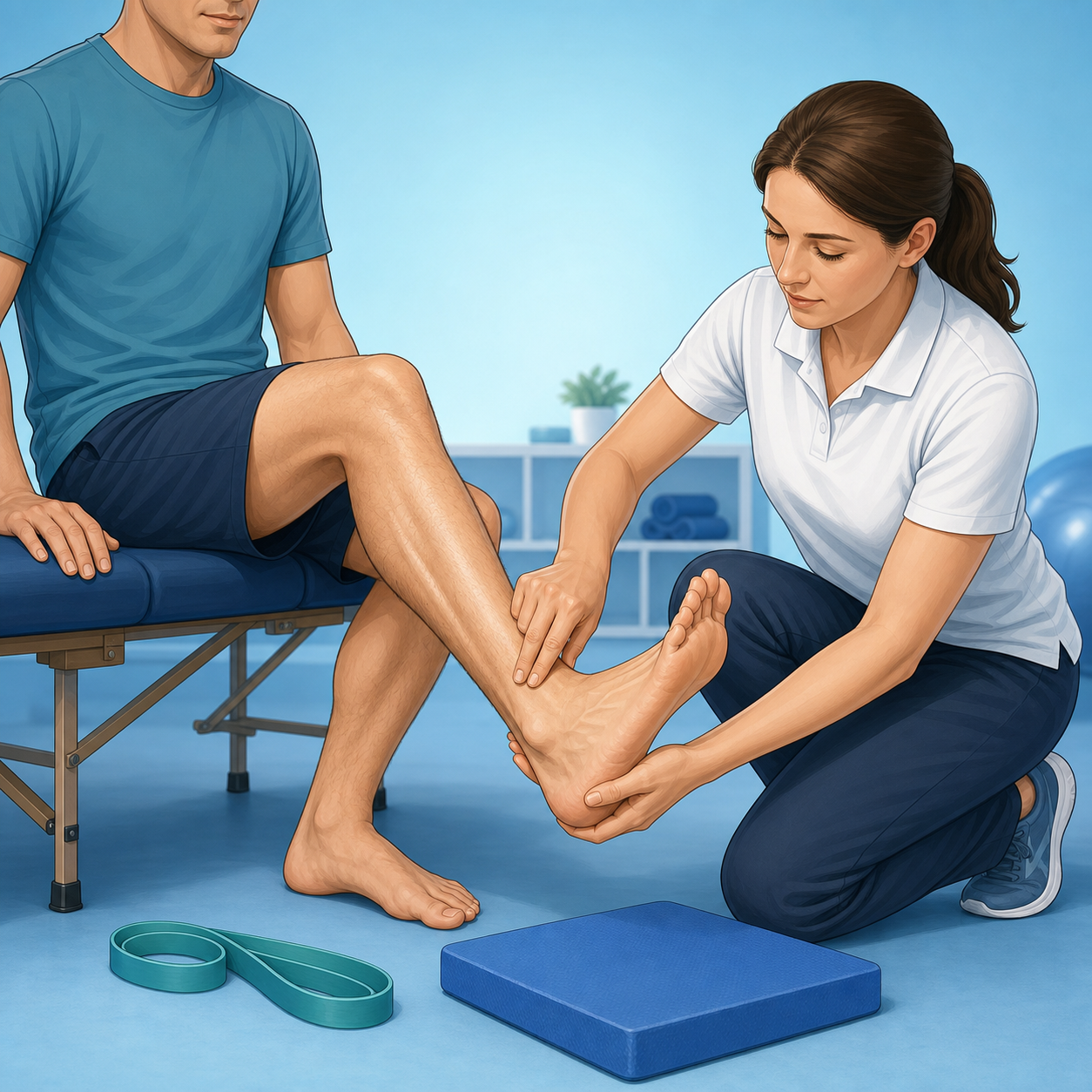
The Tuina-with-movement approach used at Beijing Massage Hospital combines clinician-applied point pressure with the patient's active or passive ankle movement and immediately links it to resistance and proprioceptive training. Manual techniques always remain within a range that does not substantially worsen pain.
Beijing Massage Hospital uses Tuina with movement during recovery from chronic or recurrent ankle sprain, emphasizing point pressure combined with active or passive movement, followed by resistance exercise for the fibularis muscles and other structures and by balance training. The 2021 AOPT/APTA guideline strongly recommends pain-free manual therapy combined with structured exercise. This treatment excludes forceful acute realignment, high-velocity manipulation, and claims of one-session reduction.
Quick Reference
Treatment
30 mins – 45 mins
Observation
0 mins
Department
Traditional Chinese Medicine Tuina
Who Is This For
Is Ankle Tuina with movement and stability training Right for You?
Good Candidates
- A graded injury that has been cleared to enter rehabilitation training
- Limited ankle movement, pain, strength deficit, or proprioceptive deficit
- Ability to progress weight bearing with a brace or other protection
- No fracture, complete tear, or neurovascular warning signs
May Not Be Suitable
- Unexcluded fracture, dislocation, complete tear, or osteochondral injury
- Progressively worsening marked swelling or inability to bear weight
- Open injury, infection, thrombosis, or neurovascular abnormality
- Any manual technique that markedly worsens pain
Step-by-Step Process
How Ankle Tuina with movement and stability training Works
Confirm the protection stage
Review imaging, ligament-injury severity, the brace, and the permitted range of weight bearing.
Perform Tuina with movement
The clinician applies pressure to relevant soft tissues while guiding active or passive ankle movement within a pain-free range. No forceful realignment is performed.
Train strength and proprioception
According to tolerance, add resisted dorsiflexion, plantar flexion, and eversion and graded single-leg balance.
Return to functional tasks
Increase loading in stages according to gait, balance, and work or sport needs.
Usually 2 to 6 weeks, with manual therapy 1 to 2 times weekly plus daily home exercise. Adjust according to injury severity and functional progress.
Cost Information
Cost Estimate for Ankle Tuina with movement and stability training
What's Included
Actual costs should be understood as uninsured full self-pay for a person not resident in China in a standard outpatient clinic. They depend on the treatment area, session duration, techniques or materials used, number of sessions, and hospital billing method. Registration, tests, and combined treatments may be charged separately; the final cost is determined by the actual plan and the treating hospital's charges.
Before Your Visit
What to Prepare
Required Tests & Examinations
If you already have recent valid test results, bring the reports. If not, these assessments can usually be completed in China before the procedure.
Injury grade and imaging results
Assessment of weight bearing, swelling, range of motion, stability, and balance
Confirmation of brace use and rehabilitation stage
Documents & Materials to Bring
Required to Bring
Treatment table and clean draping
Resistance band, balance pad, and brace as needed
FAAM or LEFS and functional records
Companion & Support
A companion is advisable for someone with unstable weight bearing or a risk of falling.
After Treatment
Recovery & Follow-Up
Manual techniques serve pain-free movement and exercise; they do not aim to produce a joint sound or intense stimulation.
A brace is not a stand-alone treatment and must be combined with exercise.
Recurrent catching or giving way, or no improvement after 3 months, requires MRI or specialist reassessment.
Follow-Up Schedule
Review weight bearing, swelling, movement, and balance weekly and formally assess function at 2 to 4 weeks.
Related Conditions
Conditions This Procedure Treats
Ready to Plan Ankle Tuina with movement and stability training in China?
Let Carevia help you find the right hospital, coordinate your treatment, and arrange every detail of your medical trip.
Frequently Asked Questions
Need personalized guidance?
Our care coordinators can help you assess whether this procedure fits your situation.
Contact Us