Ankle sprain
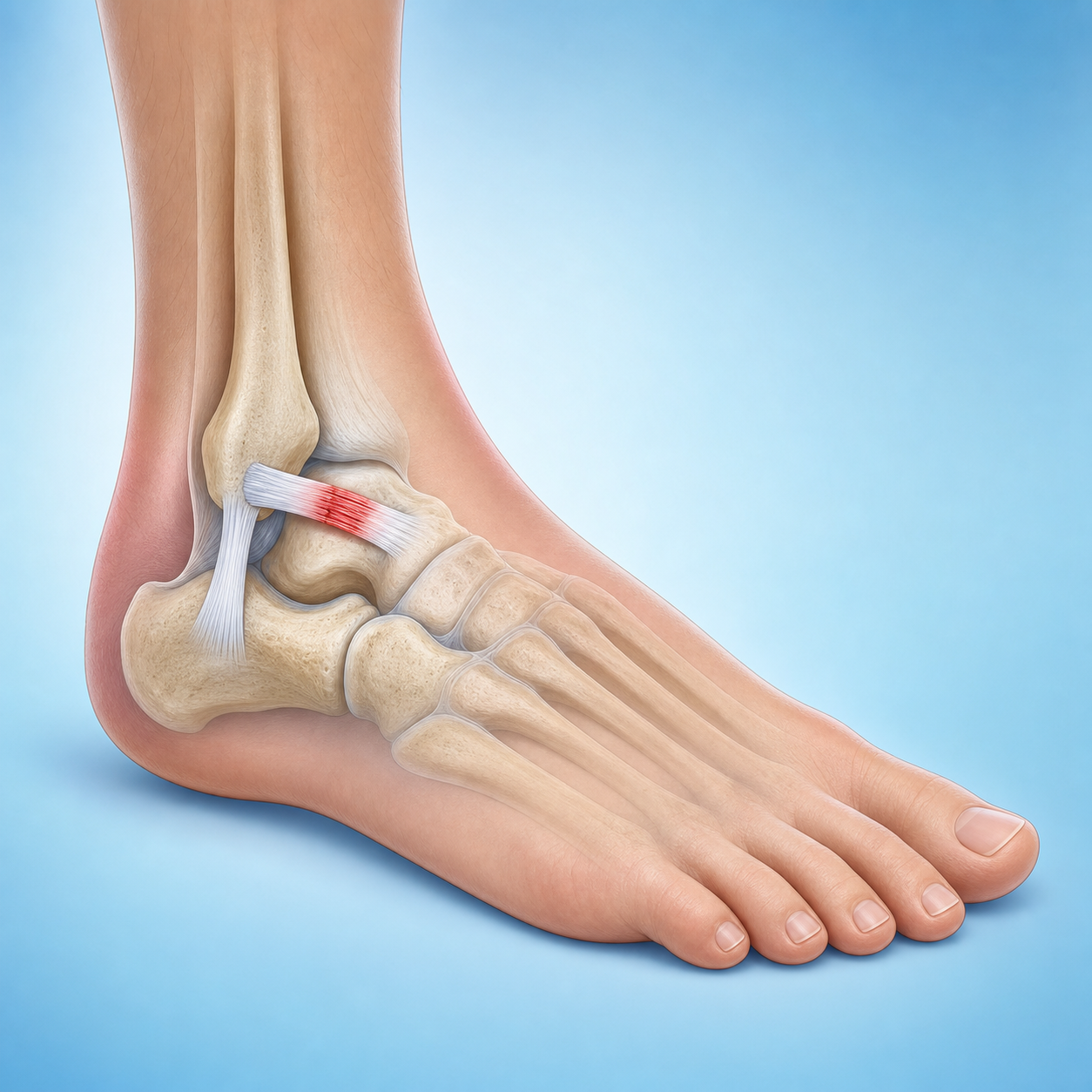
An ankle sprain is an injury to ankle ligaments and related soft tissues caused by excessive inversion, eversion, or rotation; lateral-ligament injury is most common. The disease entity includes the acute phase, recovery, and possible chronic instability. A specific recovery stage is a treatment-relationship condition, not part of the fixed disease name.
Common Symptoms
Recognizing Ankle sprain
Focus on the most useful decision cues first: common symptoms, the patients or situations that usually prompt review, and any signs that need faster assessment.
Common Symptoms
Signs patients often notice before evaluation
Ankle pain, swelling, or bruising after twisting
Pain with weight-bearing, walking, inversion, eversion, or rotation
Restricted ankle movement and localized tenderness
Inability to bear weight or marked instability in a more severe injury
Recurrent twisting, giving way, and reduced confidence after incomplete recovery
When to Seek Evaluation
Typical patients and situations that warrant review
Participants in ball sports, running and jumping, and change-of-direction sports
People with a previous ankle sprain or chronic ankle instability
People with poor balance, proprioception, or periankle muscle strength
People who walk or work on uneven ground
Inability to take consecutive weight-bearing steps or marked bony tenderness after a sprain
Increasing swelling and pain, deformity, or sensory or circulatory abnormality
Continued inability to walk normally after several days or suspected associated ligament or cartilage injury
Recurrent giving way or catching during recovery or no improvement after 3 months of rehabilitation
Urgent Assessment
Marked deformity, an open wound, a pale cold foot or loss of sensation, severe progressive pain, bony tenderness with inability to bear weight, suspected Achilles rupture, or marked calf swelling and pain requires timely emergency or orthopedic assessment. No local manual or invasive adjunctive treatment should be given before fracture, dislocation, vascular injury, and other major injury have been excluded.
Treatment Approaches
Treatment Directions for Ankle sprain
Use external support and progressive weight-bearing according to severity, with short-term immobilization for severe injury
Begin protected range-of-motion, stretching, strength, proprioception, and balance training early
Base return to work or sport on function and task requirements, not only the number of days
No recovery-phase adjunct can replace indicated bracing, structured rehabilitation, or treatment of associated injury
What usually shapes the treatment plan
Clinical Assessment
Key Assessments for Ankle sprain
These are the main areas doctors usually review first. If you already have relevant test or imaging reports, bring them to speed up the assessment. They are helpful but not required, and the same workup can also be completed in China.
Injury mechanism and timing, previous sprains, and immediate weight-bearing ability
Ottawa Ankle Rules and bony tenderness in the ankle and foot
Examination of lateral, medial, and syndesmotic ligaments, Achilles tendon, and peroneal tendons
Swelling, range of motion, and stability tests such as anterior drawer and talar tilt
Single-leg balance, hopping, gait, and functional measures such as FAAM or LEFS
Osteochondral and other associated injuries when persistent catching, deep pain, or instability is present
Before You Travel
How to Prepare
Record the injury mechanism and date, immediate weight-bearing, and changes in swelling
Bring X-ray, ultrasound, or MRI and the orthopedic or rehabilitation plan
List braces, analgesics, anticoagulants or antiplatelets, and previous ankle sprains
Do not force a reduction, deeply press the swollen area, or test running and jumping early on your own
Planning Notes
Pre-Assessment Required
First use the Ottawa Ankle Rules and clinical examination to determine imaging need and assess ligament severity and associated injuries. A recovery-phase adjunct is considered only after fracture, dislocation, complete rupture, and injuries requiring urgent surgery have been excluded or managed under a specialist plan, and clinical recovery training is appropriate.
Remote Pre-Assessment
Mechanism, weight-bearing, and warning signs can be collected remotely, but bony tenderness, stability, neurovascular status, and function require an in-person examination.
Multidisciplinary Assessment
Suspected syndesmotic injury, osteochondral lesion, complete rupture, recurrent instability, or high return-to-sport demands may require collaboration among foot and ankle surgery, sports medicine, and rehabilitation.
Medical History Important
Previous sprain or surgery, osteoporosis, diabetes or neuropathy, vascular disease, and anticoagulant treatment affect fracture risk, healing, and the safety of local or invasive procedures.
Ready to Explore Treatment for Ankle sprain?
Let Carevia help you connect with the right specialists, compare hospitals, and plan your medical trip to China.