Heat-sensitive moxibustion for bronchial asthma
A facility-based heat-sensitive moxibustion adjunct for a nonpregnant adult with chronic persistent asthma outside an acute exacerbation and a cold-pattern tendency, with cough and wheeze, aversion to cold and cold limbs, and worsening in cold air. A professional searches for heat-sensitive points around the Feishu-Geshu level or relevant anterior chest area, applies suspended moxibustion, and adjusts it to the heat-sensitive response and skin tolerance. A 2023 guideline gives grade C evidence and a strong recommendation, but included studies combined it with inhaled treatment; effects cannot be attributed independently or extrapolated to an acute exacerbation.
This plan is for a nonpregnant adult with chronic persistent asthma outside an acute exacerbation and a cold-pattern tendency, including cough and wheeze, aversion to cold and cold limbs, and worsening in cold air. A professional identifies heat-sensitive points around the Feishu-Geshu level or relevant anterior chest area, applies suspended moxibustion, and adjusts it to the response and skin tolerance. A qualified institution follows its standard operating procedures for products, equipment, and skin safety. Patient-replicable distance, duration, preparation, and stimulation parameters are not provided. It cannot replace asthma controller inhalers, a written action plan, or emergency treatment of an exacerbation. The 2023 guideline gives grade C evidence and a strong recommendation, but included research combined it with inhaled treatment, so effects cannot be attributed independently or extrapolated to acute exacerbation. Risks include burn, smoke-triggered bronchospasm, syncope, and fire. It should not routinely be performed with smoke sensitivity, sensory impairment, broken skin, or in an oxygen-use environment.
Quick Reference
Treatment
30 mins – 1 hours
Observation
1 days – 3 days
Department
Traditional Chinese Medicine Acupuncture and Moxibustion
Who Is This For
Is Heat-sensitive moxibustion for bronchial asthma Right for You?
Good Candidates
- Confirmed adult asthma with stable vital signs and no current acute breathlessness
- A nonpregnant adult with chronic persistent disease outside an acute exacerbation and a cold-pattern tendency with cough and wheeze, aversion to cold and cold limbs, and worsening in cold air
- Intact skin and sensation and understanding of potential local adverse reactions
- Understanding that this plan cannot replace asthma controller inhalers, a written action plan, or acute-exacerbation emergency care
May Not Be Suitable
- Current worsening wheeze, hypoxemia, restricted speech, a silent chest, or poor reliever response
- Infection, ulceration, marked dermatitis, sensory impairment, or an unassessed tendency to scar at the treatment area
- Pregnancy, severe allergy, fever, or a current acute exacerbation
Step-by-Step Process
How Heat-sensitive moxibustion for bronchial asthma Works
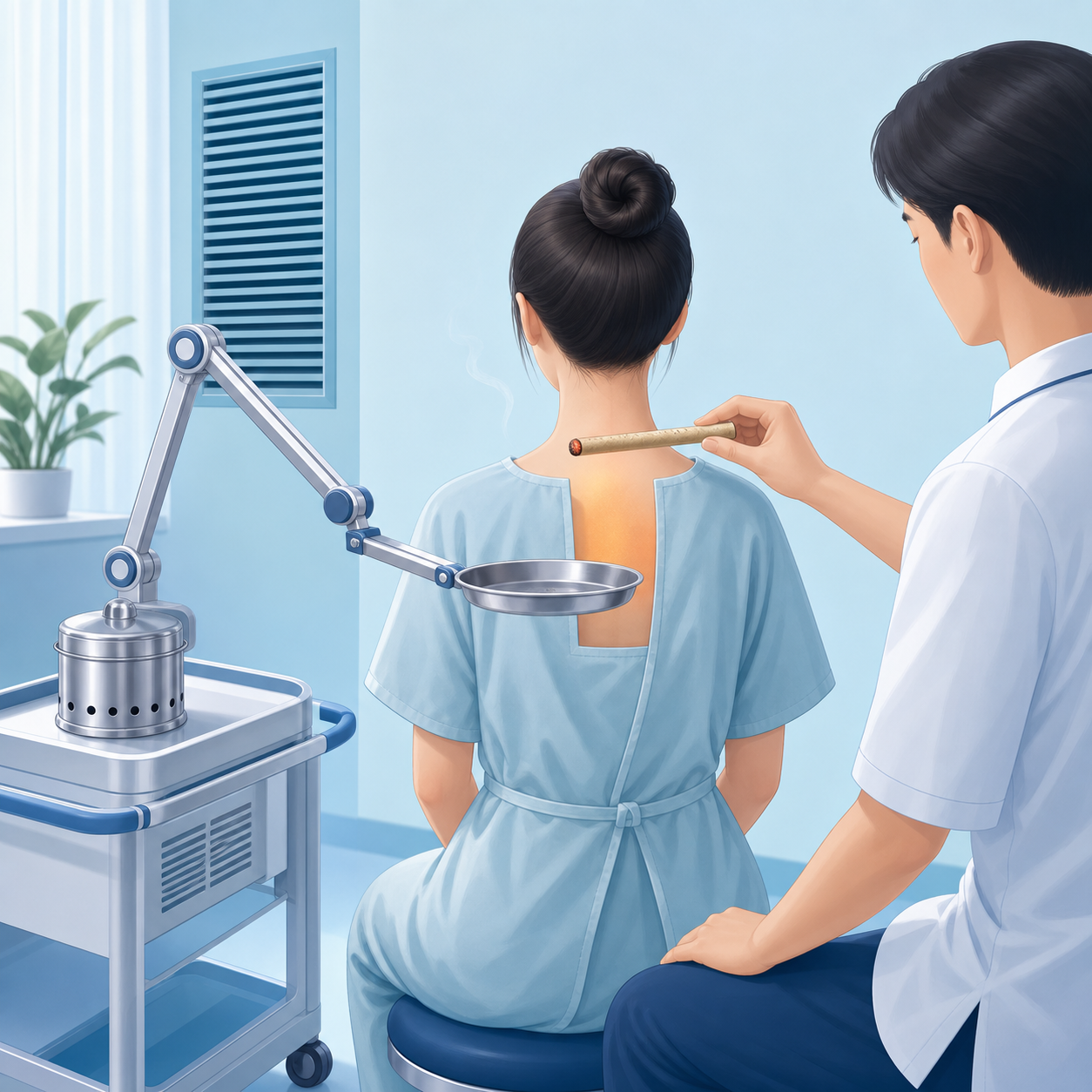
Confirm the applicable nonacute stage
Review asthma control, lung function, skin sensation, smoke sensitivity, and oxygen use and exclude current worsening wheeze, hypoxemia, restricted speech, a silent chest, or poor reliever response.
Verify skin and product safety
Check skin, sensation, and allergy history and verify products or equipment, batch, operator, and institutional standard operating procedures.
Perform according to the institutional protocol
A professional identifies heat-sensitive points around the Feishu-Geshu level or relevant anterior chest area, applies suspended moxibustion, and adjusts it according to the heat-sensitive response and skin tolerance. Monitor burning pain, wheeze, dizziness, and skin response continuously; do not seek blisters or intense stimulation.
Remove and follow up
Inspect local skin, record the actual area and response, and set symptom and functional reassessment points.
Frequency, season, and total course can be set only according to the specific guideline, institutional product, and patient tolerance. Re-screen skin and acute-exacerbation risk at every session.
Cost Information
Cost Estimate for Heat-sensitive moxibustion for bronchial asthma
What's Included
Actual costs should be understood as uninsured full self-pay for a person not resident in China in a standard outpatient clinic. They depend on the treatment area, session duration, techniques or materials used, number of sessions, and hospital billing method. Registration, tests, and combined treatments may be charged separately; the final cost is determined by the actual plan and the treating hospital's charges.
Before Your Visit
What to Prepare
Required Tests & Examinations
If you already have recent valid test results, bring the reports. If not, these assessments can usually be completed in China before the procedure.
Asthma control, lung function, skin sensation, smoke sensitivity, and oxygen use
Assessment of skin, sensation, allergy, pregnancy, and all medicine risks
Verification of the legal source of institutional moxa products or equipment and the standard operating procedure
Documents & Materials to Bring
Required to Bring
Disease stage and recent test information
All medicines and allergy and skin-disease history
Institution-approved or registered products or compliant equipment
Adverse-reaction management and informed-consent records
Companion & Support
Most adults can attend independently. A companion is advisable for first treatment, a severe allergy history, older age, or long-distance travel after treatment.
After Treatment
Recovery & Follow-Up
Mild, brief local redness may be observed. Persistent burning, blisters, ulceration, weeping, or infection requires prompt care.
Do not scratch, puncture a blister, or prolong exposure yourself.
Short-term improvement must not interrupt asthma controller inhalers, the written action plan, or acute-exacerbation emergency care.
Stop immediately if smoke or odor triggers cough or wheeze.
Follow-Up Schedule
Observe the local response after every session and review at 1 to 2 weeks. Stop and seek care immediately for marked blisters, ulceration, infection, persistent pain, worsening wheeze, or a systemic allergic reaction.
Related Conditions
Conditions This Procedure Treats
Ready to Plan Heat-sensitive moxibustion for bronchial asthma in China?
Let Carevia help you find the right hospital, coordinate your treatment, and arrange every detail of your medical trip.
Frequently Asked Questions
Need personalized guidance?
Our care coordinators can help you assess whether this procedure fits your situation.
Contact Us