Bronchial asthma
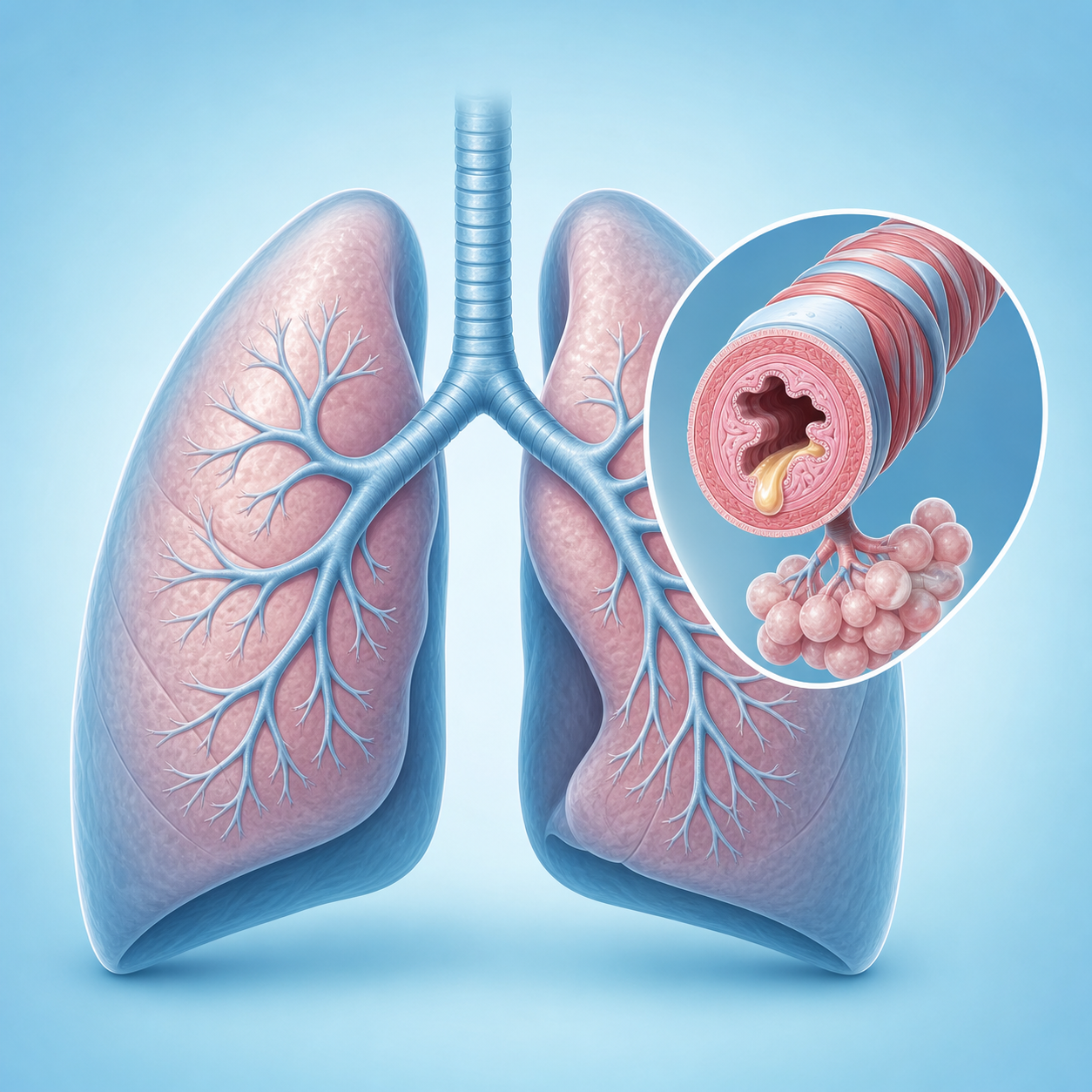
Bronchial asthma is a heterogeneous chronic airway disease characterized by wheeze, shortness of breath, chest tightness, and cough that vary over time and in intensity, together with variable expiratory airflow limitation. The disease entity includes acute exacerbation, chronic persistent disease, and clinical remission and cannot be excluded by a single symptom-free period or one normal lung-function test.
Common Symptoms
Recognizing Bronchial asthma
Focus on the most useful decision cues first: common symptoms, the patients or situations that usually prompt review, and any signs that need faster assessment.
Common Symptoms
Signs patients often notice before evaluation
Recurrent wheeze, shortness of breath, chest tightness, or cough
Symptoms that fluctuate over time and may worsen at night or early in the morning
Symptoms triggered by exercise, infection, allergens, cold air, or smoke
No symptoms or temporarily normal lung function between episodes
When to Seek Evaluation
Typical patients and situations that warrant review
People with a personal or family history of allergic disease
People of any age, with onset in childhood or adulthood
People exposed to occupational sensitizers, tobacco, air pollution, or recurrent viral infection
People with comorbid obesity, rhinitis or sinusitis, reflux, or sleep-disordered breathing
Recurrent wheeze, waking with cough at night, or breathlessness after exercise, requiring diagnostic confirmation
An established diagnosis with poor control, frequent reliever use, or an exacerbation during the past year
Planning pregnancy, travel, exercise, or a change of inhaler, requiring review of the action plan
Immediate emergency care when the person can speak only single words or cannot speak, uses accessory muscles markedly, is cyanotic or hypoxemic, is drowsy, or responds poorly to reliever treatment
Urgent Assessment
Marked breathlessness at rest, ability to speak only single words or inability to speak, marked accessory-muscle use, cyanosis or hypoxemia, a substantial fall in peak flow, poor response to reliever medicine, drowsiness or confusion, or markedly reduced breath sounds requires immediate emergency management as acute severe asthma.
Treatment Approaches
Treatment Directions for Bronchial asthma
Use an inhaled-corticosteroid-containing controller strategy and adjust it dynamically according to control and exacerbation risk
Teach correct inhaler technique, improve adherence, and provide a written action plan
Reduce tobacco, occupational sensitizers, and confirmed allergen exposure and manage related comorbidities
Select further treatment for severe or refractory disease after specialist phenotyping; manage an acute exacerbation through the emergency pathway
What usually shapes the treatment plan
Clinical Assessment
Key Assessments for Bronchial asthma
These are the main areas doctors usually review first. If you already have relevant test or imaging reports, bring them to speed up the assessment. They are helpful but not required, and the same workup can also be completed in China.
Pattern and triggers of variable symptoms, nighttime waking, activity limitation, and reliever use
Lung function before and after a bronchodilator, with a challenge test or peak-flow monitoring when needed
Exacerbations, emergency visits, hospitalizations, intubation, and systemic corticosteroid use during the past year
Inhaler technique, adherence, intensity of controller treatment, and a written action plan
Eosinophils, exhaled nitric oxide, and allergen relevance for phenotyping, not as stand-alone diagnostic tests
Comorbid or modifiable factors such as rhinitis or sinusitis, obesity, reflux, smoking, and occupational exposure
Before You Travel
How to Prepare
Bring raw lung-function curves and emergency and hospital records
Bring every current inhaler so that technique can be checked
Record daytime and nighttime symptoms, activity limitation, and reliever use over the past 4 weeks
Do not stop controller treatment on your own because symptoms have temporarily disappeared
Planning Notes
Pre-Assessment Required
Bring lung-function and peak-flow records, previous emergency and hospital information, and every inhaler. Diagnosis, control, and exacerbation risk must be established first; a current exacerbation is not a setting for routine comparison of chronic-disease plans.
Remote Pre-Assessment
Control questionnaires, peak flow, a video of inhaler technique, and the action plan can be reviewed remotely. Marked breathlessness, hypoxemia, restricted speech, drowsiness, or poor response to reliever medicine cannot be managed remotely.
Multidisciplinary Assessment
Uncertain diagnosis, severe refractory disease, occupational asthma, a complex allergic phenotype, or multisystem comorbidity may require collaborative assessment by respiratory, allergy, ENT, and other relevant specialties.
Medical History Important
A history of exacerbation or intubation, allergies, occupational exposure, smoking, nasal disease, pregnancy, and medicine-triggered symptoms directly affects risk stratification.
Ready to Explore Treatment for Bronchial asthma?
Let Carevia help you connect with the right specialists, compare hospitals, and plan your medical trip to China.