Surgical aortic valve replacement
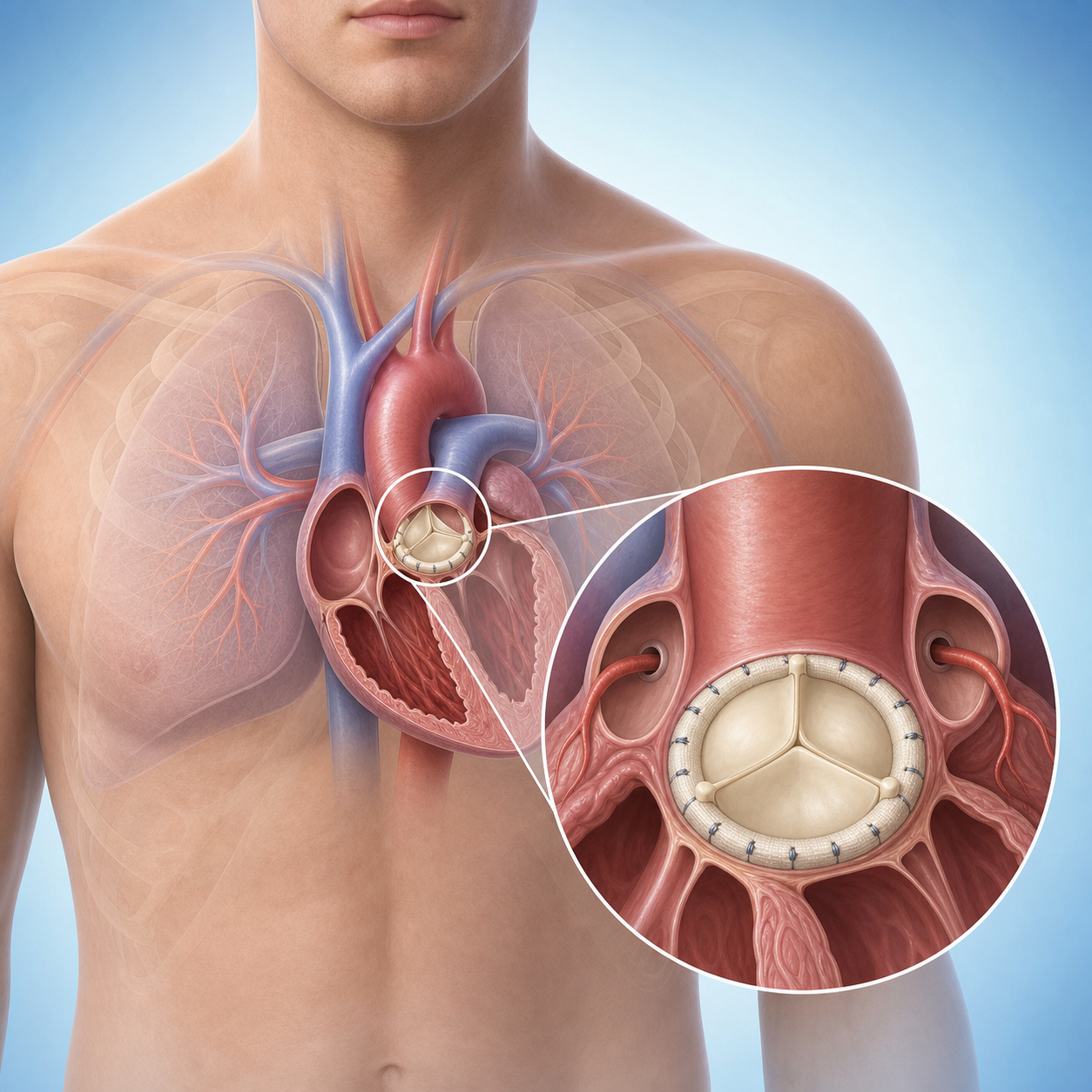
SAVR removes the diseased aortic valve through cardiac surgery and implants a mechanical or bioprosthetic valve. It can simultaneously address the aorta, coronary arteries, or another valve.
Surgical aortic valve replacement, or SAVR, removes the diseased valve with cardiac surgery and usually cardiopulmonary bypass and implants a prosthetic valve. Coronary artery bypass grafting, ascending-aortic surgery, or another valve operation can be performed at the same time when needed. A mechanical valve is generally more durable but requires lifelong warfarin anticoagulation. A bioprosthetic valve generally does not require lifelong warfarin solely because of the valve but degenerates and may need reintervention; another indication such as atrial fibrillation can still require anticoagulation. Selection between SAVR and transcatheter aortic valve implantation, or TAVI, and between valve types integrates age, life expectancy, anatomy, pregnancy plans, bleeding risk, and the lifetime coronary and reintervention strategy. Major risks include bleeding, stroke, infection, kidney or lung injury, atrial fibrillation, conduction abnormality, and death.
Quick Reference
Treatment
2 hours – 4 hours
Observation
0.3 months – 1.4 months
Department
Cardiothoracic Surgery
Who Is This For
Is Surgical aortic valve replacement Right for You?
Good Candidates
- A clear indication for valve intervention and acceptable surgical risk, especially in younger people, bicuspid anatomy or associated aortic disease, or a need for CABG or another cardiac operation.
- A situation in which long-term durability, future coronary access, or anatomy favors a surgical strategy over TAVI.
- A person willing to recover from sternotomy, attend long-term valve follow-up, and meet lifelong anticoagulation requirements for a mechanical valve or future reintervention needs for a bioprosthetic valve.
May Not Be Suitable
- No indication for valve intervention or unconfirmed disease severity.
- Extreme frailty, irreversible comorbidity, or surgical risk exceeding expected benefit requires valve-team reassessment of TAVI, supportive care, or care goals.
- Active infection, severe malnutrition, or a reversible organ problem should be optimized first while the team determines urgency.
Step-by-Step Process
How Surgical aortic valve replacement Works
Select the operation and valve type
The valve team confirms SAVR and any simultaneous coronary or aortic procedure and jointly selects a mechanical or bioprosthetic valve.
Remove and replace the diseased valve
With cardiac surgery and usually cardiopulmonary bypass, remove the diseased valve, implant the prosthesis, and check its function.
Monitor and begin early recovery
Monitor bleeding, neurologic, kidney, lung, and rhythm complications and progress through extubation, mobility, incision care, and confirmation of the antithrombotic plan before discharge.
Manage anticoagulation and monitor the valve long term
Manage anticoagulation and infection prevention according to valve type, complete cardiac rehabilitation, and follow prosthetic function and other aortic disease clinically and by echocardiography.
Intensive care and inpatient treatment are usually required, with sternal and physical recovery over weeks to months. Mechanical and bioprosthetic valves both require lifelong follow-up.
Cost Information
Cost Estimate for Surgical aortic valve replacement
What's Included
Costs are quoted in Chinese yuan (RMB). For full self-payment without Chinese medical insurance, first specify mechanical or bioprosthetic valve, brand, and size. Itemize the valve, surgery, anesthesia, cardiopulmonary bypass, intensive care, ward stay, transfusion, medicines, and rehabilitation. Long-term anticoagulation monitoring, complications, and prolonged admission should be described separately.
Before Your Visit
What to Prepare
Required Tests & Examinations
If you already have recent valid test results, bring the reports. If not, these assessments can usually be completed in China before the procedure.
Detailed echocardiography, coronary and aortic assessment, CT or other valve imaging as needed, and selection of a mechanical or bioprosthetic strategy.
Blood count, kidney and liver function, coagulation and blood preparation, infection and dental status, pulmonary function, frailty, anesthesia, and intensive-care assessment.
Discuss pregnancy and anticoagulation with people of childbearing potential, durability with younger people, and actual functional benefit after SAVR versus TAVI with older people.
Documents & Materials to Bring
Required to Bring
Original echocardiography, coronary and aortic imaging, and records of previous chest or cardiac surgery.
All medicines and allergies, antithrombotic and bleeding history, pregnancy plans, activity goals, and preferences regarding lifelong anticoagulation and reintervention.
A written comparison of mechanical and bioprosthetic valves, planned model and follow-up requirements, and preferences regarding lifelong anticoagulation, further surgery, and lifestyle effects.
Companion & Support
A responsible adult should accompany the patient for the procedure or discharge and early recovery; follow local transport, driving, and overnight-supervision rules.
After Treatment
Recovery & Follow-Up
Protect the sternum, increase activity gradually, and attend cardiac rehabilitation as directed. A mechanical valve treated with warfarin requires stable monitoring of the international normalized ratio, or INR.
Every prosthetic valve can develop infection, thrombosis, degeneration, or dysfunction. Keep valve information and attend planned reviews.
Abnormal bleeding or neurologic symptoms with a mechanical valve, or new breathlessness or heart-failure symptoms with a bioprosthetic valve, requires prompt assessment. Do not adjust warfarin yourself.
Follow-Up Schedule
Review the incision, rhythm, anticoagulation, and echocardiography early, followed by long-term valve follow-up. Chest pain or breathlessness, syncope, neurologic symptoms, fever, or bleeding requires urgent assessment.
Related Conditions
Conditions This Procedure Treats
Ready to Plan Surgical aortic valve replacement in China?
Let Carevia help you find the right hospital, coordinate your treatment, and arrange every detail of your medical trip.
Frequently Asked Questions
Need personalized guidance?
Our care coordinators can help you assess whether this procedure fits your situation.
Contact Us