Sublingual Gland Excision
The sublingual gland and related cyst are treated through an intraoral approach, an important method for reducing recurrence risk of ranula.
Sublingual gland excision is an important procedure for treating sublingual gland cysts, commonly called ranula, especially recurrent, large, or plunging lesions. The sublingual gland lies deep to the sublingual fold in the floor of the mouth. Duct obstruction or injury can cause mucus leakage and cyst formation. Simple aspiration or cyst wall treatment alone has a high recurrence rate, so the related sublingual gland often needs treatment to reduce recurrence. Surgery is mostly performed through an intraoral sublingual incision. Anesthesia depends on lesion extent, age, and cooperation. Precise dissection is needed to avoid injury to the lingual nerve and submandibular duct.
Quick Reference
Treatment
1 hours – 2 hours
Observation
1 days – 2 days
Est. Cost
$1,200 – $2,200
Department
Oral and Maxillofacial Surgery
Who Is This For
Is Sublingual Gland Excision Right for You?
Good Candidates
- Ranula or sublingual gland cyst
- Chronic sublingual gland inflammation ineffective with conservative treatment
- Benign sublingual gland tumor
May Not Be Suitable
- Uncontrolled acute inflammation
- General condition unable to tolerate anesthesia and surgery
Step-by-Step Process
How Sublingual Gland Excision Works
Preoperative Preparation
Local or general anesthesia is selected according to lesion extent and patient condition. Prophylactic antibiotics are decided according to infection risk and perioperative protocols.
Surgical Procedure
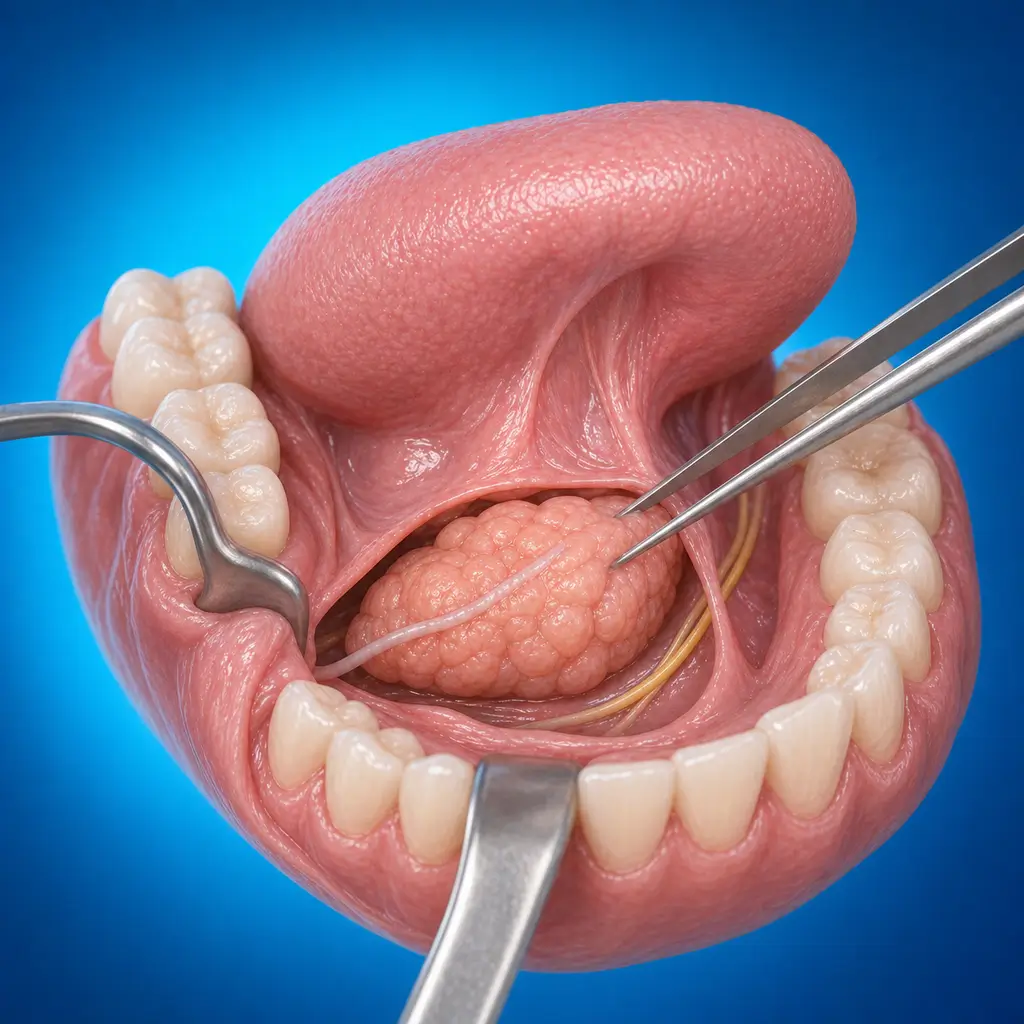
A longitudinal incision about 2-3 cm long is made lateral to the sublingual fold, medial to the submandibular duct and lingual nerve. Blunt dissection is used around the gland to fully expose the sublingual gland. Two key structures must be carefully identified and protected: the lingual nerve, which supplies sensation and taste to the ipsilateral tongue, and the submandibular duct, which drains saliva from the submandibular gland. The sublingual gland is completely excised. If the cyst is large, its fluid may be aspirated at the same time, but complete peeling of the cyst wall is not required.
Hemostasis and Suturing
After thorough hemostasis, the intraoral incision is closed with interrupted absorbable sutures.
Usually completed in one surgery, with postoperative observation in hospital for about 1-2 days and suture removal or wound review in 7-10 days.
Cost Information
Cost Estimate for Sublingual Gland Excision
Estimated Price Range
$1,200 – $2,200
What's Included
General anesthesia, inpatient tests, imaging examinations, sublingual gland excision, and postoperative care.
Before Your Visit
What to Prepare
Required Tests & Examinations
If you already have recent valid test results, bring the reports. If not, these assessments can usually be completed in China before the procedure.
Clinical oral examination: sublingual floor-of-mouth swelling, shallow blue and soft cyst
Imaging: ultrasound or CT to assess cyst extent and relationship to the sublingual gland, submandibular gland, and surrounding structures
Puncture: aspiration of egg-white-like viscous fluid can support diagnosis
Routine preoperative tests
Documents & Materials to Bring
Required to Bring
Recent oral or maxillofacial imaging, such as X-ray, CBCT, CT, or MRI if available
Previous dental or maxillofacial treatment records
Medication allergy history
General medical history
Current medication list, especially anticoagulants, diabetes medications, antihypertensives, or immunosuppressants
Recent preoperative test results such as complete blood count, coagulation function, blood glucose, or ECG if completed
Companion & Support
An adult companion is recommended for postoperative pickup and observation. For general anesthesia, sedation, larger procedures, child patients, or patients with limited mobility, arrange accompaniment according to hospital requirements.
After Treatment
Recovery & Follow-Up
Apply cold compresses within 24 hours after surgery to reduce swelling.
Eat warm or cool liquid or semi-liquid food for 1 week after surgery, avoiding very hot or spicy food.
Rinse with chlorhexidine mouthwash after meals to keep the mouth clean.
Avoid strenuous exercise for 1 week after surgery.
Follow-Up Schedule
Review wound healing 1 week after surgery. Review at 3 months and 6 months after surgery to assess recurrence.
Related Conditions
Conditions This Procedure Treats
Ready to Plan Sublingual Gland Excision in China?
Let Carevia help you find the right hospital, coordinate your treatment, and arrange every detail of your medical trip.
Frequently Asked Questions
Need personalized guidance?
Our care coordinators can help you assess whether this procedure fits your situation.
Contact Us