Subgingival Scaling and Root Planing
Subgingival calculus and contaminated root surfaces inside periodontal pockets are removed. This is a core step of basic periodontal therapy.
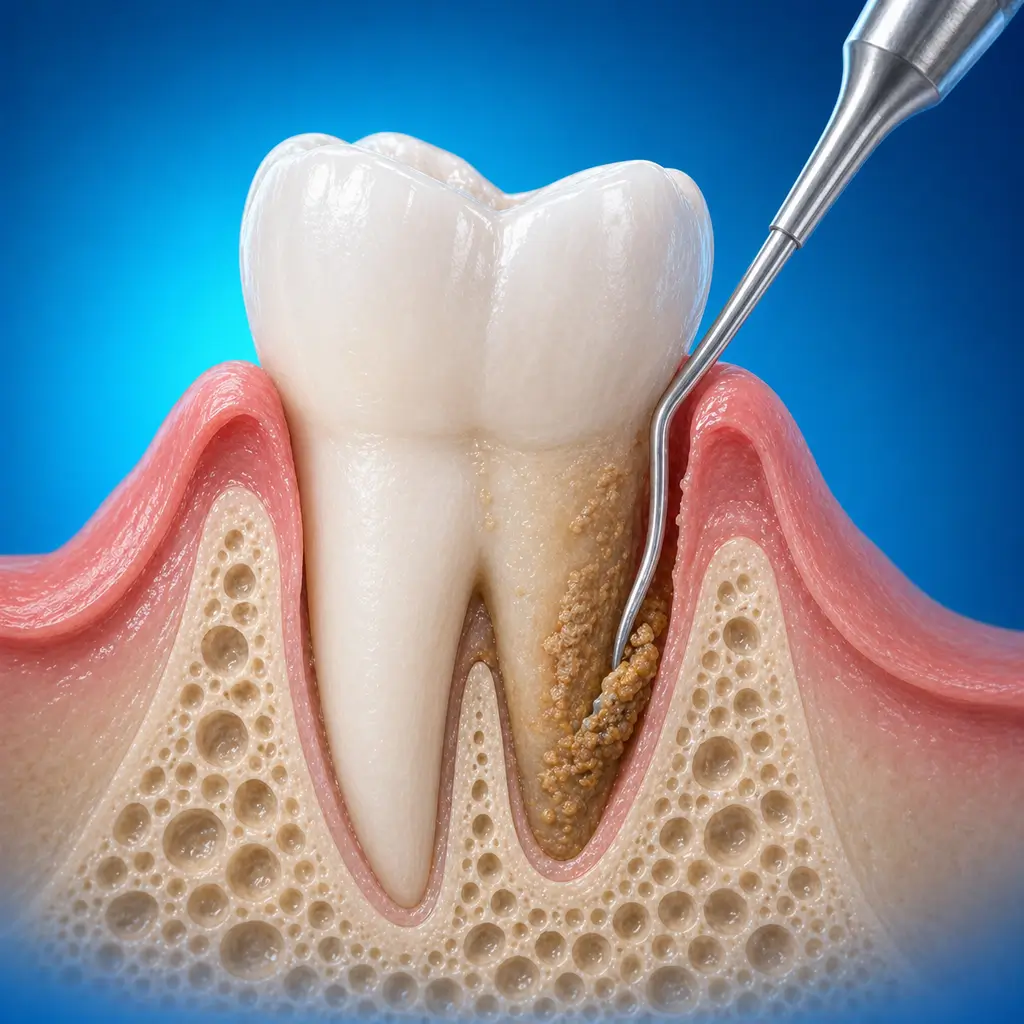
Subgingival scaling and root planing is used for patients with periodontitis. Hand or ultrasonic instruments remove subgingival calculus, plaque, and contaminated diseased root surface material from periodontal pockets, making the root surface more favorable for periodontal tissue healing. Treatment is usually performed by quadrant or region and may be combined with local anesthesia. After treatment, probing depth, bleeding index, and oral hygiene control need reassessment. If deep periodontal pockets remain, periodontal surgery or long-term maintenance may be required.
Quick Reference
Treatment
1 hours – 2 hours
Observation
0 mins – 1 days
Est. Cost
$300 – $600
Department
Periodontology
Who Is This For
Is Subgingival Scaling and Root Planing Right for You?
Good Candidates
- Persistent gingival redness, swelling, bleeding, bad breath, and periodontal pockets with probing depth greater than 3 mm
- Basic treatment for moderate to severe periodontitis
May Not Be Suitable
- Patients with cardiac pacemakers should not receive ultrasonic scaling
- Patients with acute infectious diseases such as active hepatitis or tuberculosis
- Blood diseases such as thrombocytopenia or leukemia
- Uncontrolled diabetes
- Acute inflammation of oral soft tissue or malignant tumors of the gingiva
- Active angina, recent myocardial infarction, or uncontrolled hypertension
Step-by-Step Process
How Subgingival Scaling and Root Planing Works
Preoperative Preparation
Intraoral disinfection is performed. The patient rinses with an appropriate mouthwash as instructed, such as chlorhexidine, and local anesthesia is provided in the scaling area.
Remove Calculus and Plaque
Scaling instruments are inserted into the periodontal pocket to gently and thoroughly remove calculus and plaque from the root surface and plane the root surface until smooth.
Irrigation and Cleaning
After scaling, saline or another irrigant is used to flush away calculus debris. Anti-inflammatory medication such as iodine glycerin may be applied locally inside the periodontal pocket when needed.
Full-mouth scaling usually requires 2-4 visits, with about 1-2 weeks between visits.
Cost Information
Cost Estimate for Subgingival Scaling and Root Planing
Estimated Price Range
$300 – $600
What's Included
Fees usually include local anesthesia, subgingival scaling/root planing, and necessary irrigation and medication.
Before Your Visit
What to Prepare
Required Tests & Examinations
If you already have recent valid test results, bring the reports. If not, these assessments can usually be completed in China before the procedure.
Comprehensive periodontal examination to rule out contraindications
Documents & Materials to Bring
Required to Bring
Recent periodontal examination records, such as periodontal pocket depth, bleeding index, and tooth mobility if available
Recent dental imaging, such as periapical radiographs, panoramic radiographs, or CBCT if available
Previous periodontal treatment records
General medical history, especially diabetes or immunosuppression-related information
Current medication list, especially anticoagulants
Medication allergy history
Companion & Support
A dedicated companion is usually not needed. For children, older adults, pregnancy, underlying medical conditions, or when treatment may affect eating or travel afterward, having a family member accompany the patient is recommended.
After Treatment
Recovery & Follow-Up
Short-term tooth sensitivity or gingival bleeding may occur after cleaning and usually disappears gradually within 1-2 weeks. Desensitizing toothpaste can help.
Avoid very hot, very cold, or acidic foods for 24 hours. Normal brushing can resume the next day.
Follow-Up Schedule
Review 4-6 weeks after completion of the first treatment phase to assess effectiveness. Thereafter, regular follow-up and maintenance are performed every 3-6 months.
Ready to Plan Subgingival Scaling and Root Planing in China?
Let Carevia help you find the right hospital, coordinate your treatment, and arrange every detail of your medical trip.
Frequently Asked Questions
Need personalized guidance?
Our care coordinators can help you assess whether this procedure fits your situation.
Contact Us