Pericoronal Pocket Irrigation and Medication
The wisdom tooth pericoronal pocket is cleaned and medicated locally, mainly to reduce inflammation, relieve pain, and control infection in acute pericoronitis.
Pericoronal pocket irrigation and medication is a common local treatment during the acute phase of wisdom tooth pericoronitis. Food debris, purulent discharge, and plaque are flushed from the pocket to reduce the local bacterial load, and local medication may be placed as appropriate. This treatment mainly relieves acute inflammation and pain; it does not solve the underlying cause of impacted wisdom teeth or recurrent pocket infection. After inflammation is controlled, the wisdom tooth position should be reviewed to assess whether extraction or operculectomy is needed.
Quick Reference
Treatment
10 mins – 15 mins
Observation
1 days – 3 days
Est. Cost
$3 – $7
Department
Oral and Maxillofacial Surgery
Who Is This For
Is Pericoronal Pocket Irrigation and Medication Right for You?
Good Candidates
- Early acute pericoronitis without abscess formation or with only slight exudate
- Mild limitation of mouth opening, allowing irrigation instruments to be inserted
- Patients who refuse extraction or are temporarily unsuitable for extraction, such as early pregnancy or uncontrolled severe systemic disease
- Preoperative preparation before extraction
May Not Be Suitable
- Obvious abscess formation
- Diffuse cellulitis or fascial space infection
- Allergy to irrigation medications
- Severely limited mouth opening that prevents the procedure
Step-by-Step Process
How Pericoronal Pocket Irrigation and Medication Works
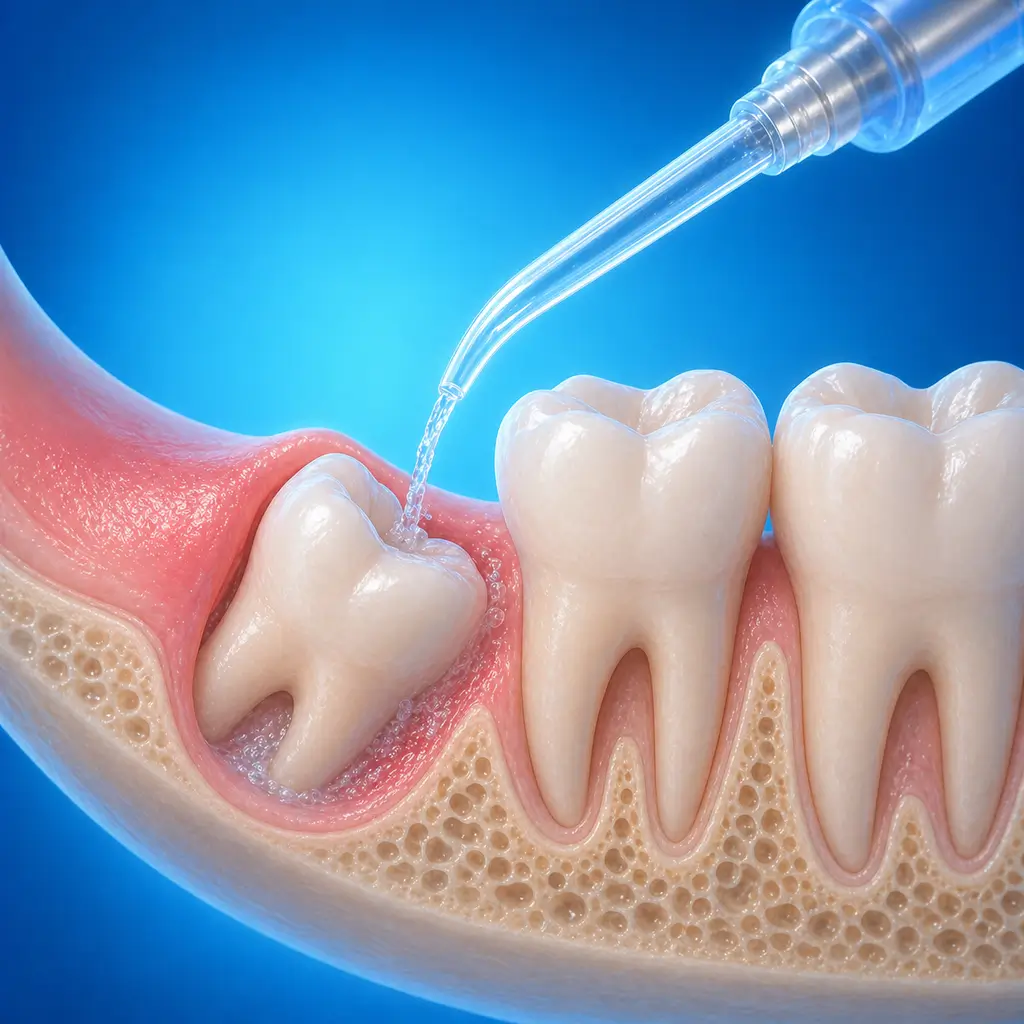
Positioning and Exposure
The patient sits or reclines semi-supine. The dentist exposes the pericoronal pocket around the wisdom tooth and assesses redness, swelling, pus, and the degree of limited mouth opening.
Pocket Irrigation
A blunt irrigation tip is inserted into the pocket, and food debris, plaque, and purulent discharge are repeatedly flushed until the outflow is mostly clear.
Local Medication
Appropriate local medication is placed according to the inflammation, and the patient is told to avoid rinsing, eating, or drinking immediately afterward for a short period.
Medication Assessment and Follow-up
The dentist decides whether systemic anti-infective treatment is needed based on fever, extent of swelling, limited mouth opening, allergy history, and overall health. After inflammation is controlled, the wisdom tooth should be reassessed for retention or removal.
During the acute phase, local irrigation and medication may be performed according to inflammation severity, often requiring several follow-up visits until pain, swelling, and pus discharge clearly improve. After inflammation is controlled, the wisdom tooth position and cause of the pocket should be assessed. Recurrent cases usually require wisdom tooth extraction or operculectomy rather than long-term irrigation at a fixed frequency.
Cost Information
Cost Estimate for Pericoronal Pocket Irrigation and Medication
Estimated Price Range
$3 – $7
What's Included
Fees usually include local irrigation, medication, and necessary follow-up management. Imaging, systemic anti-infective treatment, or subsequent wisdom tooth extraction is charged separately.
Before Your Visit
What to Prepare
Required Tests & Examinations
If you already have recent valid test results, bring the reports. If not, these assessments can usually be completed in China before the procedure.
Dental specialty examination to assess mouth opening, pocket depth, and abscess presence
Complete blood count when needed to assess infection severity and whether systemic antibiotics are required
Documents & Materials to Bring
Required to Bring
Previous wisdom tooth or dental X-ray, panoramic radiograph, or CBCT if available
Medication allergy history, especially allergies to iodine preparations, hydrogen peroxide, or antibiotics
General medical history
Current medication list
Pregnancy, pregnancy planning, or breastfeeding status if applicable
Companion & Support
A dedicated companion is usually not needed. For children, older adults, pregnancy, underlying medical conditions, or when treatment may affect eating or travel afterward, having a family member accompany the patient is recommended.
After Treatment
Recovery & Follow-Up
Eat a light diet
Maintain oral hygiene
Attend regular follow-up
Follow-Up Schedule
During the acute phase, review is usually needed 2-3 days after treatment. Seek care immediately if limited mouth opening, fever, facial swelling, or swallowing difficulty worsens.
Ready to Plan Pericoronal Pocket Irrigation and Medication in China?
Let Carevia help you find the right hospital, coordinate your treatment, and arrange every detail of your medical trip.
Frequently Asked Questions
Need personalized guidance?
Our care coordinators can help you assess whether this procedure fits your situation.
Contact Us