Parotid Lesion Excision
Parotid lesions are removed while preserving facial nerve function as much as possible. This is an important treatment for parotid tumors and some parotid space-occupying lesions.
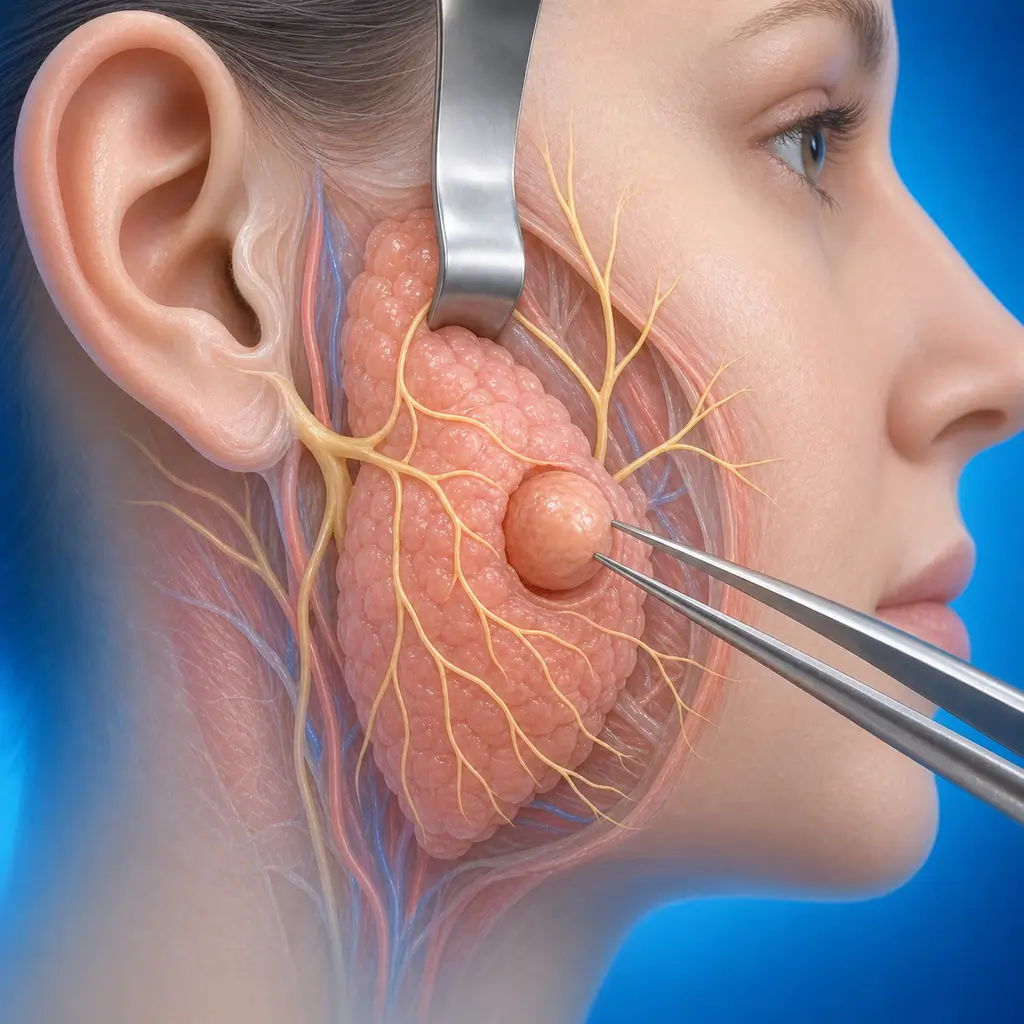
Parotid lesion excision is used to treat benign parotid tumors, suspected malignant tumors, or other lesions that require surgery to clarify their nature. Branches of the facial nerve pass through the parotid gland, so the key to surgery is complete lesion management while protecting facial nerve function as much as possible. The specific extent depends on tumor location, size, imaging boundaries, preoperative aspiration or pathology results, and whether the deep lobe, skin, facial nerve, or cervical lymph nodes are involved.
Quick Reference
Treatment
1 hours – 3 hours
Observation
3 days – 0.2 months
Est. Cost
$2,900 – $5,900
Department
Oral and Maxillofacial Surgery
Who Is This For
Is Parotid Lesion Excision Right for You?
Good Candidates
- Benign or malignant parotid tumors
- Parotid cysts or chronic parotitis ineffective with conservative treatment
- Recurrent parotid tumor
May Not Be Suitable
- Uncontrolled acute inflammation, which requires anti-infective treatment first
- General condition unable to tolerate anesthesia and surgery
- Tumor extensively invading surrounding important structures and not resectable
Step-by-Step Process
How Parotid Lesion Excision Works
Preoperative Assessment
Physical examination, salivary gland ultrasound, contrast-enhanced CT or MRI, fine-needle aspiration, or pathology results are combined to determine lesion location, benign or malignant risk, and relationship to the facial nerve.
Incision and Exposure
Under general anesthesia, a preauricular and submandibular incision is designed, a skin flap is elevated, the parotid lesion area is exposed, and facial nerve anatomical landmarks are identified.
Lesion Excision
The mass and necessary gland tissue are removed according to lesion nature and extent. If malignancy is suspected or surrounding structures are involved, expanded evaluation and management according to oncologic principles are needed.
Hemostasis, Drainage, and Suturing
After thorough hemostasis, negative-pressure drainage or a drain is placed, the incision is closed in layers, and facial nerve function, bleeding, and salivary fistula risk are observed.
Usually completed in one surgery, with postoperative observation in hospital for about 3-4 days. If pathology suggests malignancy or higher recurrence risk, further treatment and long-term follow-up are arranged according to stage.
Cost Information
Cost Estimate for Parotid Lesion Excision
Estimated Price Range
$2,900 – $5,900
What's Included
General anesthesia, inpatient tests, imaging examinations, parotid lesion excision, higher fees if endoscopic surgery is used, and postoperative care.
Before Your Visit
What to Prepare
Required Tests & Examinations
If you already have recent valid test results, bring the reports. If not, these assessments can usually be completed in China before the procedure.
Oral and maxillofacial clinical examination: palpate mass location, size, texture, and mobility; assess facial nerve function including eye closure, cheek puffing, showing teeth, and eyebrow elevation
Imaging: ultrasound, CT, or MRI to assess lesion extent and relationship to the facial nerve and surrounding structures
Fine-needle aspiration cytology when needed to judge lesion nature before surgery
Complete blood count, coagulation function, infectious disease screening, and ECG
Documents & Materials to Bring
Required to Bring
Recent salivary gland ultrasound, contrast-enhanced CT, or MRI images
Fine-needle aspiration, core biopsy, or previous pathology report if available
Previous head and neck surgery, radiotherapy, or salivary gland treatment records if available
General medical history
Medication allergy history
Current medication list
Recent preoperative test results if completed
Companion & Support
An adult companion is recommended for postoperative pickup and observation. For general anesthesia, sedation, larger procedures, child patients, or patients with limited mobility, arrange accompaniment according to hospital requirements.
After Treatment
Recovery & Follow-Up
Apply ice within 24 hours after surgery to reduce swelling.
Eat warm or cool liquid or semi-liquid food for 1 week after surgery, avoiding very hot, spicy, or acidic foods, because acidic foods stimulate saliva secretion and may affect wound healing.
Keep the incision dry and avoid water contact for 24-48 hours after surgery.
Avoid strenuous exercise for 1 week after surgery.
Return promptly if fever, incision redness or drainage, mouth-corner deviation, difficulty closing the eye, or other abnormalities occur.
Follow-Up Schedule
Suture removal and review 7 days after surgery. Review facial nerve function 1 month after surgery. Benign tumors are reviewed every 6-12 months; malignant tumors require long-term follow-up as instructed.
Related Conditions
Conditions This Procedure Treats
Ready to Plan Parotid Lesion Excision in China?
Let Carevia help you find the right hospital, coordinate your treatment, and arrange every detail of your medical trip.
Frequently Asked Questions
Need personalized guidance?
Our care coordinators can help you assess whether this procedure fits your situation.
Contact Us