Wisdom Tooth Operculectomy
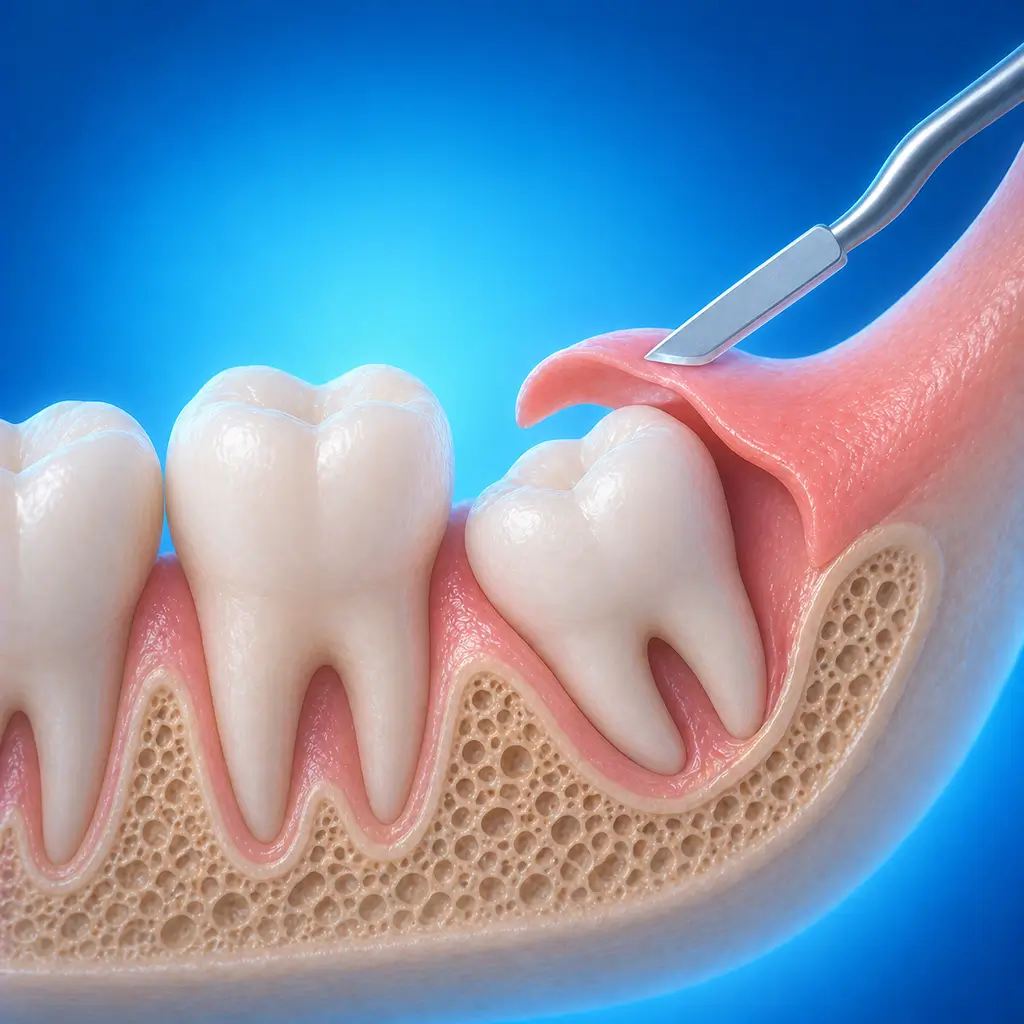
The pericoronal gingival flap that repeatedly traps debris is removed. It is suitable for partially erupted wisdom teeth in favorable position and does not replace extraction of impacted wisdom teeth.
Wisdom tooth operculectomy removes excess gingival tissue covering a partially erupted wisdom tooth to reduce food and plaque retention. It is suitable for patients whose wisdom tooth is basically in a normal position, has enough eruption space, and causes recurrent mild to moderate pericoronitis. If the wisdom tooth is clearly impacted, malpositioned, damaging the adjacent tooth, or lacks eruption space, removing the flap alone usually cannot cure the problem, and wisdom tooth extraction is usually more appropriate. Intraoral examination and imaging are needed before surgery to confirm the indication.
Quick Reference
Treatment
30 mins – 1 hours
Observation
0 mins – 1 days
Est. Cost
$74 – $100
Department
Oral and Maxillofacial Surgery
Who Is This For
Is Wisdom Tooth Operculectomy Right for You?
Good Candidates
- Wisdom teeth with normal eruption position, enough eruption space, ability to establish normal occlusion with the opposing tooth, and recurrent pericoronitis
May Not Be Suitable
- Impacted wisdom tooth, insufficient eruption space, or malposition
- Uncontrolled acute inflammation
- Severe coagulation disorder
- No opposing tooth on the other arch
Step-by-Step Process
How Wisdom Tooth Operculectomy Works
Disinfection and Incision Marking
Before surgery, the patient rinses with 0.12% chlorhexidine to clean the mouth. A periodontal probe is used to explore the gingival pocket and mark the incision position.
Anesthesia
Local infiltration or block anesthesia is performed with articaine containing epinephrine to ensure the gingiva and surrounding tissues are fully numb.
Excision
Along the crown margin of the wisdom tooth, the gingiva is incised to the bone using a scalpel, electrosurgical knife, or laser, and the flap tissue covering the crown is completely removed to fully expose the crown.
Hemostasis and Management
The wound is irrigated with saline, hemostasis is achieved by gauze pressure or electrocautery, and the wound is covered with periodontal dressing or closed with interrupted sutures.
Usually a single outpatient surgery. It should be performed after acute pericoronal inflammation is basically controlled and the indication is clear. Dressing change, suture removal, and later evaluation of wisdom tooth retention or extraction are arranged according to wound healing.
Cost Information
Cost Estimate for Wisdom Tooth Operculectomy
Estimated Price Range
$74 – $100
What's Included
Local anesthesia, surgical excision, additional laser surgery fees if used, and suturing.
Before Your Visit
What to Prepare
Required Tests & Examinations
If you already have recent valid test results, bring the reports. If not, these assessments can usually be completed in China before the procedure.
Clinical examination to confirm wisdom tooth eruption position and occlusal relationship
X-ray, dental film, or panoramic radiograph to assess wisdom tooth angulation, space, and periapical lesions
Documents & Materials to Bring
Required to Bring
Recent wisdom tooth imaging, such as panoramic radiograph or CBCT if available
Previous pericoronitis episodes and treatment records, such as irrigation, medication, or incision and drainage if available
Medication allergy history
General medical history, especially hypertension, diabetes, or abnormal coagulation
Current medication list
Companion & Support
A dedicated companion is usually not needed. For children, older adults, pregnancy, underlying medical conditions, or when treatment may affect eating or travel afterward, having a family member accompany the patient is recommended.
After Treatment
Recovery & Follow-Up
Two hours after surgery, warm or cool liquid food may be eaten. Avoid very hot, hard, or spicy food for 24-48 hours and do not chew on the treated side.
Brush and rinse after 24 hours to maintain oral hygiene, but avoid forceful brushing that irritates the wound.
Do not lick or suck the wound.
Follow-Up Schedule
Review and dressing change about 3 days after surgery; remove sutures in 10-14 days. Return earlier if persistent bleeding, worsening swelling or pain, fever, limited mouth opening, or swallowing discomfort occurs.
Ready to Plan Wisdom Tooth Operculectomy in China?
Let Carevia help you find the right hospital, coordinate your treatment, and arrange every detail of your medical trip.
Frequently Asked Questions
Need personalized guidance?
Our care coordinators can help you assess whether this procedure fits your situation.
Contact Us