Micro-Invasive Glaucoma Surgery (MIGS)
For appropriate mild-to-moderate open-angle glaucoma, this category of surgery improves aqueous drainage through small incisions or micro-devices with relatively low tissue trauma and fast recovery.
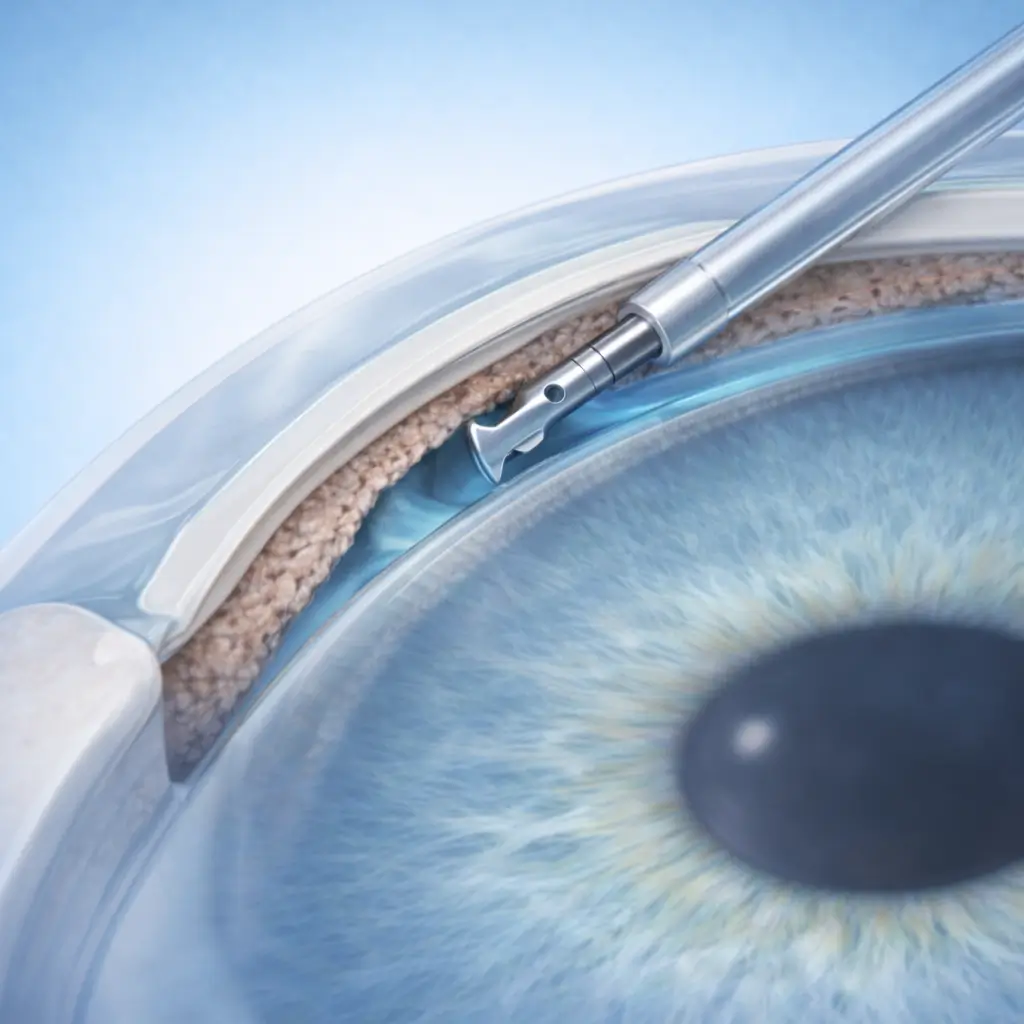
Micro-invasive glaucoma surgery (MIGS) is a category of procedures for selected mild-to-moderate open-angle glaucoma. It includes angle-based microincisional techniques as well as some implant-assisted approaches designed to improve aqueous outflow with less tissue trauma than traditional filtration surgery. Its advantages are faster recovery and generally fewer complications, but IOP reduction is usually more modest (often around 20-30%) and it is not suitable for every glaucoma type. In practice, MIGS is often considered for mild-to-moderate open-angle glaucoma, especially when combined with cataract surgery. The specific technique depends on angle anatomy, target IOP, prior treatment response, and local availability.
Quick Reference
Treatment
15 mins – 30 mins
Observation
1 days – 2 days
Est. Cost
$2,900 – $8,100
Department
Ophthalmology
Who Is This For
Is Micro-Invasive Glaucoma Surgery (MIGS) Right for You?
Good Candidates
- Mild to moderate open-angle glaucoma
- Those wishing to reduce IOP medication burden
- Combined with cataract surgery for concurrent IOP lowering
- Patients intolerant to medications or with inadequate laser response
May Not Be Suitable
- Advanced severe glaucoma (needs stronger IOP reduction)
- Angle-closure glaucoma (angle anatomy unsuitable)
- Neovascular glaucoma
- Severe peripheral anterior synechiae
Step-by-Step Process
How Micro-Invasive Glaucoma Surgery (MIGS) Works
Anesthesia
Topical or local anesthesia.
Corneal incision
Enter the anterior chamber through a clear corneal micro-incision.
Gonioscopic guidance
Use a surgical goniolens for direct visualization of the angle structures.
Perform the angle-based microinvasive procedure
Depending on the chosen technique, the surgeon performs angle incision, tissue excision, or placement of a micro-drainage device to enhance aqueous outflow.
Position confirmation
Confirm satisfactory operative status and a stable anterior chamber, then irrigate the incision.
Single procedure, often combined with cataract surgery, adding approximately 10-15 minutes to total time.
Cost Information
Cost Estimate for Micro-Invasive Glaucoma Surgery (MIGS)
Estimated Price Range
$2,900 – $8,100
What's Included
Public tier-3A International Medical Department: approximately ¥20,000-38,000; premium private eye centers: approximately ¥35,000-55,000. Combined cataract surgery adds additional fees. When an implant-based technique is used, device cost is often a major price driver.
Before Your Visit
What to Prepare
Required Tests & Examinations
If you already have recent valid test results, bring the reports. If not, these assessments can usually be completed in China before the procedure.
IOP measurement
Gonioscopy (assess angle structure)
Optic nerve OCT
Visual field testing
Anterior segment OCT or UBM
Documents & Materials to Bring
Required to Bring
Passport and valid visa
Previous IOP and medication records
Visual field test reports
Companion & Support
Accompaniment needed on surgery day.
After Treatment
Recovery & Follow-Up
Recovery similar to cataract surgery; normal activities in 1-2 days
Mild transient anterior chamber blood may occur initially, absorbing in days
Regular IOP monitoring required
Some IOP medications may still be needed postoperatively
Avoid rubbing eyes
Follow-Up Schedule
Follow-up at 1 day, 1 week, 1 month, and 3 months.
Related Conditions
Conditions This Procedure Treats
Ready to Plan Micro-Invasive Glaucoma Surgery (MIGS) in China?
Let Carevia help you find the right hospital, coordinate your treatment, and arrange every detail of your medical trip.
Frequently Asked Questions
Need personalized guidance?
Our care coordinators can help you assess whether this procedure fits your situation.
Contact Us