Catheter ablation of atrial fibrillation
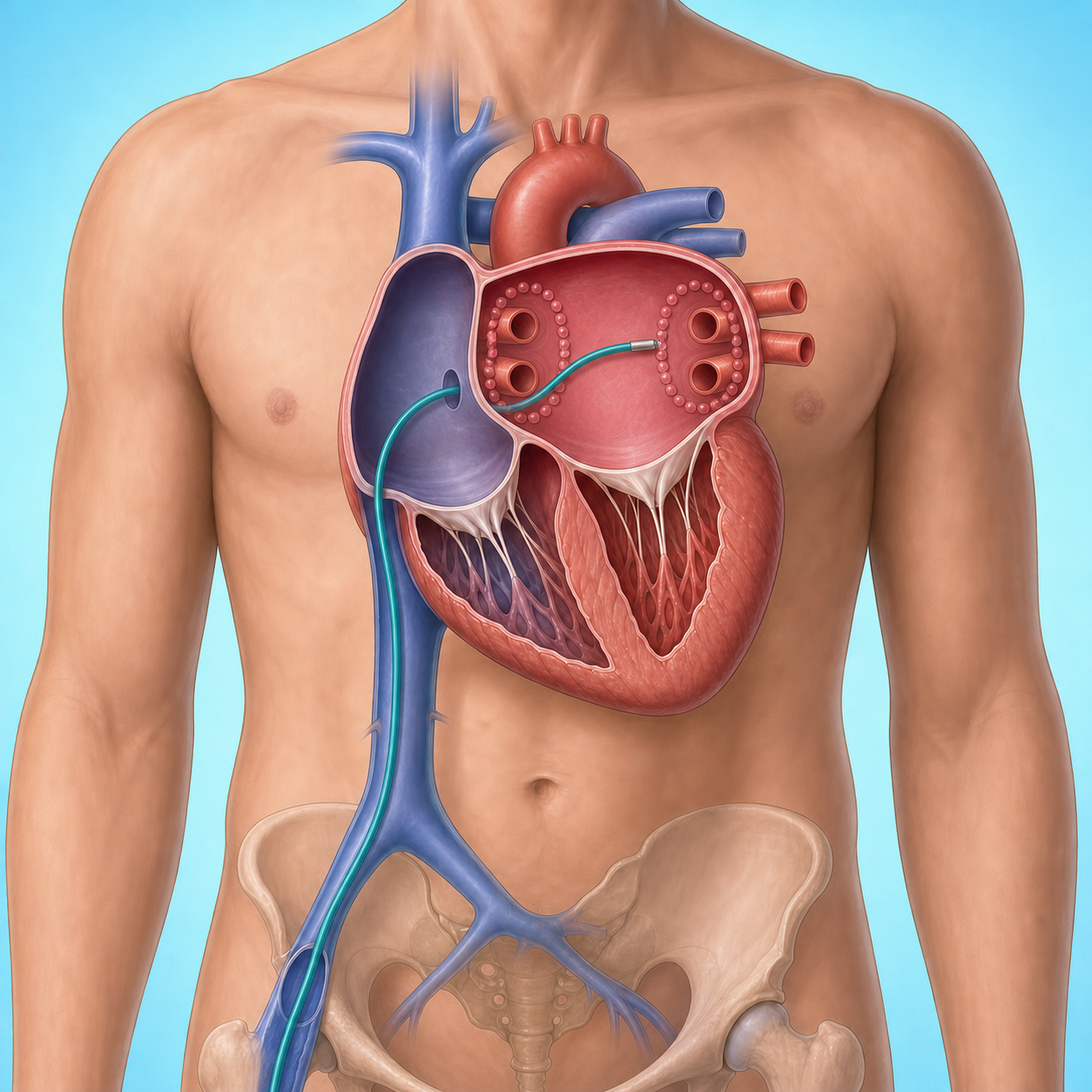
Catheter ablation of atrial fibrillation is centered on pulmonary vein isolation and uses catheter energy to modify atrial tissue that triggers or maintains atrial fibrillation. Its principal aims in suitable patients are better symptoms and a lower atrial-fibrillation burden.
Ablation cannot guarantee a cure. Atrial fibrillation can recur early or later, and some patients need repeat ablation or continued antiarrhythmic medicine. Long-term anticoagulation remains determined by stroke risk. Major risks include access-site bleeding, cardiac tamponade, stroke, pulmonary-vein stenosis, phrenic-nerve or esophageal injury, atrial arrhythmia, and, rarely, death. The main goals are usually a lower atrial-fibrillation burden, improved symptoms, and better quality of life; selected patients with heart failure may also gain cardiac-function benefit. Before treatment, the team distinguishes paroxysmal from persistent atrial fibrillation and addresses risk factors. Arrhythmia can occur in the early blanking period, but sustained episodes or episodes with unstable symptoms still require recording and assessment.
Quick Reference
Treatment
2 hours – 4 hours
Observation
0.2 months – 0.5 months
Department
Cardiology
Who Is This For
Is Catheter ablation of atrial fibrillation Right for You?
Good Candidates
- Symptomatic paroxysmal or persistent atrial fibrillation when medicines are ineffective or not tolerated, or after shared decision-making in favor of catheter rhythm control.
- Selected people with HFrEF or suitability for early rhythm control may receive additional benefit, according to cause, atrial-fibrillation burden, and team assessment.
- A person able to follow perioperative anticoagulation, rhythm recording, and risk-factor management and who understands that one ablation may be insufficient.
May Not Be Suitable
- Unconfirmed atrial fibrillation, symptoms unrelated to it, active infection, left-atrial thrombus, or inability to complete perioperative anticoagulation safely.
- Severe comorbidities, atrial substrate, or care goals that make benefit small, or a person who does not understand recurrence and possible repeat intervention.
- Atrial fibrillation driven mainly by an untreated acute reversible trigger, or current inability to complete perioperative safety management, requires stabilization first. Chronic factors such as thyroid disease, sleep apnea, obesity, and alcohol should be optimized in parallel but are not each an absolute contraindication.
Step-by-Step Process
How Catheter ablation of atrial fibrillation Works
Plan electrophysiology and imaging
Confirm the atrial-fibrillation type, anticoagulation, and anesthesia plan, exclude left-atrial thrombus, and map pulmonary-vein and left-atrial anatomy.
Isolate the pulmonary veins
Enter the left atrium through a vein and the atrial septum and use an approved radiofrequency, cryothermal, pulsed-field, or other technique to create PVI, treating other targets when indicated.
Monitor recurrence and anticoagulation
Observe access-site, pericardial, and neurologic complications and define early activity, rhythm monitoring, medicines, and long-term anticoagulation review.
Manage risk factors and rhythm long term
Use rhythm monitoring to address early or late recurrence, continue managing weight, blood pressure, sleep apnea, and alcohol, and determine anticoagulation by stroke risk.
Treatment is usually completed in one admission or a short stay, but transient arrhythmias can occur over the early weeks to months, and some patients require repeat ablation.
Cost Information
Cost Estimate for Catheter ablation of atrial fibrillation
What's Included
Costs are quoted in Chinese yuan (RMB). For full self-payment without Chinese medical insurance, first specify radiofrequency, cryoballoon, pulsed-field, or another ablation method. Itemize three-dimensional mapping, intracardiac ultrasound, each diagnostic and ablation catheter, preoperative TEE or CT, anesthesia, the ward and expected stay, and perioperative anticoagulation. Repeat ablation, complications, and a prolonged stay are charged separately.
Before Your Visit
What to Prepare
Required Tests & Examinations
If you already have recent valid test results, bring the reports. If not, these assessments can usually be completed in China before the procedure.
Confirm atrial-fibrillation type and burden by electrocardiogram or monitoring and assess symptoms, previous rhythm medicines, echocardiography, and left-atrial and pulmonary-vein anatomy.
Check blood count, kidney function, electrolytes, anticoagulant adherence, and anesthesia risk, and use transesophageal echocardiography, or TEE, or CT as planned to exclude left-atrial thrombus.
Assess sleep apnea, weight, alcohol, blood pressure, thyroid function, and other recurrence factors and define the method of post-procedure rhythm monitoring.
Documents & Materials to Bring
Required to Bring
Electrocardiograms and monitor records, echocardiography and relevant CT or MRI, and records of previous cardioversion and ablation.
Time of the last anticoagulant dose, all medicines and allergies, kidney function, and the effect and adverse reactions of previous antiarrhythmic medicines.
Records relating symptoms to rhythm and current management of recurrence factors such as sleep apnea, weight, alcohol, and blood pressure.
Companion & Support
A responsible adult should accompany the patient for the procedure or discharge and early recovery; follow local transport, driving, and overnight-supervision rules.
After Treatment
Recovery & Follow-Up
Continue anticoagulation and other medicines as directed. Return to sinus rhythm does not mean anticoagulation can be stopped without advice.
Record palpitations and heart rate. An early episode is not necessarily long-term failure but should be interpreted by the team.
Painful swallowing with fever, neurologic symptoms, persistent chest pain, or severe breathlessness after ablation is uncommon but can indicate a serious complication and requires immediate emergency assessment.
Follow-Up Schedule
Perform planned electrocardiography or rhythm monitoring and review symptoms, anticoagulation, and antiarrhythmic treatment. Chest pain or breathlessness, syncope, neurologic symptoms, painful swallowing with fever, or heavy access-site bleeding requires emergency care.
Related Conditions
Conditions This Procedure Treats
Ready to Plan Catheter ablation of atrial fibrillation in China?
Let Carevia help you find the right hospital, coordinate your treatment, and arrange every detail of your medical trip.
Frequently Asked Questions
Need personalized guidance?
Our care coordinators can help you assess whether this procedure fits your situation.
Contact Us