Anatomic total shoulder arthroplasty
Anatomic total shoulder arthroplasty reconstructs the shoulder in its original ball-and-socket orientation. It is generally used for severe symptomatic glenohumeral osteoarthritis when the rotator cuff is intact or repairable and glenoid bone conditions permit.
Anatomic total shoulder arthroplasty reconstructs the glenohumeral joint in its natural ball-and-socket orientation and is used for symptomatic joint-surface destruction when the rotator cuff is intact or repairable and glenoid bone stock is adequate. Before surgery, the pain source must be confirmed and the rotator cuff, deltoid, axillary nerve, and glenoid retroversion assessed; these factors affect component position, stability, and postoperative strength. The usual goals are to reduce joint pain and improve sleep and a useful range of activity, not to guarantee a shoulder equivalent to one without disease. Major risks include infection, stiffness, nerve injury, rotator-cuff failure, glenoid loosening, fracture, instability, wear, and further surgery.
Quick Reference
Treatment
1 hours – 2 hours
Observation
1.4 months – 2.8 months
Department
Orthopaedic Surgery
Who Is This For
Is Anatomic total shoulder arthroplasty Right for You?
Good Candidates
- Persistent substantial pain and functional limitation despite nonsurgical treatment, with an intact or repairable rotator cuff and glenoid bone stock and shape suitable for anatomic reconstruction.
- Pain that affects sleep, dressing, grooming, or other daily activities when appropriate options such as medication, activity modification, injections, or rehabilitation have not produced an acceptable result.
- A patient with usable deltoid and nerve function who can protect repaired tissue such as the subscapularis and complete several months of staged rehabilitation.
May Not Be Suitable
- Massive irreparable rotator-cuff dysfunction or loss of deltoid or axillary-nerve function that cannot provide stable power for an anatomic implant.
- Shoulder symptoms arising mainly from the cervical spine, peripheral nerves, or isolated subacromial disease rather than damage to the glenohumeral joint surface.
- Active infection, severe glenoid bone loss that cannot be managed, major medical risk not yet optimized, or inability to follow sling and staged-rehabilitation instructions.
Step-by-Step Process
How Anatomic total shoulder arthroplasty Works
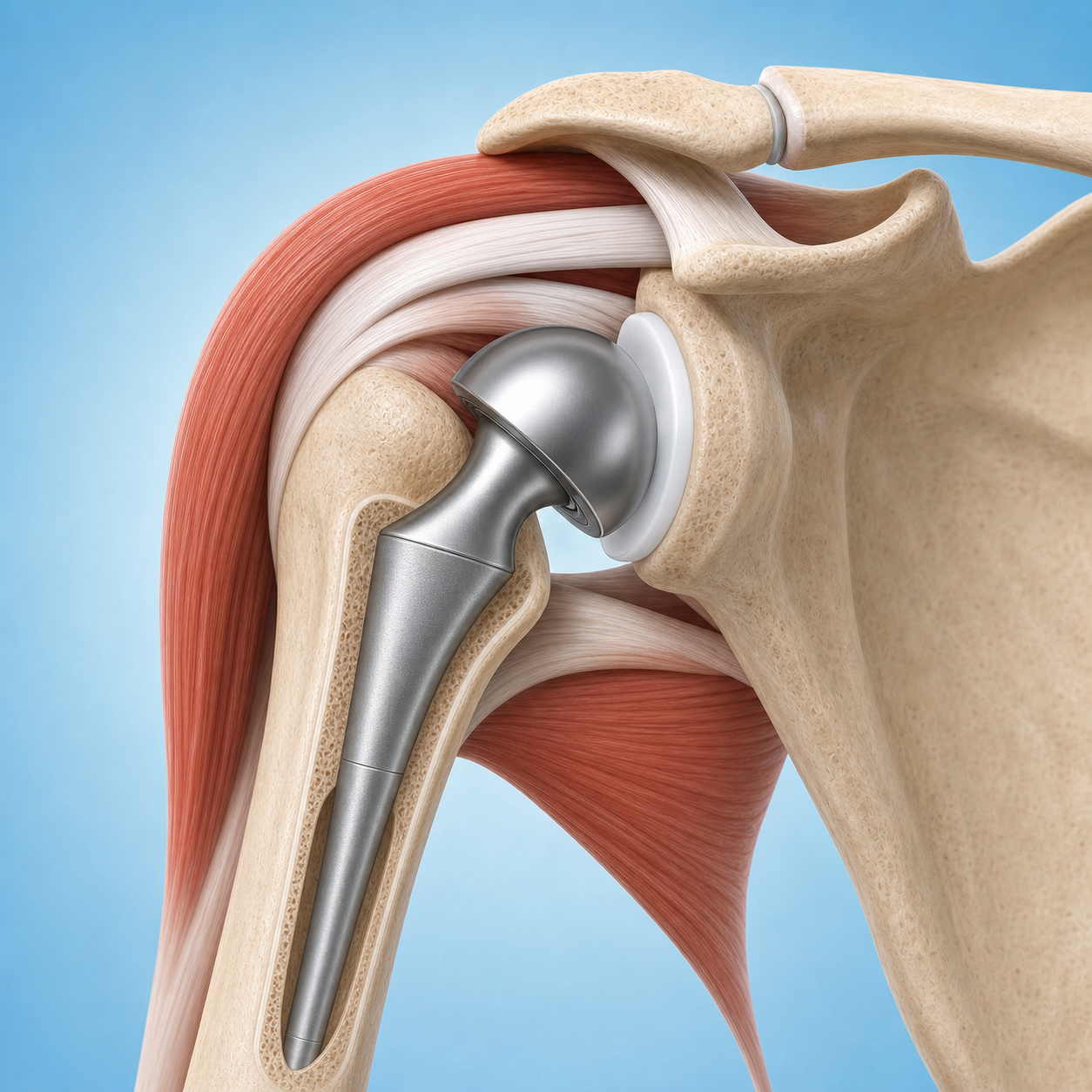
Assess the rotator cuff and bone stock
Confirm the indication for anatomic replacement, rotator-cuff function, glenoid shape, implant plan, and the boundary between anatomic and reverse replacement.
Perform anatomic reconstruction
Prepare the humeral head and glenoid joint surfaces, implant the humeral and glenoid components in the original anatomic orientation, and repair the relevant soft tissues.
Protect soft-tissue healing
Close the incision, use a sling, and plan staged motion and rehabilitation according to the repaired tissues and stability.
Follow function and monitor the implant
Review motion and strength according to soft-tissue healing, gradually expand permitted use, and monitor implant position, the rotator cuff, and the glenoid clinically and with imaging when needed.
The procedure may follow a day-surgery or inpatient pathway. Soft-tissue repair must be protected early, and recovery of motion and strength usually takes several months.
Cost Information
Cost Estimate for Anatomic total shoulder arthroplasty
What's Included
Costs are quoted in Chinese yuan (RMB). For full self-payment without Chinese medical insurance, obtain a complete-path quotation from a hospital that performs shoulder replacement. Specify the anatomic implant brand and humeral and glenoid components, whether bone grafting or special fixation is expected, and separate the costs of preoperative imaging and tests, surgery, anesthesia, hospitalization, sling, and postoperative rehabilitation. Complex bone loss, complications, and further surgery are charged separately.
Before Your Visit
What to Prepare
Required Tests & Examinations
If you already have recent valid test results, bring the reports. If not, these assessments can usually be completed in China before the procedure.
Shoulder examination and radiographs, CT as needed to assess the glenoid, and MRI or ultrasound to assess the rotator cuff; plus preoperative laboratory, medical, and anesthesia assessments.
Record active and passive range of motion, rotator-cuff strength, deltoid and axillary-nerve function, and whether pain matches the imaging abnormality.
Use three-dimensional planning according to bone loss and prior surgery, and review diabetes, anticoagulation, smoking, infection, and rehabilitation support as perioperative factors.
Documents & Materials to Bring
Required to Bring
Images and reports, medication and allergy list, previous surgery and implant records, and any culture or pathology results relevant to the current condition.
Records of prior injections, rehabilitation, rotator-cuff repair, or instability surgery, especially the original operative reports and implant information.
The patient's work, sports, dominant hand, and self-care needs, plus arrangements for sling use and assistance with daily life after discharge.
Companion & Support
A reliable adult should assist with admission, discharge, transport, medications, and early daily care; complex cases may need support for longer.
After Treatment
Recovery & Follow-Up
Use the sling and restrict active elevation, external rotation, weight bearing, and lifting as instructed; exact restrictions depend on the operation and soft-tissue repair.
Pain often improves before strength returns; rehabilitation that advances too quickly or too slowly can affect the result.
Help with daily activities is often needed early. Pushing up with the operated arm, sudden external rotation, or lifting heavy objects may damage repaired tissue and should wait for explicit clearance.
Follow-Up Schedule
Check the incision, nerve function, and implant position early, then adjust sling use and rehabilitation by phase. Fever, drainage, sudden weakness, altered sensation, or a feeling of dislocation requires prompt assessment.
Related Conditions
Conditions This Procedure Treats
Ready to Plan Anatomic total shoulder arthroplasty in China?
Let Carevia help you find the right hospital, coordinate your treatment, and arrange every detail of your medical trip.
Frequently Asked Questions
Need personalized guidance?
Our care coordinators can help you assess whether this procedure fits your situation.
Contact Us