Glenohumeral osteoarthritis
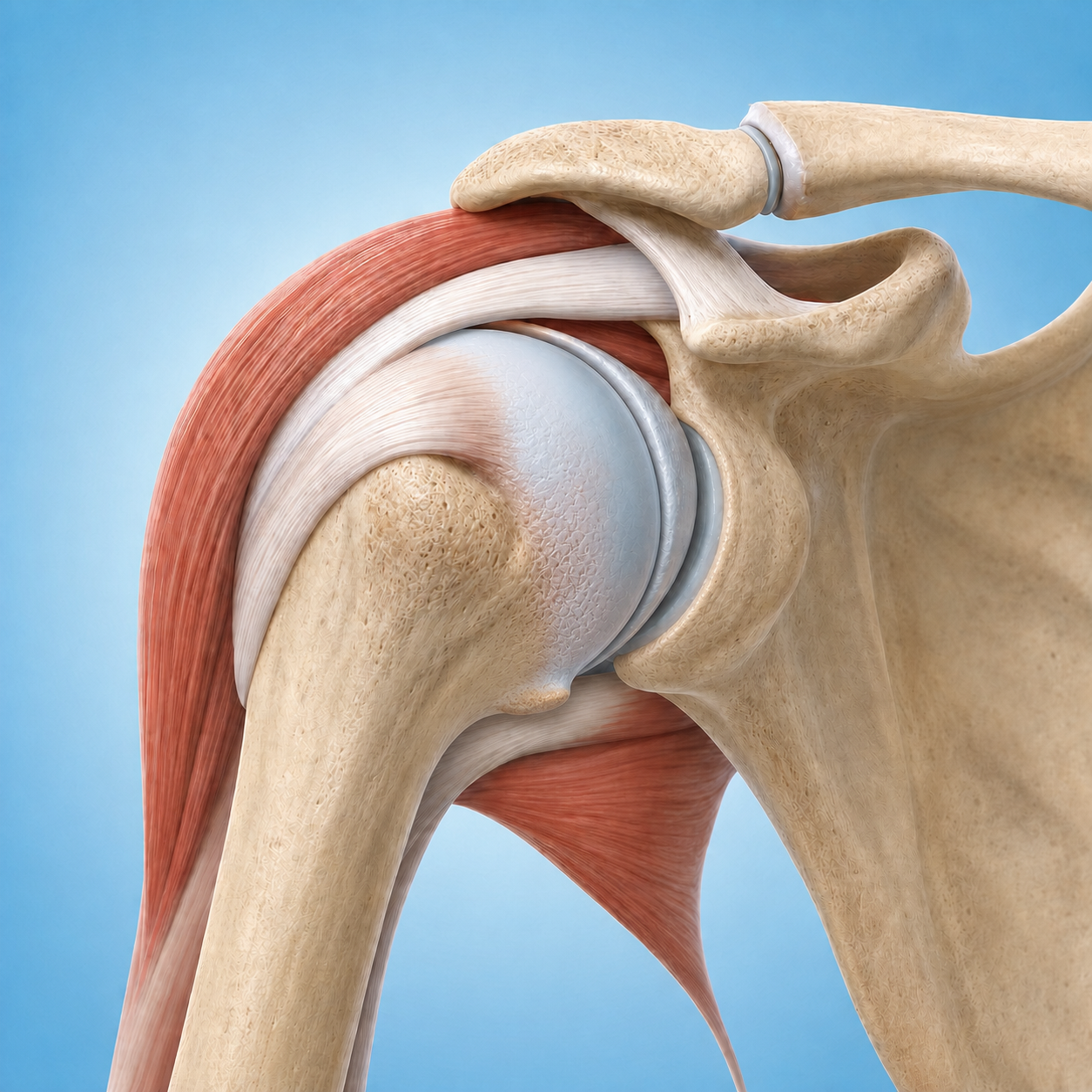
Glenohumeral osteoarthritis is degeneration of the cartilage on the ball-and-socket surfaces of the shoulder with associated bone changes. It can cause deep shoulder pain, stiffness, night pain, and reduced range of motion.
Common Symptoms
Recognizing Glenohumeral osteoarthritis
Focus on the most useful decision cues first: common symptoms, the patients or situations that usually prompt review, and any signs that need faster assessment.
Common Symptoms
Signs patients often notice before evaluation
Deep shoulder pain
Stiffness and difficulty reaching
Night pain
When to Seek Evaluation
Typical patients and situations that warrant review
Middle-aged and older adults with primary degenerative disease of the shoulder joint
People with post-traumatic arthritis after a previous shoulder fracture, dislocation, or articular-surface injury
People with secondary degeneration after inflammatory joint disease, humeral-head osteonecrosis, or a previous shoulder infection
People with previous shoulder surgery or a longstanding structural shoulder abnormality; the precise cause still requires confirmation
Deep shoulder pain or night pain persists and is affecting sleep, dressing, hair care, or raising the arm
Both active and passive movement are becoming increasingly restricted, with grinding, stiffness, or a marked decline in daily function
Symptoms remain severe after appropriate activity modification, rehabilitation, and pain relief, prompting review of the diagnosis or comparison of surgical and nonsurgical options
Seek prompt emergency evaluation for obvious deformity or inability to raise the arm after a recent injury, a red, hot, swollen and painful shoulder with fever, or sudden arm numbness, weakness, or coldness
Treatment Approaches
Treatment Directions for Glenohumeral osteoarthritis
Begin with education, activity modification, and individualized exercises for shoulder motion and strength, avoiding prolonged complete immobilization
Choose pain relief or local treatment according to symptoms and systemic risks, and regularly assess real functional benefit and adverse effects
If symptoms arise mainly from the rotator cuff, cervical spine, infection, or inflammatory disease, treat the actual cause
If severe pain and loss of function persist and nonsurgical care has failed or is unsuitable, a shoulder surgeon can assess replacement options in light of rotator-cuff integrity and bone stock
What usually shapes the treatment plan
Clinical Assessment
Key Assessments for Glenohumeral osteoarthritis
These are the main areas doctors usually review first. If you already have relevant test or imaging reports, bring them to speed up the assessment. They are helpful but not required, and the same workup can also be completed in China.
Pain location, night pain, stiffness, grinding, and limitations in dressing, hair care, raising the arm, and work
Comparison of active and passive range of motion and examination of the rotator cuff, deltoid, scapular movement, and cervical-spine signs
Axillary-nerve and upper-limb neurovascular status, with exclusion of cervical radiculopathy and peripheral nerve disease
Shoulder X-rays to assess joint space, osteophytes, bone stock, and deformity; when the diagnosis is unclear or surgery is being planned, selective use of CT (computed tomography), MRI (magnetic resonance imaging), or ultrasound
Distinguish frozen shoulder, rotator-cuff disease, inflammation or infection, osteonecrosis, post-fracture deformity, and other causes of shoulder pain
Before You Travel
How to Prepare
Bring images and reports, a medication and allergy list, previous operation records, and information about current symptoms and activity level.
Planning Notes
Pre-Assessment Required
An in-person shoulder examination and appropriate imaging are required. Medical and anesthesia assessment is needed only if the patient enters a surgical pathway.
Remote Pre-Assessment
Imaging and records can be screened remotely, but rotator-cuff, deltoid, and nerve function must be confirmed in person.
Multidisciplinary Assessment
Medical History Important
A history of rotator-cuff injury, fracture or dislocation, surgery, infection, nerve injury, inflammatory disease, medications, and general health affects the diagnosis and options.
Ready to Explore Treatment for Glenohumeral osteoarthritis?
Let Carevia help you connect with the right specialists, compare hospitals, and plan your medical trip to China.