Alveoloplasty
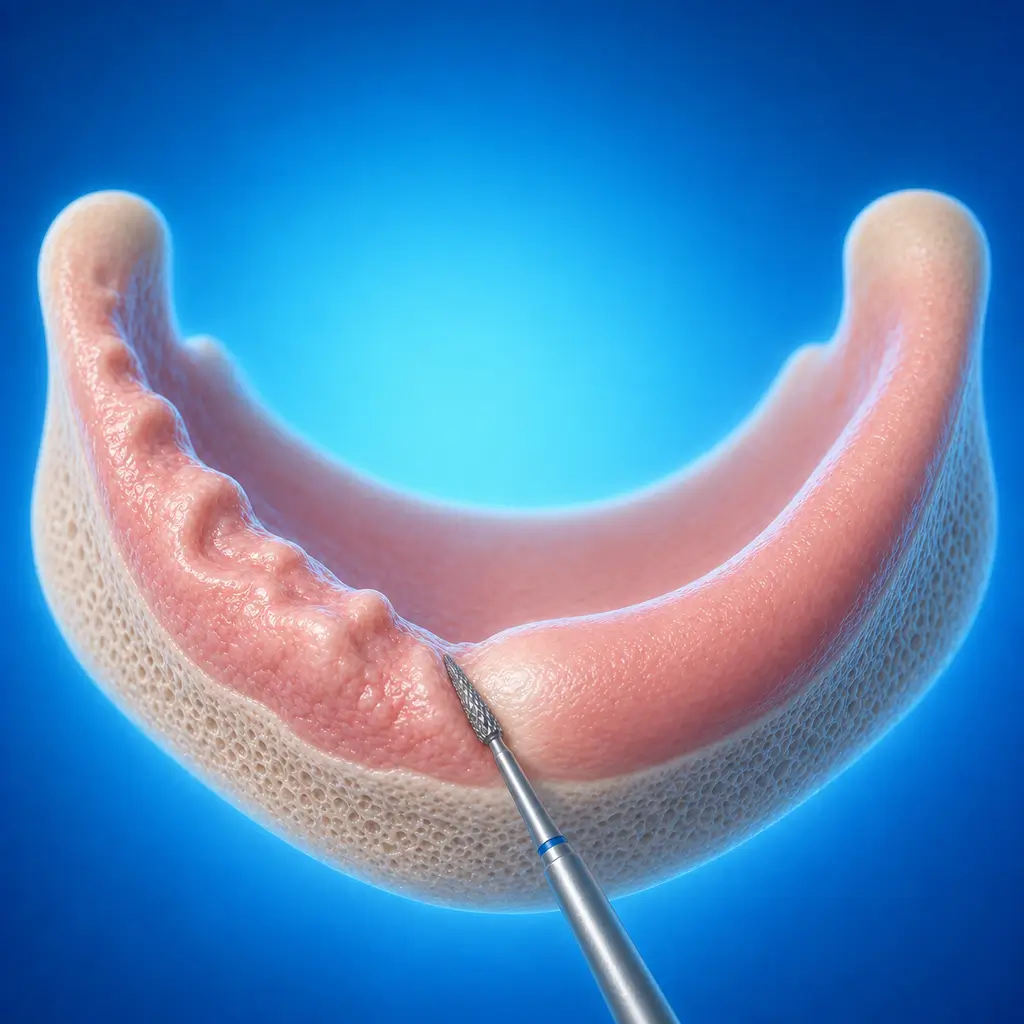
Irregular or sharp alveolar bone is surgically reshaped to remove bony prominences and spurs, creating a favorable bone bed for denture restoration or implant placement.
Alveoloplasty removes irregular bony tissues such as prominent bone points, ridges, and tori, smoothing and regularizing the alveolar ridge to prepare for denture restoration, implant placement, or improved oral hygiene. It is usually performed about 3 months after extraction, once alveolar bone healing is basically complete. The surgery is minimally traumatic and recovery is quick, making it a common pre-prosthetic surgical procedure. For patients undergoing implant restoration, alveoloplasty can be performed at the same time as implant placement.
Quick Reference
Treatment
1 hours – 2 hours
Observation
0 mins – 1 days
Est. Cost
$74 – $100
Department
Oral and Maxillofacial Surgery
Who Is This For
Is Alveoloplasty Right for You?
Good Candidates
- Uneven alveolar bone resorption after extraction, forming sharp bony prominences or spicules that affect denture insertion or cause pressure pain
- Mandibular tori or enlarged maxillary tuberosity affecting denture seating or tongue movement
- Excessively prominent alveolar ridge preventing denture base adaptation
- Need to smooth the bone surface before implant placement and create a good bone bed
- Irregular bone edges after cyst or tumor surgery
May Not Be Suitable
- Unhealed extraction wound, usually requiring a 1-3 month wait
- Acute oral infection or active periodontitis
- Uncontrolled systemic disease such as severe diabetes, hypertension, or coagulation disorder
- Pregnancy, where elective surgery should be avoided
- Jaw area at risk for osteoradionecrosis after head and neck radiotherapy
- Unrealistic psychological expectations
Step-by-Step Process
How Alveoloplasty Works
Preoperative Preparation
Verify patient information and surgical site, obtain informed consent, and have the patient rinse with chlorhexidine mouthwash before surgery.
Flap Elevation and Bone Reshaping
After local infiltration anesthesia, an incision and flap are made to fully expose bone. A bone file, chisel, or high-speed turbine with round bur is used to remove protruding bone, reshape sharp spicules into a smooth rounded contour, preserve alveolar ridge height and width, avoid excessive removal, smooth the bone surface, remove rough edges, irrigate with saline, clear bone chips, reposition the mucoperiosteal flap, and close with interrupted sutures.
Hemostasis and Protection
Bite on gauze for pressure hemostasis for 30 minutes.
Usually completed in one surgery, with suture removal in 7-10 days. If the reshaping area is large or combined with denture or implant planning, later follow-up is scheduled according to the restorative plan.
Cost Information
Cost Estimate for Alveoloplasty
Estimated Price Range
$74 – $100
What's Included
Fees usually include local infiltration anesthesia, flap elevation, alveolar bone reshaping, irrigation, and suturing. Costs increase for larger areas or when combined with a restorative plan.
Before Your Visit
What to Prepare
Required Tests & Examinations
If you already have recent valid test results, bring the reports. If not, these assessments can usually be completed in China before the procedure.
Clinical oral examination: palpate the alveolar ridge to identify the location, size, and extent of bony prominences or spicules
CBCT: accurately assess bone volume, bone density, and relationship to important anatomical structures
History taking: general health, medication allergy history, and anticoagulant use
Documents & Materials to Bring
Required to Bring
Recent oral or maxillofacial imaging, such as X-ray, CBCT, CT, or MRI if available
Previous dental or maxillofacial treatment records
Medication allergy history
General medical history
Current medication list, especially anticoagulants, diabetes medications, antihypertensives, or immunosuppressants
Recent preoperative test results such as complete blood count, coagulation function, blood glucose, or ECG if completed
Companion & Support
A dedicated companion is usually not needed. For children, older adults, pregnancy, underlying medical conditions, or when treatment may affect eating or travel afterward, having a family member accompany the patient is recommended.
After Treatment
Recovery & Follow-Up
Apply cold compresses to the surgical side of the face within 24 hours after surgery to reduce swelling.
Two hours after surgery, warm or cool liquid food may be eaten; avoid very hot or hard foods.
Brush and rinse after 24 hours.
Avoid strenuous exercise, forceful sucking, and spitting for 1 week after surgery.
Take antibiotics if prescribed and pain medication as instructed.
Return promptly if persistent heavy bleeding, severe pain, or fever occurs.
Follow-Up Schedule
Review and remove sutures about 7 days after surgery. Review about 3 months after surgery to assess bone healing.
Related Conditions
Conditions This Procedure Treats
Ready to Plan Alveoloplasty in China?
Let Carevia help you find the right hospital, coordinate your treatment, and arrange every detail of your medical trip.
Frequently Asked Questions
Need personalized guidance?
Our care coordinators can help you assess whether this procedure fits your situation.
Contact Us