Presbyopia
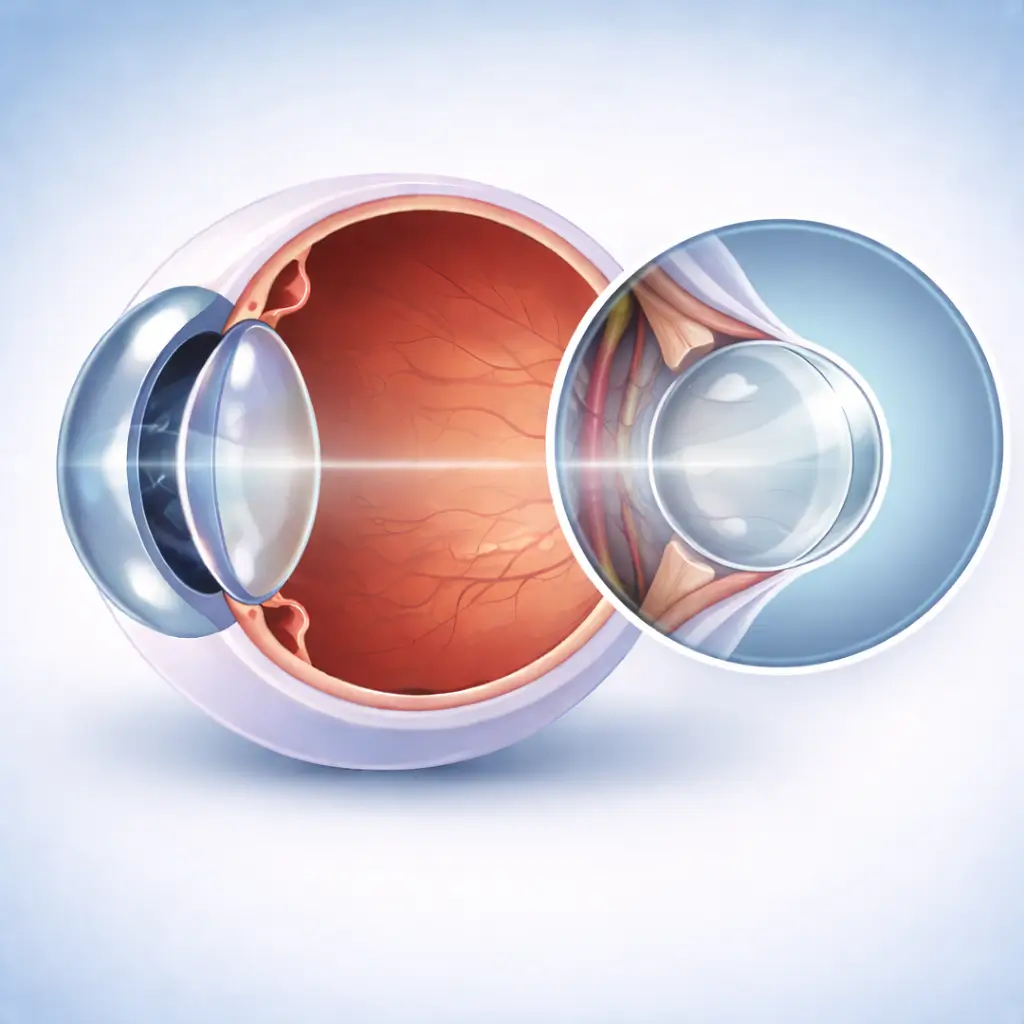
An age-related physiological change where decreasing lens elasticity leads to reduced accommodation and difficulty focusing on near objects.
Common Symptoms
Recognizing Presbyopia
Focus on the most useful decision cues first: common symptoms, the patients or situations that usually prompt review, and any signs that need faster assessment.
Common Symptoms
Signs patients often notice before evaluation
Near objects (phone, books) appear blurry; need to hold them farther away
Require brighter light for reading
Eye fatigue and headaches after prolonged near work
Prolonged adjustment time when switching between far and near focus
When to Seek Evaluation
Typical patients and situations that warrant review
Adults over 40 (virtually 100% affected)
Middle-aged professionals with high visual demands (frequent reading, computer use)
Near vision difficulty affecting work and daily life
Desire surgical solution to avoid reading glasses
Presbyopia combined with cataracts
Treatment Approaches
Treatment Directions for Presbyopia
Non-surgical: reading glasses, progressive multifocal lenses, multifocal contact lenses
Surgical: carefully selected presbyopia-correcting IOL surgery may reduce spectacle dependence
Corneal laser surgery (monovision approach, limited effectiveness)
What usually shapes the treatment plan
Clinical Assessment
Key Assessments for Presbyopia
These are the main areas doctors usually review first. If you already have relevant test or imaging reports, bring them to speed up the assessment. They are helpful but not required, and the same workup can also be completed in China.
Near and distance visual acuity testing
Accommodation amplitude measurement
Refraction assessment
Lens clarity evaluation (screen for early cataracts)
Fundus examination
Before You Travel
How to Prepare
Bring current reading glasses or progressive lens prescription
Describe daily visual activities and needs
Planning Notes
Pre-Assessment Required
Assessment of accommodation, refractive status, and lens clarity is required. If lens replacement is considered, the same full preoperative workup as cataract surgery is needed.
Remote Pre-Assessment
Symptoms and visual needs can be described remotely for preliminary correction recommendations. Surgical evaluation requires on-site examination.
Multidisciplinary Assessment
Medical History Important
Ready to Explore Treatment for Presbyopia?
Let Carevia help you connect with the right specialists, compare hospitals, and plan your medical trip to China.