Macular Hole
A full-thickness retinal defect at the foveal center of the macula, causing significant central vision loss and metamorphopsia.
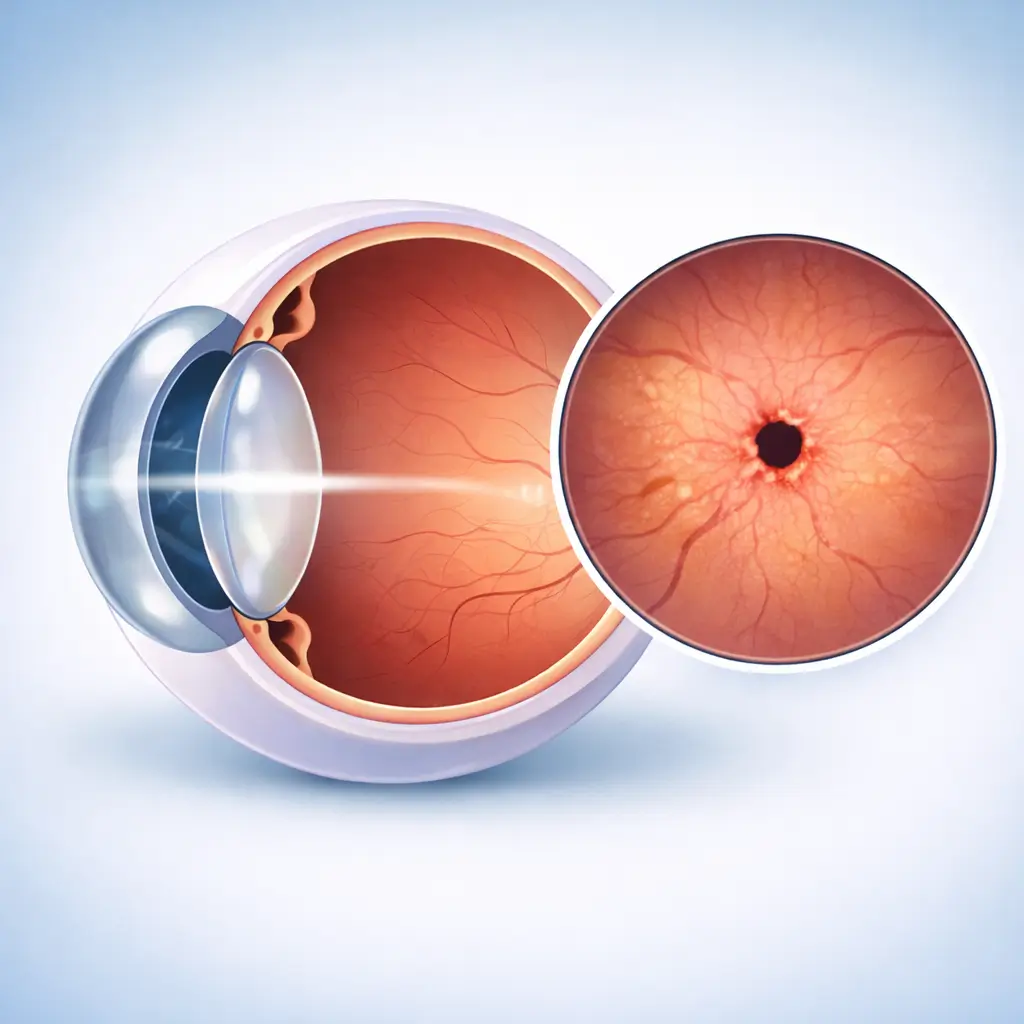
Common Symptoms
Recognizing Macular Hole
Focus on the most useful decision cues first: common symptoms, the patients or situations that usually prompt review, and any signs that need faster assessment.
Common Symptoms
Signs patients often notice before evaluation
Central vision loss
Metamorphopsia (straight lines appear wavy)
Missing or distorted text while reading
Central scotoma
When to Seek Evaluation
Typical patients and situations that warrant review
Predominantly women over 60
High myopia patients
Post-ocular trauma
Onset of central vision loss and metamorphopsia
Macular hole detected on OCT examination
Treatment Approaches
Treatment Directions for Macular Hole
Vitrectomy + internal limiting membrane peeling + gas tamponade (standard procedure)
Pharmacologic vitreolysis for small holes (Ocriplasmin, limited use)
Postoperative face-down positioning to promote hole closure
What usually shapes the treatment plan
Clinical Assessment
Key Assessments for Macular Hole
These are the main areas doctors usually review first. If you already have relevant test or imaging reports, bring them to speed up the assessment. They are helpful but not required, and the same workup can also be completed in China.
OCT (critical for diagnosis and staging; determines hole size and stage)
Visual acuity testing
Amsler grid testing
Fellow eye assessment
Before You Travel
How to Prepare
Bring recent OCT reports
Understand the postoperative face-down positioning requirement
Planning Notes
Pre-Assessment Required
OCT is needed for precise hole measurement and staging, vitreous and macular status assessment, to guide surgical planning.
Remote Pre-Assessment
OCT images can be submitted remotely for hole staging assessment and surgical feasibility evaluation.
Multidisciplinary Assessment
Medical History Important
Ready to Explore Treatment for Macular Hole?
Let Carevia help you connect with the right specialists, compare hospitals, and plan your medical trip to China.