Lacrimal Duct Obstruction
Obstruction of the tear drainage pathway causing persistent tearing and recurrent infection.
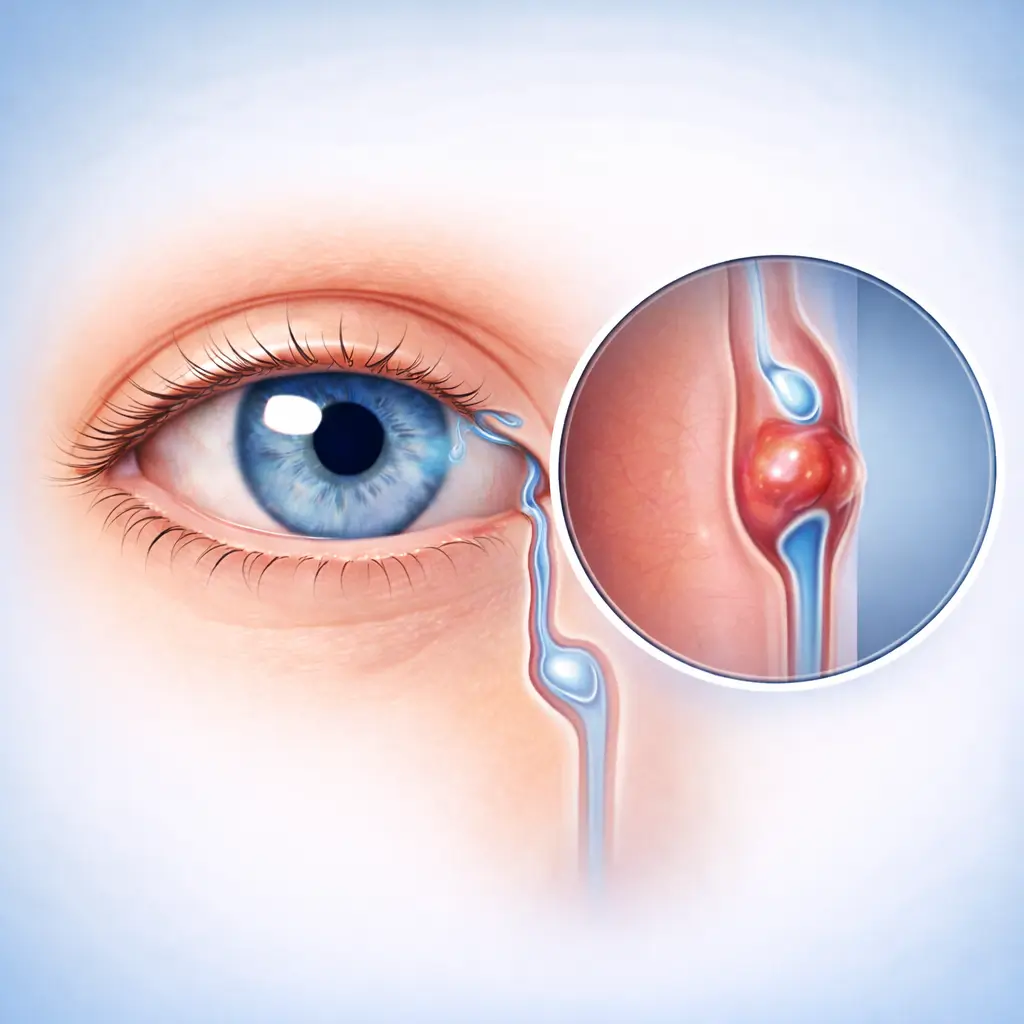
Common Symptoms
Recognizing Lacrimal Duct Obstruction
Focus on the most useful decision cues first: common symptoms, the patients or situations that usually prompt review, and any signs that need faster assessment.
Common Symptoms
Signs patients often notice before evaluation
Persistent epiphora (involuntary tearing)
Recurrent swelling and redness at medial canthus
Purulent discharge upon pressure over lacrimal sac area
Increased mucoid eye discharge
When to Seek Evaluation
Typical patients and situations that warrant review
More common in middle-aged and older women
Chronic rhinitis and sinusitis patients
Infants (congenital lacrimal duct obstruction)
Persistent tearing affecting daily life
Recurrent lacrimal sac area swelling and pain
Infant with persistent tearing and discharge since birth
Treatment Approaches
Treatment Directions for Lacrimal Duct Obstruction
Infants: lacrimal sac massage → probing → intubation if necessary
Adults: dacryocystorhinostomy (DCR) as standard surgery
Lacrimal probing/intubation (suitable for some early obstructions)
What usually shapes the treatment plan
Clinical Assessment
Key Assessments for Lacrimal Duct Obstruction
These are the main areas doctors usually review first. If you already have relevant test or imaging reports, bring them to speed up the assessment. They are helpful but not required, and the same workup can also be completed in China.
Lacrimal irrigation (determine obstruction site and severity)
Dacryocystography (confirm obstruction location)
Nasal endoscopy (assess nasal cavity conditions)
Tear secretion test (rule out excessive tearing)
Before You Travel
How to Prepare
Control acute dacryocystitis infection before surgery
Bring nasal CT if available
Planning Notes
Pre-Assessment Required
Lacrimal irrigation, dacryocystography, and nasal endoscopy are needed to determine obstruction site and nasal conditions for surgical planning.
Remote Pre-Assessment
Symptoms and previous examination reports can be described remotely for preliminary assessment. Precise obstruction localization requires on-site examination.
Multidisciplinary Assessment
Medical History Important
Ready to Explore Treatment for Lacrimal Duct Obstruction?
Let Carevia help you connect with the right specialists, compare hospitals, and plan your medical trip to China.