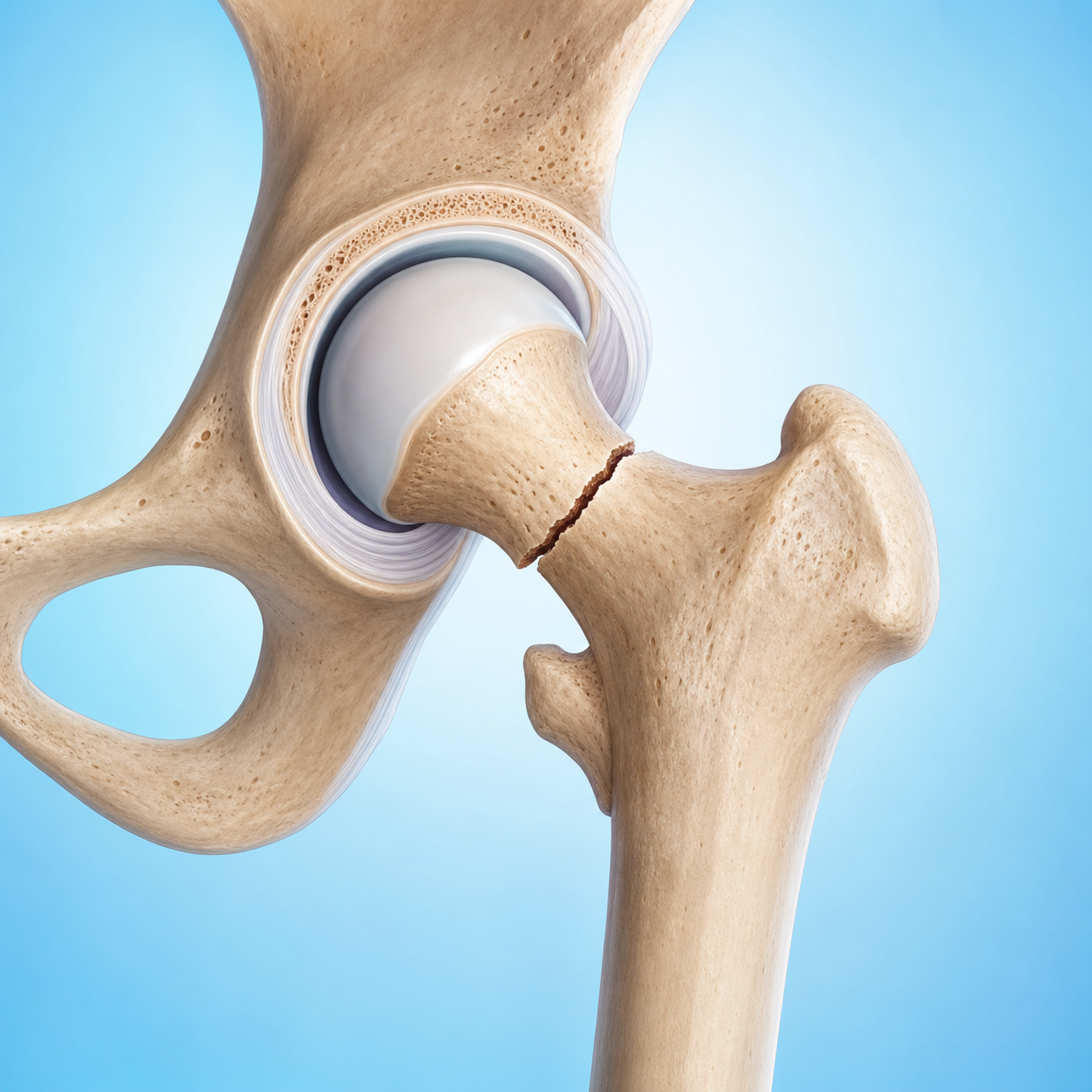
Displaced intracapsular femoral neck fracture
A displaced intracapsular femoral neck fracture is an acute injury in which a fracture within the hip capsule has shifted out of alignment. It markedly affects blood supply to the femoral head and the ability to bear weight.
Common Symptoms
Recognizing Displaced intracapsular femoral neck fracture
Focus on the most useful decision cues first: common symptoms, the patients or situations that usually prompt review, and any signs that need faster assessment.
Common Symptoms
Signs patients often notice before evaluation
Severe hip or groin pain after injury
Inability to bear weight
Shortened or externally rotated affected leg
When to Seek Evaluation
Typical patients and situations that warrant review
Older adults with osteoporosis, sarcopenia, or high fall risk, commonly after a low-energy fall
People with a previous fragility fracture, impaired vision or balance, or use of sedatives or multiple medications
In younger people, the fracture usually follows high-energy trauma such as a road collision or fall from height and may accompany other serious injuries
People with cancer, metabolic bone disease, or another cause of reduced bone strength may sustain a pathological fracture
Go immediately to a local emergency department for severe hip or groin pain and inability to stand or bear weight after a fall or injury
A leg that looks shortened or externally rotated, or pain that becomes much worse when the hip is moved, should be treated as a suspected hip fracture
If the first X-rays show no fracture but weight bearing remains impossible or groin pain persists, evaluation for an occult fracture must continue
Even without a clear injury, an older or long-term bedbound person who suddenly cannot move or develops hip pain needs prompt in-person examination
Urgent Assessment
Severe hip pain, inability to bear weight, or a shortened or externally rotated leg after a fall or injury requires immediate emergency care. Evaluation must continue if the first X-ray is negative but suspicion remains high.
Treatment Approaches
Treatment Directions for Displaced intracapsular femoral neck fracture
Provide pain relief, fluids, and necessary stabilization in the emergency setting while preventing pressure injury, delirium, thrombosis, and complications of prolonged immobility
Most displaced intracapsular femoral neck fractures require prompt surgery; emergency, orthopedic, and anesthesia teams coordinate timing while maintaining safety
Choose internal fixation, hemiarthroplasty, or total hip arthroplasty according to age, physiological status, fracture features, pre-injury function, and pre-existing hip disease
Begin multidisciplinary rehabilitation, osteoporosis assessment, and fall prevention early after surgery to restore mobility and independence
What usually shapes the treatment plan
Clinical Assessment
Key Assessments for Displaced intracapsular femoral neck fracture
These are the main areas doctors usually review first. If you already have relevant test or imaging reports, bring them to speed up the assessment. They are helpful but not required, and the same workup can also be completed in China.
Time and mechanism of injury, pain and weight-bearing ability, shortening and external rotation of the leg, and skin and neurovascular status
X-rays to confirm fracture location, displacement, and type; when suspicion remains high despite negative X-rays, use MRI (magnetic resonance imaging) or other further imaging through the emergency pathway
Outdoor walking, use of aids, independence in daily activities, living situation, and cognitive function before the injury
Cardiopulmonary disease, anticoagulant and antiplatelet medication, anemia, infection, kidney function, nutrition, and anesthesia risk, while avoiding unnecessary delay for optimization
Osteoporosis, previous hip disease, and other injuries, with a concurrent plan to prevent falls and further fractures
Before You Travel
How to Prepare
If already in a healthcare facility, provide the injury time, pre-injury mobility and cognition, medications and anticoagulants, allergies, and important history. Do not delay emergency care to compile cross-border records.
Planning Notes
Pre-Assessment Required
Imaging, pain treatment, medical and anesthesia assessment, and a prompt surgical plan should be completed in the local emergency setting. Assessment must not cause unnecessary delay.
Remote Pre-Assessment
Remote advice can only support a team already providing local emergency care. It must never replace or delay in-person examination, pain relief, or surgical treatment.
Multidisciplinary Assessment
Orthopedic, geriatric or medical, anesthesia, nursing, and rehabilitation teams usually work together to reduce surgical delay and complications.
Medical History Important
Anticoagulants, cardiopulmonary disease, cognitive impairment, previous hip disease, osteoporosis, fall history, and pre-injury mobility directly affect perioperative risk and the operation chosen.
Ready to Explore Treatment for Displaced intracapsular femoral neck fracture?
Let Carevia help you connect with the right specialists, compare hospitals, and plan your medical trip to China.