Chalazion
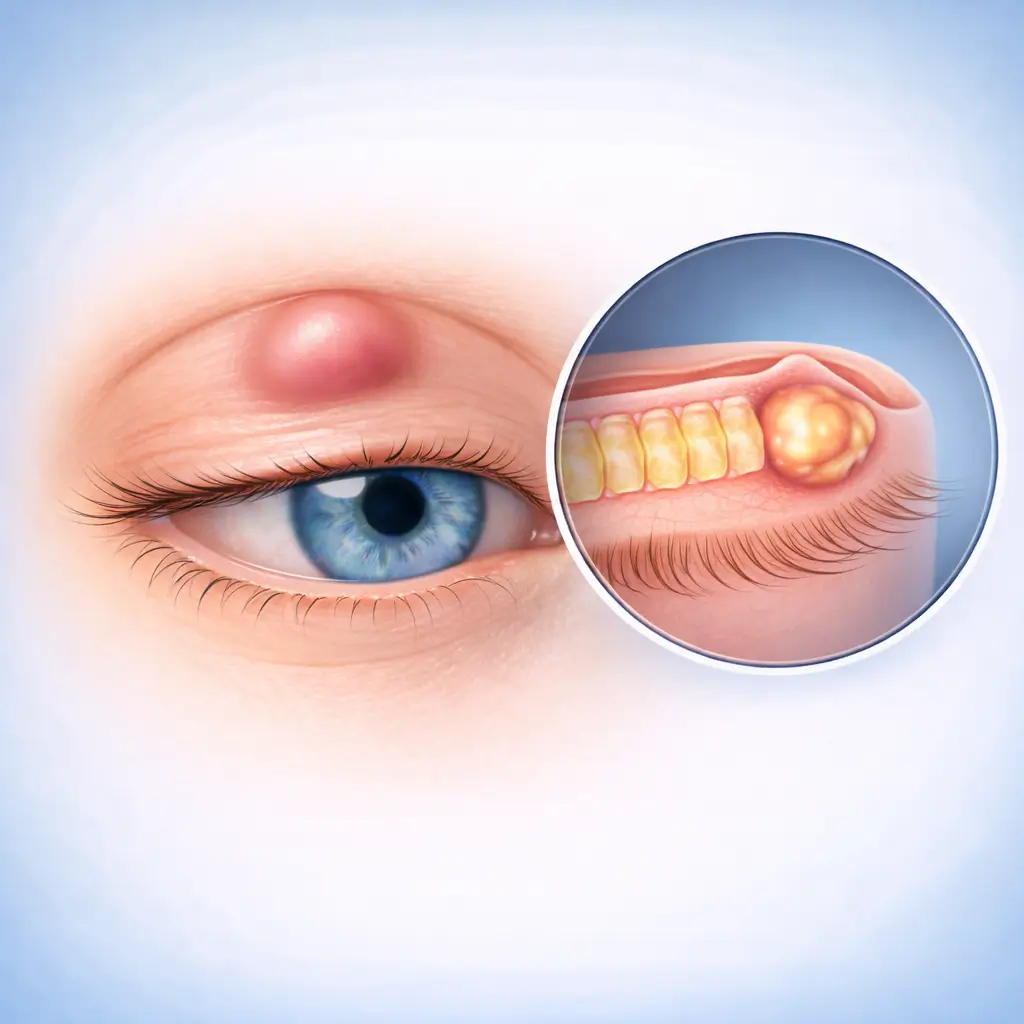
A chronic granulomatous inflammation caused by blocked meibomian gland secretion, presenting as a painless eyelid lump.
Common Symptoms
Recognizing Chalazion
Focus on the most useful decision cues first: common symptoms, the patients or situations that usually prompt review, and any signs that need faster assessment.
Common Symptoms
Signs patients often notice before evaluation
Painless eyelid lump (chalazion)
Red, swollen, painful eyelid (hordeolum)
Eyelid heaviness
Granulation tissue if lump ruptures
When to Seek Evaluation
Typical patients and situations that warrant review
Can occur at any age
Those with oily skin
Meibomian gland dysfunction patients
Relatively common in children
Eyelid lump persisting for over 1 month
Lump enlarging and affecting appearance or vision
Recurrent episodes
Treatment Approaches
Treatment Directions for Chalazion
Warm compress + lid hygiene (early conservative treatment)
Surgical excision (when conservative treatment fails or lump is large)
Antibiotic eye drops (when infection is present)
What usually shapes the treatment plan
Clinical Assessment
Key Assessments for Chalazion
These are the main areas doctors usually review first. If you already have relevant test or imaging reports, bring them to speed up the assessment. They are helpful but not required, and the same workup can also be completed in China.
Eyelid palpation and eversion examination
Rule out meibomian gland carcinoma (biopsy recommended for elderly with recurrence at same site)
Before You Travel
How to Prepare
No special preparation required
Planning Notes
Pre-Assessment Required
Remote Pre-Assessment
Eyelid photographs can be submitted remotely for preliminary assessment.
Multidisciplinary Assessment
Medical History Important
Ready to Explore Treatment for Chalazion?
Let Carevia help you connect with the right specialists, compare hospitals, and plan your medical trip to China.