Ankyloglossia
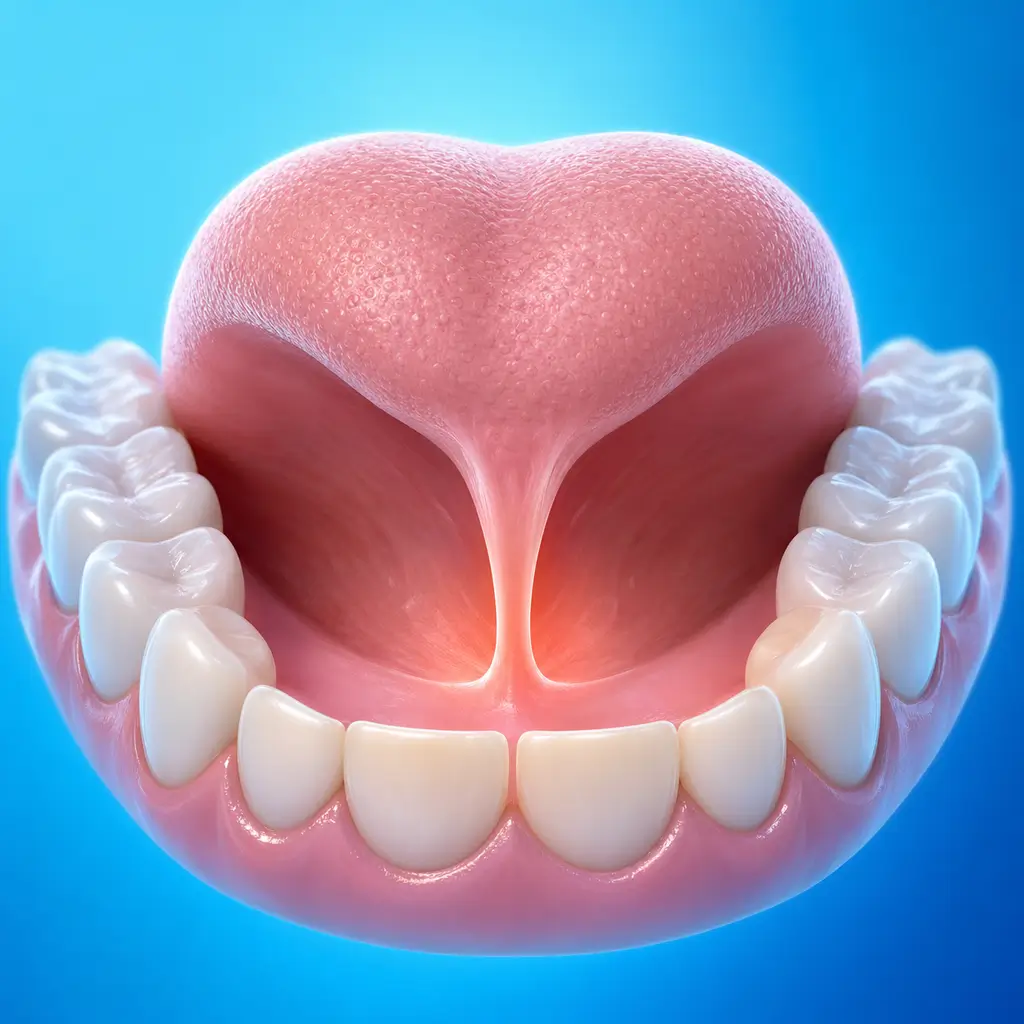
Ankyloglossia is a congenital tongue developmental abnormality in which the lingual frenulum is too short or attaches too far forward, limiting tongue movement and potentially affecting breastfeeding, speech, oral hygiene, and maxillofacial development.
Common Symptoms
Recognizing Ankyloglossia
Focus on the most useful decision cues first: common symptoms, the patients or situations that usually prompt review, and any signs that need faster assessment.
Common Symptoms
Signs patients often notice before evaluation
Restricted tongue movement: the tongue tip cannot touch the palate or protrude beyond the lower lip, and when protruded it appears W-shaped because the frenulum pulls the tip inward while both sides bulge
Difficulty with breastfeeding or bottle feeding
Speech abnormalities
Poor oral hygiene
When to Seek Evaluation
Typical patients and situations that warrant review
Newborns and infants, often presenting for breastfeeding difficulty
Restricted tongue movement: the tongue tip cannot touch the palate or protrude beyond the lower lip, and when protruded it appears W-shaped because the frenulum pulls the tip inward while both sides bulge
Difficulty with breastfeeding or bottle feeding
Speech abnormalities
Poor oral hygiene
Treatment Approaches
Treatment Directions for Ankyloglossia
Treatment aims to relieve restricted tongue movement, improve function such as feeding, speech, and oral hygiene, and prevent maxillofacial developmental problems
Conservative observation is suitable for mild ankyloglossia, feeding difficulty that can be compensated, or when caregivers do not currently want surgery; tongue movement and speech training should be provided
Frenotomy is suitable for newborns and infants under 6 months
Frenuloplasty is suitable for children over 6 months, adolescents, and adults
Postoperative tongue movement training and speech training are needed
What usually shapes the treatment plan
Clinical Assessment
Key Assessments for Ankyloglossia
These are the main areas doctors usually review first. If you already have relevant test or imaging reports, bring them to speed up the assessment. They are helpful but not required, and the same workup can also be completed in China.
Lingual frenulum morphology
Mobility assessment
Speech status
Before You Travel
How to Prepare
Clean the mouth and comfort the child
Planning Notes
Pre-Assessment Required
An oral specialist should perform an intraoral examination and, as appropriate, periodontal probing, pulp vitality testing, periapical radiographs, panoramic radiographs, or CBCT before determining the treatment plan. Key checks include specialist oral examination of frenulum morphology, attachment position, tongue shape during protrusion, mobility, and speech clarity. Bring oral examination records if available.
Remote Pre-Assessment
Intraoral photos, the course of pain/swelling, previous dental records, and imaging can be submitted remotely for preliminary triage, urgency assessment, and an estimated treatment direction. Final diagnosis still requires in-person intraoral examination and necessary imaging.
Multidisciplinary Assessment
Depending on the condition, joint evaluation by oral and maxillofacial surgery, endodontics, periodontics, prosthodontics, orthodontics, imaging, anesthesia, or other related disciplines is recommended, especially for complex infection, tumors, trauma, jaw lesions, or high systemic disease risk.
Medical History Important
Previous dental treatment history, imaging, allergy history, anticoagulant/bisphosphonate use, diabetes, and immune-related diseases can affect diagnosis, anesthesia, bleeding and infection risk, and treatment selection.
Ready to Explore Treatment for Ankyloglossia?
Let Carevia help you connect with the right specialists, compare hospitals, and plan your medical trip to China.