Back to Hospitals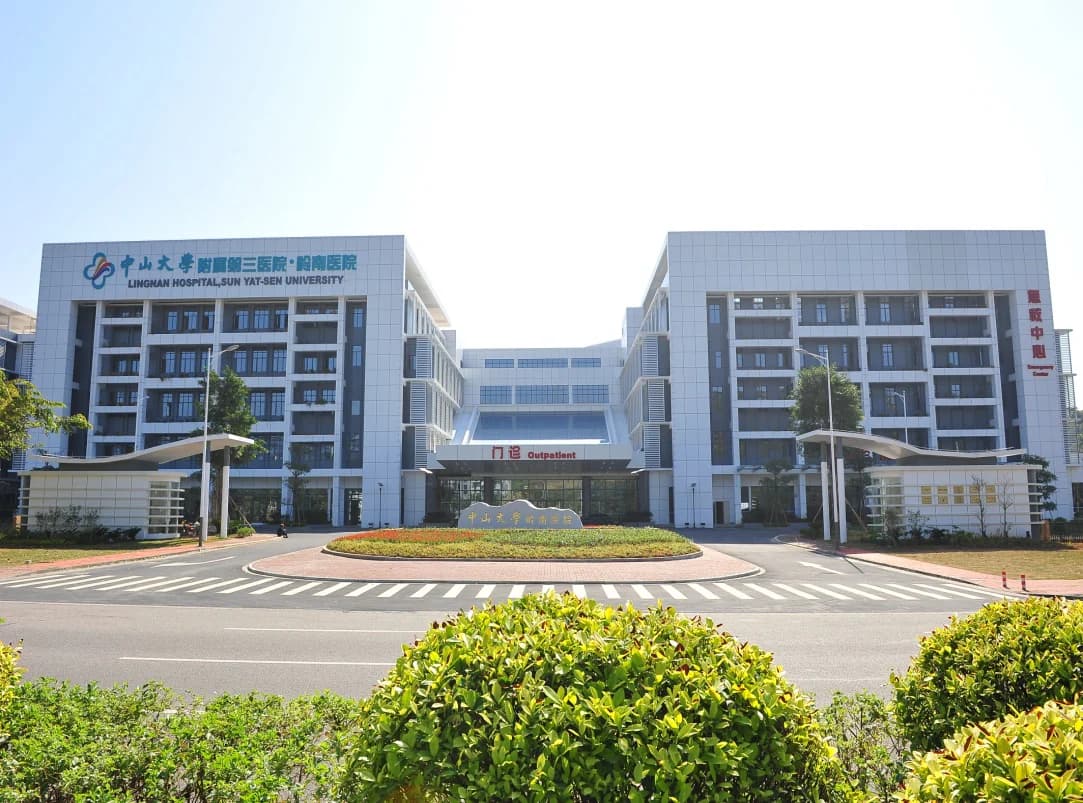
Grade III Grade A
The Third Affiliated Hospital of Sun Yat-sen University
The Third Affiliated Hospital of Sun Yat-sen University was founded in 1971. It is a general Grade III Class A hospital managed by the National Health Commission and a major clinical teaching base of the Sun Yat-sen University Faculty of Medicine. The Tianhe and Lingnan campuses and National Regional Medical Center projects form a collaborative multicampus configuration. Its website lists 5,152 employees, including 4,668 medical professionals. The Tianhe campus has approximately 2,000 open beds and records more than 12,000 outpatient and emergency visits per day. The hospital has five National Key Disciplines, 15 National Clinical Key Specialty development projects, three National Flagship Departments for Coordination of Chinese and Western Medicine, and multiple Guangdong High-level Clinical Key Specialties. Its disciplinary development centers on three clusters: liver diseases, brain diseases, and immune diseases. Liver medicine spans internal medicine, surgery, critical care, anesthesia, interventional imaging, and experimental research and includes care for severe hepatitis, liver cancer, and liver transplantation. The brain disease cluster connects neurology, neurosurgery, child behavior and development, psychology, spine care, rehabilitation, and other fields. The immune disease cluster integrates specialties involving allergy, metabolic immunity, neuroimmunology, and transplant immunology. The hospital also develops platforms for stem cells, nanomedicine, big data, the gut microbiome, and medicine in special environments and serves as an exporting institution for a National Regional Medical Center. It offers 51 master's programs and 41 doctoral programs in clinical medicine and has a postdoctoral research station and 25 national standardized residency training bases, providing education for undergraduate and graduate students, residents, and visiting professionals. Its website lists 16 provincial- and ministerial-level and 11 departmental or bureau-level research bases. Over the past five years, research projects at all levels received more than CNY 920,000,000 in funding, and the hospital continues to advance clinical research, stem cell research, and technology transfer. It has received honors including National Advanced Collective in the Health System and National Advanced Collective in the Fight Against COVID-19 and uses high-level hospital and Regional Medical Center development to improve service capacity for difficult and critical conditions in South China and surrounding regions.
Established
1971-01-01
Official website
www.zssy.com.cn/
Snapshot
Active departments
25 active departments available in this language.
Hospital tag
Grade III Grade A
Care planning
Need help comparing departments or travel logistics?
Carevia can help you assess department fit, shortlist hospitals across cities, and coordinate translation, appointments, and post-visit travel planning.
Departments
Clinical departments at The Third Affiliated Hospital of Sun Yat-sen University
25 department profiles are available for review.
Department of Pulmonary and Critical Care Medicine
This department provides medical care, teaching, and research for respiratory diseases and has long diagnosed and treated respiratory infections, chronic obstructive pulmonary disease, asthma, lung cancer, and respiratory critical illness. It has facilities for pulmonary and critical-care monitoring and participates in surveillance of antimicrobial resistance among pathogenic microorganisms, management of chronic airway disease, and smoking-cessation and tobacco-control work. It was recognized as a Guangdong Key Clinical Specialty in 2013. The discipline was an early recipient of authorization to train master's and doctoral students and subsequently became a national drug clinical-trial institution, a standardized resident-training base, and a training center related to rehabilitation for chronic obstructive pulmonary disease.
Respiratory Medicine
Department of Gastroenterology
The Department of Gastroenterology at The Third Affiliated Hospital of Sun Yat-sen University is a National Key Clinical Specialty development unit and a Guangdong Key Clinical Specialty. Its subspecialties include gastrointestinal disease, biliary and pancreatic disease, cirrhosis, alcoholic liver disease, and gastrointestinal endoscopy. The department diagnoses and treats diseases of the esophagus, stomach and intestines, liver, biliary tract, pancreas, and peritoneum. It also provides minimally invasive endoscopic treatment for gastrointestinal bleeding, esophagogastric varices, and early gastrointestinal cancers. The discipline consists of seven units: an inpatient ward, outpatient clinic, gastrointestinal endoscopy center, gastrointestinal-function room, gastrointestinal-motility room, clinical-research room, and basic-research laboratory.
Gastroenterology
Department of Cardiology
The Department of Cardiology at The Third Affiliated Hospital of Sun Yat-sen University was founded in 1973. It comprises departments at the Tianhe, Luogang, and Zhaoqing campuses and also manages the corresponding department at Yuedong Hospital. Its subspecialties include cardiac critical care, coronary heart disease, hypertension, cardiac electrophysiology, cardiac rehabilitation, and structural heart disease. It performs multiple types of interventional diagnosis and treatment for coronary arteries, structural heart disease, arrhythmias, and other conditions. The department has 46 physicians, 39 of whom hold doctoral degrees, and hosts a national training base for interventional diagnosis and treatment of coronary heart disease. Clinical subspecialties, interventional platforms, and postgraduate training operate collaboratively.
Cardiology
Department of Hematology
The Department of Hematology at The Third Affiliated Hospital of Sun Yat-sen University originated from the Hematologic Disease Research Laboratory established in the 1980s. It is now a Guangdong Key Clinical Specialty with wards in Tianhe, Luogang, Zhaoqing, and Yuedong. The department performs autologous, allogeneic, umbilical-cord-blood, and haploidentical hematopoietic stem-cell transplantation and provides diagnosis and treatment for leukemia, lymphoma, multiple myeloma, and other diseases. It also has laboratories for cellular morphology, molecular research, and hematologic malignancy research. The department has 21 physicians and researchers, all with postgraduate education. The discipline is authorized to train master's and doctoral students and conducts clinical and experimental research through the Sun Yat-sen University Institute of Hematology.
Hematology
Department of Nephrology
The Department of Nephrology at The Third Affiliated Hospital of Sun Yat-sen University was founded in 1973 and is a National Key Discipline and Guangdong Key Clinical Specialty. It focuses on diagnosing and treating glomerulonephritis, tubulointerstitial diseases, acute and chronic renal failure, and difficult or critical kidney diseases, and it provides blood-purification treatment. The directly affiliated Tianhe, Luogang, and Zhaoqing campuses and the Yuedong branch campus each have an inpatient ward and hemodialysis center. The discipline operates a platform related to national drug clinical trials and is qualified to train master's and doctoral students and postdoctoral researchers. Approximately 95% of its physicians hold doctoral degrees.
Nephrology
Department of Endocrinology and Metabolism
The Department of Endocrinology and Metabolism at The Third Affiliated Hospital of Sun Yat-sen University has wards at multiple campuses and has developed four subspecialty directions: diabetes, thyroid disease, obesity and metabolic disease, and pituitary–adrenal–gonadal disorders. Based on standardized clinical diagnosis and treatment, the department also undertakes teaching, talent development, and research in endocrine and metabolic diseases. The discipline has been recognized as a Key Discipline of the Ministry of Education and a National Key Clinical Specialty. It hosts the Guangdong Key Laboratory for Diabetes Prevention and Control and is qualified to train master's and doctoral students and postdoctoral researchers.
Endocrinology
Department of Neurology
The Department of Neurology at The Third Affiliated Hospital of Sun Yat-sen University began as an internal-medicine neurology group in 1978. It has developed fields including cerebrovascular disease, neuroimmunology, central nervous system infection, neurodegenerative disease, neuropathology, and neurological critical care. The department has five subspecialties—cerebrovascular disease, neuroimmunology, central nervous system infection, neurodegenerative disease, and neurological intensive care—and provides treatments including early vascular recanalization for stroke. The neurology group became an independent department in 1998. The discipline subsequently entered national and Guangdong key-specialty development programs and trains master's and doctoral students, postdoctoral researchers, and residents.
Neurology
Department of Gastrointestinal Surgery
The Department of Gastrointestinal Surgery at The Third Affiliated Hospital of Sun Yat-sen University was founded in 2004. It is a principal branch of the hospital's General Surgery program and integrates medical care, teaching, and research. The department focuses on diagnosing and treating gastrointestinal tumors and has developed a comprehensive-treatment model centered on minimally invasive laparoscopic surgery. It performs laparoscopic operations for gastric cancer, colorectal cancer, and other diseases and trains postgraduate students and residents. Gastrointestinal Surgery has 50 open beds and 16 physicians, 14 of whom hold doctoral degrees. The discipline is also included as a General Surgery branch of the National Key Clinical Specialty and has formed a collaborative clinical and research team.
General Surgery
1/4