Back to Hospitals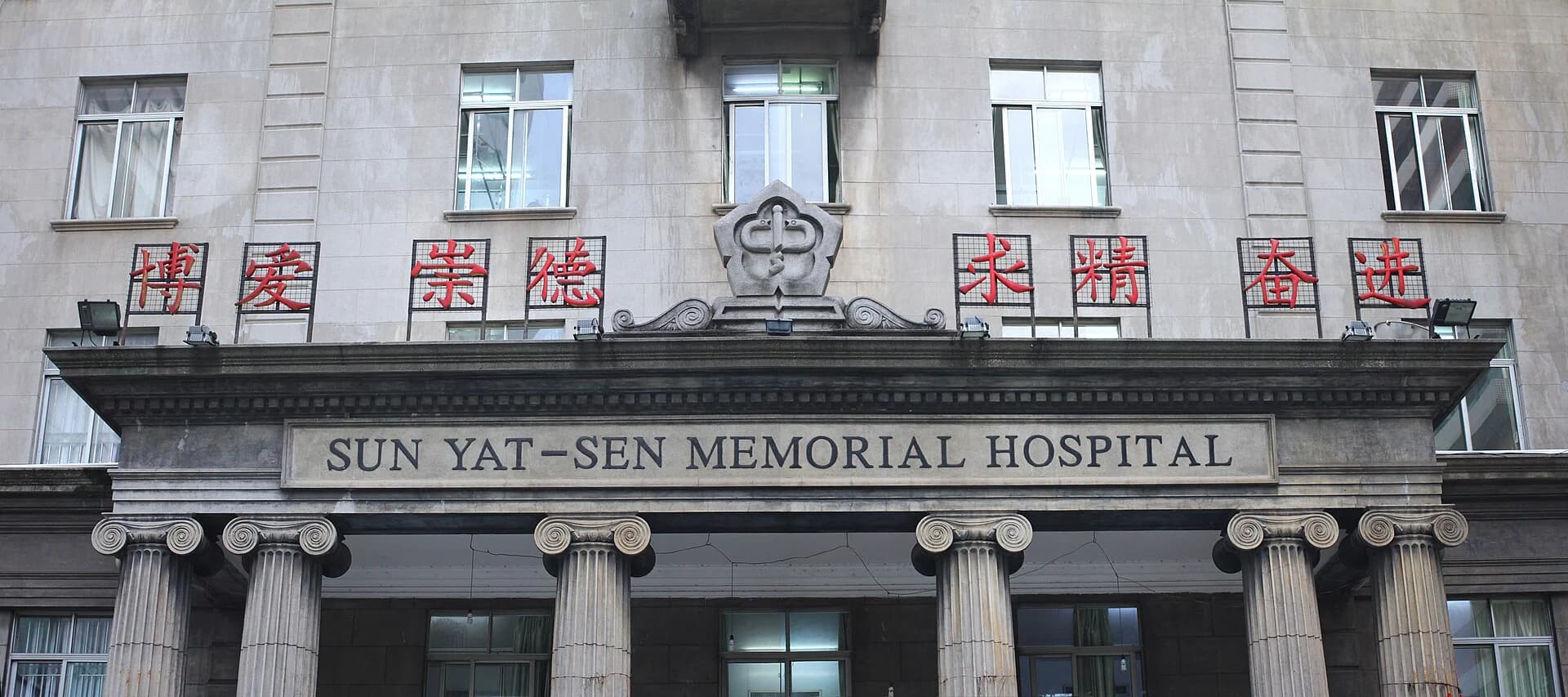
Grade III Grade A
Sun Yat-sen Memorial Hospital, Sun Yat-sen University
Sun Yat-sen Memorial Hospital, Sun Yat-sen University was founded in 1835 as Boji Hospital. It was among the first Western medicine hospitals established in China and was one of the important birthplaces of modern Western medicine and medical education in the country; Dr. Sun Yat-sen studied medicine there. The hospital is now a general Grade III Class A hospital managed by the National Health Commission and affiliated with Sun Yat-sen University, with multiple campuses and outpatient departments operating collaboratively as a medical, teaching, and research system. An introduction current through December 2025 on its website states that the hospital has 3,013 open beds and more than 5,700 employees, including a large complement of senior medical professionals and graduate supervisors. It records more than 3,880,000 outpatient and emergency visits, more than 202,000 discharges, and more than 150,000 surgical procedures annually, reflecting its comprehensive care and ability to manage difficult and critical conditions. The hospital has a complete disciplinary structure, seven National Key Disciplines, 17 National Clinical Key Specialties, and 29 Guangdong Clinical Key Specialties, as well as qualifications related to heart, lung, liver, and kidney transplantation. Multidisciplinary capabilities have developed in oncology, cardiovascular medicine, urology, obstetrics and gynecology, pediatrics, organ transplantation, and acute and critical care. The hospital was also selected for Guangdong's high-level hospital program and a national initiative to strengthen capacity for diagnosing and treating difficult conditions. It operates national and provincial or ministerial research platforms and conducts clinical and basic research on malignant tumors, cardiovascular and cerebrovascular diseases, immunity and metabolism, maternal and infant health, and translational medicine; its website lists data on research funding, papers, and technology transfer. Continuing its tradition in modern Western medical education, the hospital trains Sun Yat-sen University undergraduate and graduate students, residents, and specialists and has clinical teaching bases, residency training bases, clinical pharmacist training, and other platforms. It also undertakes national health emergency response, regional collaboration, and support for primary institutions, while continuing to develop as a research-oriented hospital with integrated multicampus operations.
Established
1835-01-01
Official website
www.gzsys.org.cn/
Snapshot
Active departments
21 active departments available in this language.
Hospital tag
Grade III Grade A
Care planning
Need help comparing departments or travel logistics?
Carevia can help you assess department fit, shortlist hospitals across cities, and coordinate translation, appointments, and post-visit travel planning.
Departments
Clinical departments at Sun Yat-sen Memorial Hospital, Sun Yat-sen University
21 department profiles are available for review.
Department of Pulmonary and Critical Care Medicine
The department's predecessor was established by Chinese respiratory-disease experts in the 1950s and was one of the hospital's earlier specialties to provide diagnosis and treatment, teaching, and research in respiratory disease. It was an early adopter of bronchial-asthma research, pulmonary-function testing, and fiberoptic bronchoscopy, and it established clinical units related to respiratory intensive care. Its current scope includes chronic airway diseases, pulmonary infections, lung cancer, respiratory critical illness, and other fields. The department adopted its present name, the Department of Pulmonary and Critical Care Medicine, in 2017. In 2018, it was recognized as an Outstanding Unit in the National Standardized Development Program for Pulmonary and Critical Care Medicine and undertook related specialist training.
Respiratory Medicine
Department of Cardiology
The Department of Cardiology at Sun Yat-sen Memorial Hospital, Sun Yat-sen University, was founded in 1958. It has five subspecialties—coronary heart disease, hypertension, arrhythmia, heart failure, and cardiovascular diagnostics—and operates a cardiac catheterization laboratory and a cardiac electrophysiology platform. The department diagnoses and treats common cardiovascular diseases and acute, critical conditions, and provides coronary, pacing, electrophysiological, valvular, congenital-heart-disease, and other interventional treatments. It is a National Key Clinical Specialty, is qualified to train master's and doctoral students and postdoctoral researchers, and hosts training bases for arrhythmia intervention, coronary intervention, and cardiovascular specialists.
Cardiology
Department of Endocrinology
The Department of Endocrinology at Sun Yat-sen Memorial Hospital, Sun Yat-sen University, was founded in 1957 and is one of China's earlier-established endocrinology specialties. It provides standardized diagnosis and treatment for diabetes, thyroid disease, obesity and metabolic disorders, and diseases related to the pituitary gland, adrenal glands, and gonads, while undertaking teaching, talent development, and clinical research. The discipline is a National Key Clinical Specialty, a National Key Discipline of the Ministry of Education, and a Key Discipline of Guangdong higher-education institutions. It also provides master's, doctoral, postdoctoral, and specialist training.
Endocrinology
Department of Gastroenterology
The Department of Gastroenterology at Sun Yat-sen Memorial Hospital, Sun Yat-sen University, was founded in 1954 and is one of China's earlier-established gastroenterology specialties. Its clinical scope includes gastrointestinal bleeding, cirrhosis, acute and chronic pancreatitis, inflammatory bowel disease, digestive-system tumors, and other conditions. It performs endoscopic hemostasis, resection of mucosal and submucosal lesions, endoscopic retrograde cholangiopancreatography, pancreatic and bile-duct stone extraction and stent placement, endoscopic ultrasonography, capsule endoscopy, and other techniques. The discipline is a Guangdong Key Clinical Specialty. It was also an early developer of a gastroenterology training system for master's and doctoral degrees and postdoctoral research, and it continues to provide clinical teaching and specialist-talent development.
Gastroenterology
Department of Hematology
The Department of Hematology at Sun Yat-sen Memorial Hospital, Sun Yat-sen University, was founded in 1974. It has four subspecialties—leukemia, thrombosis and hemostasis, lymphoma and myeloma, and bone-marrow transplantation—as well as two specialist laboratories for thrombosis and hemostasis and cellular morphology. The department diagnoses and treats platelet disorders and platelet dysfunction, provides stratified diagnosis and individualized treatment of leukemia, and performs hematopoietic stem-cell transplantation for leukemia, severe aplastic anemia, relapsed or refractory lymphoma, multiple myeloma, and other conditions. Its physician team consists of 15 members, all with at least a master's degree; most hold doctoral degrees or have studied overseas. The department also trains specialists in hematologic diseases.
Hematology
Department of Nephrology
The Department of Nephrology at Sun Yat-sen Memorial Hospital, Sun Yat-sen University, was founded in 1986. It operates wards and clinics across multiple campuses, supported by hemodialysis, peritoneal dialysis, a nephrology laboratory, specialist ultrasonography, and other units. The department provides diagnosis and treatment of kidney disease, renal-replacement therapy, clinical trials, and talent development, forming a specialty system that integrates medical care, teaching, and research. The discipline is a National Key Discipline, a Guangdong Key Clinical Specialty, and a key discipline of higher-education institutions. It also operates training platforms for blood purification and peritoneal dialysis and is qualified to train master's and doctoral students and postdoctoral researchers.
Nephrology
Department of Neurology
The Department of Neurology at Sun Yat-sen Memorial Hospital, Sun Yat-sen University, was established in 1971. Its clinical units include specialist wards and clinics, neurological intensive care, and neurophysiology, and it has developed platforms related to stroke and brain science. The department provides diagnosis and treatment of neurological diseases, critical-care rescue, functional examinations, clinical research, and medical-talent development. The discipline is both a National Key Clinical Specialty and a Guangdong Key Clinical Specialty. It has clinical centers for stroke, epilepsy, and other disorders and trains master's and doctoral students, postdoctoral researchers, and residents.
Neurology
Department of General Surgery
The Department of General Surgery at Sun Yat-sen Memorial Hospital, Sun Yat-sen University, has six subspecialties: the Breast Tumor Center, hepatobiliary surgery, biliary and pancreatic surgery, gastrointestinal surgery, vascular surgery, and thyroid surgery. It also has a general-surgery intensive-care unit. According to the hospital's official website, the department focuses on precision surgical treatment of breast, hepatobiliary, pancreatic, gastrointestinal, and thyroid tumors and performs minimally invasive and robotic surgery for digestive-system tumors. General Surgery is part of the National Key Clinical Specialty development system. It also has two laboratories, a tissue bank, and a follow-up office; clinical teams and postgraduate supervisors jointly support research across the six subspecialties.
General Surgery
1/3