Back to Hospitals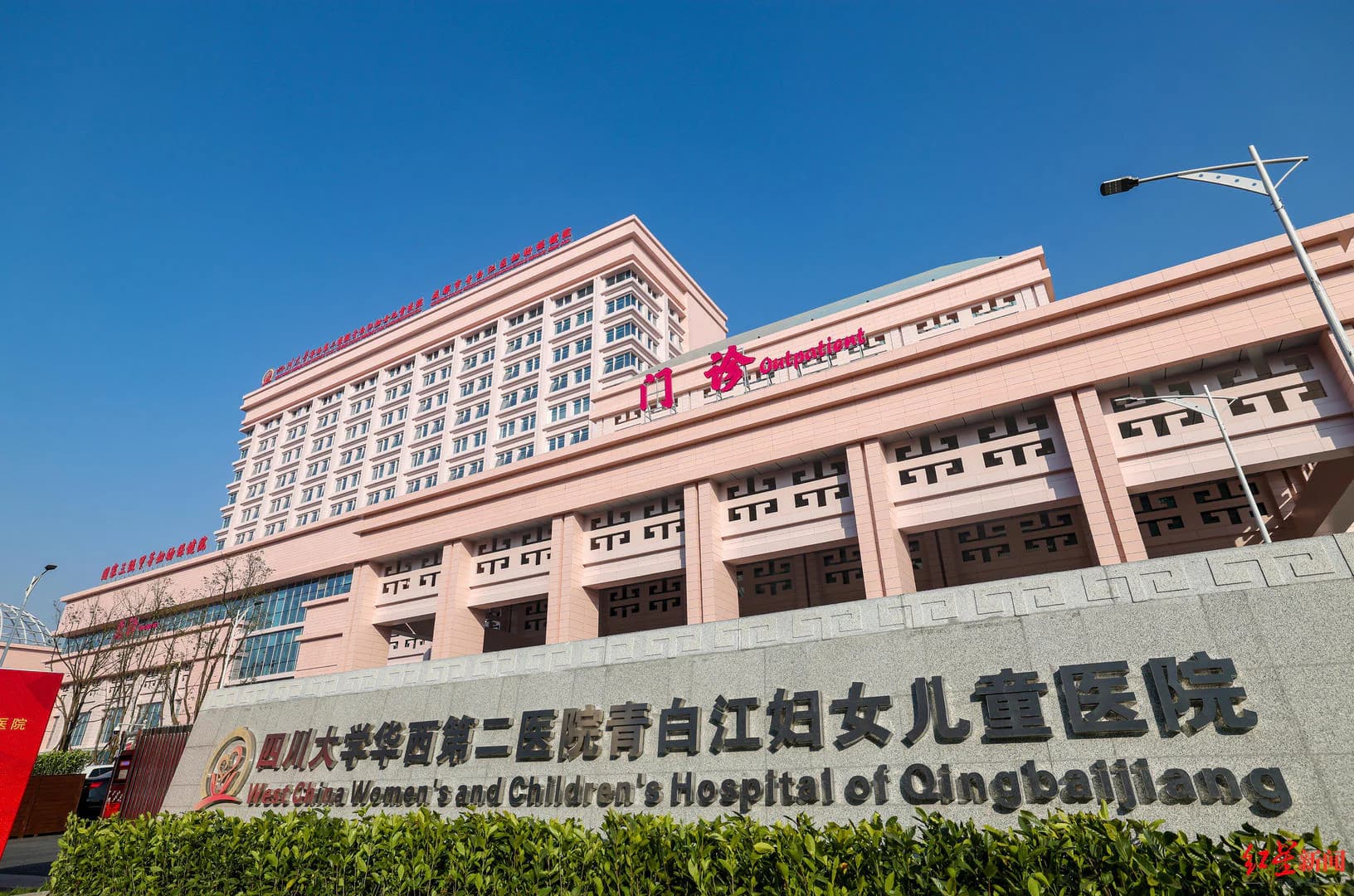
Grade III Grade A
West China Second Hospital, Sichuan University
West China Second Hospital, Sichuan University traces its origins to Renji Women's Hospital, founded in 1896. In 1987, the obstetrics, gynecology, and pediatrics departments of the former Affiliated Hospital of West China University of Medical Sciences moved out to establish an independent hospital. It adopted its current name in 2001 and also uses the name West China Women's and Children's Health Hospital. The hospital is a women and children's specialty hospital under the budgetary management of the National Health Commission, integrating medical care, teaching, research, preventive care, and professional training. In 1998, it became one of the first national Grade III Class A obstetrics, gynecology, and pediatrics specialty hospitals. Its West China and Jinjiang campuses have 1,580 authorized beds and 52 clinical and medical technology departments and provide comprehensive, life-course health and medical services for women and children. The hospital is a National Regional Medical Center for Children and serves as the exporting institution for National Regional Medical Center projects including Tianfu Hospital of West China Second Hospital, Sichuan University, Sichuan Provincial Children's Hospital, and Tibet Women's and Children's Hospital. Obstetrics and gynecology and pediatrics are both National Key Disciplines. Gynecology, obstetrics, neonatology, integrated care for congenital heart disease, reproductive medicine, pediatric infection, pediatric neurology, and other fields are included in National Clinical Key Specialties or development projects. The National Center for Birth Defects Monitoring, Sichuan Prenatal Diagnosis Center, and treatment centers for critically ill pregnant and postpartum women and newborns operate through the hospital. Its research infrastructure includes Ministry of Education, National Health Commission, and provincial key laboratories addressing birth defects and women's and children's diseases, chronobiology, development and women's and children's diseases, and pediatric medicines. It also has doctoral degree authorization and a postdoctoral research station. The hospital has more than 5,000 employees and a large complement of senior faculty, doctoral supervisors, master's supervisors, and high-caliber professionals. It provides training for residents, specialists, clinical pharmacists, prenatal diagnosis professionals, and primary-level obstetric and gynecologic personnel. Since national performance monitoring of Grade III public hospitals began, the hospital has received the highest rating in the obstetrics and gynecology specialty category for consecutive years.
Established
1987-01-01
Official website
www.motherchildren.com/
Snapshot
Active departments
24 active departments available in this language.
Hospital tag
Grade III Grade A
Care planning
Need help comparing departments or travel logistics?
Carevia can help you assess department fit, shortlist hospitals across cities, and coordinate translation, appointments, and post-visit travel planning.
Departments
Clinical departments at West China Second Hospital, Sichuan University
24 department profiles are available for review.
Gynecology
The Department of Gynecology has 6 medical teams and more than 40 physicians, including more than 20 with senior professional titles; over 95% hold master's or doctoral degrees. The department has 166 inpatient and chemotherapy beds and more than 20 operating rooms equipped for transabdominal, transvaginal, and endoscopic surgery. It admits more than 10,000 patients and performs more than 9,000 surgeries annually, and it also treats gynecologic malignancies. Gynecology is a development institution for a National Key Clinical Specialty. In 2018, it also established a national laparoscopic-surgery training base for county-level hospitals.
Gynecology
Obstetrics
The Department of Obstetrics has 312 staff members, including 57 physicians, 242 nurses, and 13 technologists. Its team includes 19 experts with senior professional titles, 5 doctoral supervisors, and 9 master's supervisors, as well as multiple provincial academic and technical leaders and leading professionals in the health sector. Together, its medical, nursing, and technical personnel form a coordinated professional workforce. Obstetrics is a National Key Clinical Specialty, and the department also has a prenatal diagnosis and genetic counseling team.
Obstetrics
Reproductive Medicine
The Department of Reproductive Medicine grew out of the Family Planning Research Office of West China University of Medical Sciences, which was approved in 1973. It was among the earlier institutions in China, and the first in Sichuan Province, to provide assisted reproductive technology. The department achieved Sichuan's first in vitro fertilization birth and subsequently completed second- and third-generation in vitro fertilization programs, among others, while continuing to provide multiple forms of assisted conception technology. In 2020, the department led reproductive endocrinology, andrology, and medical genetics in establishing a collaborative reproductive-medicine platform that implements reproductive health management throughout the entire course of diagnosis and treatment.
Reproductive Medicine and Infertility
Neonatology
The Department of Neonatology was founded in 1973. It was among the earlier neonatal specialties established in China and has been designated a National Key Clinical Specialty. The department has established a neonatal transport system covering western China and has long undertaken the transport, treatment, and referral of critically ill newborns while also conducting clinical care, research, and professional training. In 2011, it became Sichuan's first training base for specialty nurses in neonatal intensive care and began providing integrated perinatal management for high-risk premature infants.
Neonatology
Pediatric Cardiology
The Department of Pediatric Cardiology originated in the 1970s. It was among the earlier pediatric cardiovascular subspecialties established in China and among the earlier specialties to provide interventional diagnosis and treatment for congenital heart disease in children. The department focuses on diagnosing and treating pediatric cardiovascular diseases and extends its services to the diagnosis and related treatment of fetal cardiovascular diseases. It also undertakes clinical care, teaching, and research.
Pediatric Cardiology
Pediatric Respiratory Medicine
The Department of Pediatric Respiratory Medicine is located at the Jinjiang Campus and encompasses two subspecialties, respiratory medicine and immunology. It has 34 open beds and includes a general ward, a pulmonary function laboratory, a bronchoscopy suite, and a pediatric polysomnographic respiratory-monitoring platform. The department's physicians, nurses, and medical technologists provide diagnosis and treatment, teaching, and research for pediatric respiratory and immune-related diseases.
Respiratory Medicine
Pediatric Hematology
The Department of Pediatric Hematology was founded in 1973. It was among the earlier pediatric hematology-oncology specialties established in China and is an important component of the hospital's key discipline in pediatrics. The department has long conducted clinical diagnosis and treatment, teaching, and research for pediatric hematologic diseases and tumors, and it has undertaken development work for national and provincial key-discipline platforms.
Pediatric Hematology
Pediatric Nephrology
The pediatric nephrology specialty was established in 1987 and became an independent department in 2018. It is a clinical, teaching, and research base for pediatric kidney diseases. The department has 51 open beds and a specialty clinic for nocturnal enuresis in children. It provides outpatient and inpatient care for pediatric kidney diseases, trains specialists, and leads provincial academic work in pediatric nephrology.
Pediatric Nephrology
1/3