Back to Hospitals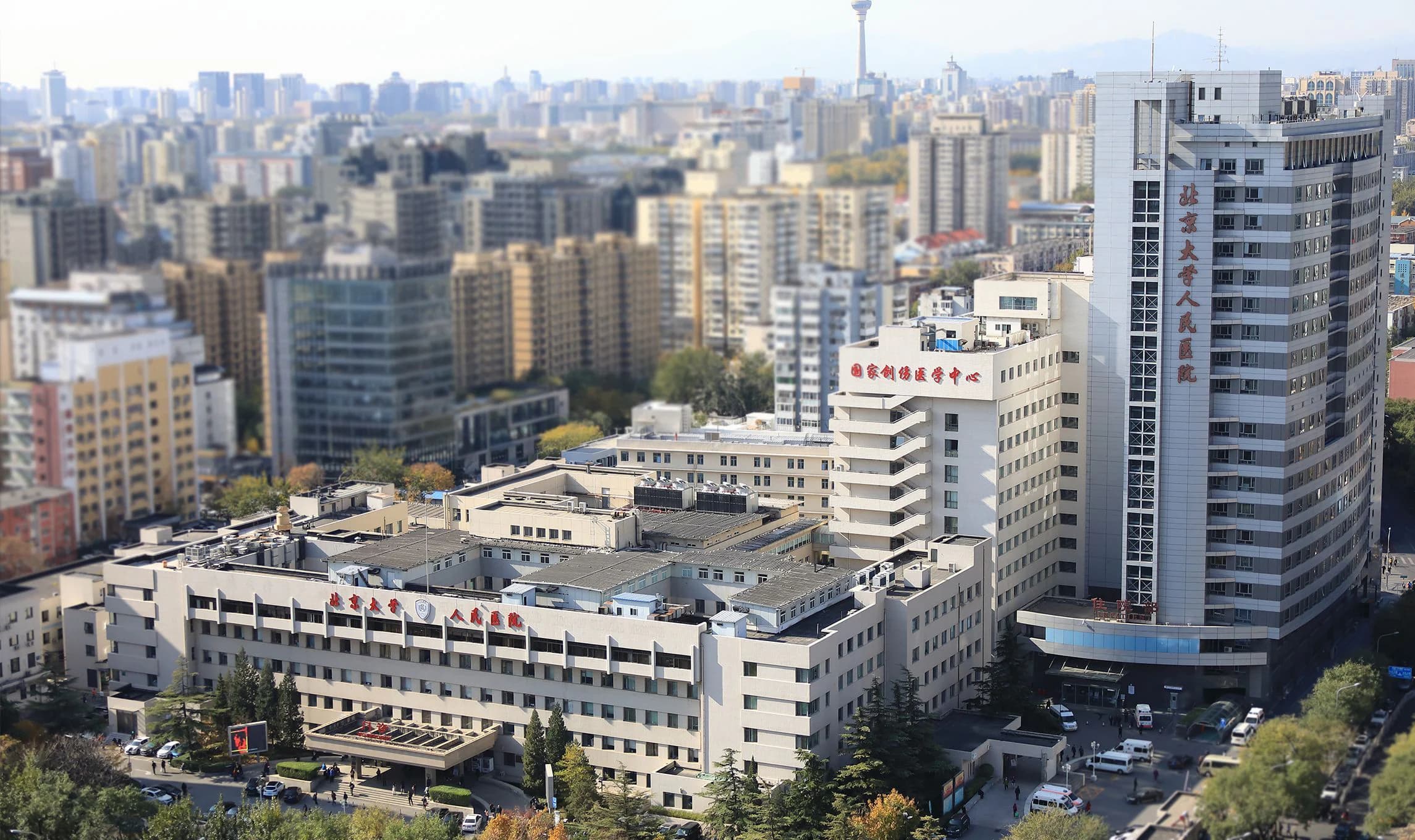
Grade III Grade A
Peking University People's Hospital
Peking University People's Hospital was founded in 1918 as Beijing Central Hospital. Funded, built, and managed by Chinese citizens, with Dr. Wu Lien-teh as its first director, it represents an important starting point in the development of modern hospitals in China. It is now a general Grade III Class A hospital managed by the National Health Commission, an affiliated hospital of Peking University, and the university's Second School of Clinical Medicine. The hospital undertakes medical care, teaching, research, and major national public health and emergency treatment responsibilities. It operates service campuses in Beijing including Xizhimen, Baitasi, and Tongzhou and is advancing construction of its Xiong'an campus; these campuses together constitute a single medical and teaching system. Public information on its website shows a complete disciplinary structure spanning internal medicine, surgery, obstetrics and gynecology, pediatrics, and medical technology, with strong clinical and translational research capabilities in hematologic diseases, thoracic surgery, trauma care, and other areas. The National Center for Trauma Medicine, built principally around the hospital, integrates trauma care, research translation, information, training, and regional collaboration. The hospital has also been approved to host the National Clinical Research Center for Hematologic Diseases and has developed Ministry of Education key laboratories, Beijing key laboratories, and Peking University institutes and research centers. It is an important Peking University base for clinical medical education, responsible for training undergraduate and graduate students, residents, and specialists, and it established an integrated medical, teaching, and research system relatively early. The three Beijing campuses together have more than 2,600 open beds, according to the hospital's English-language introduction, with a large complement of physicians, nurses, and support staff that demonstrates its comprehensive service capacity. Over more than a century, the hospital has continued to build expertise in trauma, hematology, thoracic surgery, cardiovascular medicine, respiratory medicine, critical care, and related fields. Through national medical centers, clinical research centers, and medical consortium development, it disseminates treatment standards and professional expertise across the region while strengthening emergency care and medical support for major disasters.
Established
1918-01-27
Official website
www.pkuph.cn/
Snapshot
Active departments
20 active departments available in this language.
Hospital tag
Grade III Grade A
Care planning
Need help comparing departments or travel logistics?
Carevia can help you assess department fit, shortlist hospitals across cities, and coordinate translation, appointments, and post-visit travel planning.
Departments
Clinical departments at Peking University People's Hospital
20 department profiles are available for review.
Department of Pulmonary and Critical Care Medicine
The Department of Pulmonary and Critical Care Medicine at Peking University People's Hospital was established in 1962 and integrates medical care, teaching, and research. It has specialist groups for chronic obstructive pulmonary disease, asthma, pulmonary infections, respiratory critical care, lung cancer, interventional pulmonology, interstitial lung disease, and pulmonary vascular disease, as well as a respiratory intensive care unit. It provides diagnosis and treatment including bedside bronchoscopy, ultrasound, and respiratory support. The department is also designated a National Key Clinical Specialty and a National Clinical Diagnosis and Treatment Center for Complex and Critical Respiratory Diseases, and hosts Beijing resident physician and China-US PCCM specialist training bases.
Respiratory Medicine
Department of Gastroenterology
The Department of Gastroenterology at Peking University People's Hospital became an independent department in 1990. It now comprises inpatient wards, outpatient clinics, an endoscopy center, a gastrointestinal motility unit, an ultrasound examination room, and laboratories. According to the hospital's official website, its key areas include inflammatory bowel disease, chronic and complex severe liver diseases, and the diagnosis and endoscopic treatment of early cancers of the esophagus, stomach, and colon; it has also developed a range of disease-specific clinics. The department is a specialist physician training base, a clinical drug trial institution recognized by the national drug regulatory authority, and a doctoral training site in internal medicine, and it continues to build a strong pipeline of young medical and nursing professionals.
Gastroenterology
Department of Cardiology
The Department of Cardiology at Peking University People's Hospital developed from a cardiovascular medicine specialty founded in the 1950s and formally became a department in the 1980s. It provides specialized diagnosis and treatment for coronary heart disease, hypertension, heart failure, arrhythmias, and thromboembolic disorders, and covers coronary intervention, cardiac electrophysiology and ablation, implantable device management, and multidisciplinary joint clinics. The department is also a Ministry of Education National Key Discipline, a National Key Clinical Specialty, and an American Heart Association professional demonstration center, and undertakes training in coronary and arrhythmia interventions.
Cardiology
Department of Nephrology
The Department of Nephrology at Peking University People's Hospital was founded in 1988 and consists of inpatient wards, outpatient clinics, a blood purification center, a chronic kidney disease center, a continuous renal replacement therapy center, and a renal pathology laboratory. It diagnoses and treats primary and secondary kidney diseases and acute and chronic kidney injury, and provides hemodialysis, peritoneal dialysis, and related renal replacement therapies. The department is also a Project 985 National Key Discipline of the Ministry of Education, a nephrology specialist physician training base, and a national clinical pharmacology base, and it additionally performs blood purification training functions.
Nephrology
Department of Hematology
According to the official website of the Department of Hematology at Peking University People's Hospital, the department has built clinical translational platforms focused on novel molecular markers for hematologic malignancies, hematopoietic stem cell transplantation and anti-infective immunity, the bone marrow microenvironment, CAR-T cell therapy, and aplastic anemia. It integrates clinical diagnosis and treatment resources with basic research in hematologic diseases to advance the development of new diagnostic and therapeutic technologies. The department was formally established in 1957, founded its Institute of Hematology in 1981, and is now a key discipline of the Ministry of Education and the former Ministry of Health as well as a National Key Clinical Specialty.
Hematology
Department of Endocrinology and Metabolism
The Department of Endocrinology and Metabolism at Peking University People's Hospital was established in 1986 and has outpatient clinics, inpatient wards, a clinical laboratory, and a diabetes research laboratory. Its disciplines encompass diabetes and obesity, pituitary, adrenal, thyroid and gonadal disorders, bone and mineral metabolism, and fluid and electrolyte disorders. It also operates disease-specific clinics for newly diagnosed diabetes, thyroid nodules, and pituitary and adrenal disorders. In 2011, the department was selected for the National Key Specialty Development Program and was designated a clinical research center in the field of diabetes by the Beijing Municipal Science and Technology Commission.
Endocrinology
Department of Neurology
The Department of Neurology at Peking University People's Hospital has a Xizhimen inpatient area, a Tongzhou inpatient area, and an emergency treatment area. It has developed ten subspecialties: cerebrovascular disease, neurointervention, headache, cognitive impairment, Parkinson's disease, epilepsy, neuromuscular disease, neuroinfectious and immune disorders, rare and complex diseases, and sleep disorders. It also provides examinations and treatments including electroencephalography, electromyography, and transcranial Doppler ultrasonography. The department's qualifications and platforms include a National Key Clinical Specialty Capacity Development Program, a neurology advanced training base of the National Health Commission, and a stroke screening and prevention base.
Neurology
Department of Hepatobiliary Surgery
The Department of Hepatobiliary Surgery at Peking University People's Hospital has long provided diagnosis and treatment for diseases of the liver, biliary tract, pancreas, and spleen, as well as portal hypertension, liver cancer, and liver transplantation. According to its official website, it uses surgical resection as the foundation of comprehensive liver cancer treatment, combined with ablation, interventional therapy, immunotherapy, and other approaches. It also performs complex biliary and pancreatic operations and laparoscopic procedures involving the liver, biliary tract, pancreas, and spleen, and provides intensive care and follow-up services for liver transplantation. Its academic platforms include key specialty status under Project 211 and the former Ministry of Health, a Beijing Key Discipline, a doctoral program, and a Beijing Key Laboratory.
General Surgery
1/3