Back to Hospitals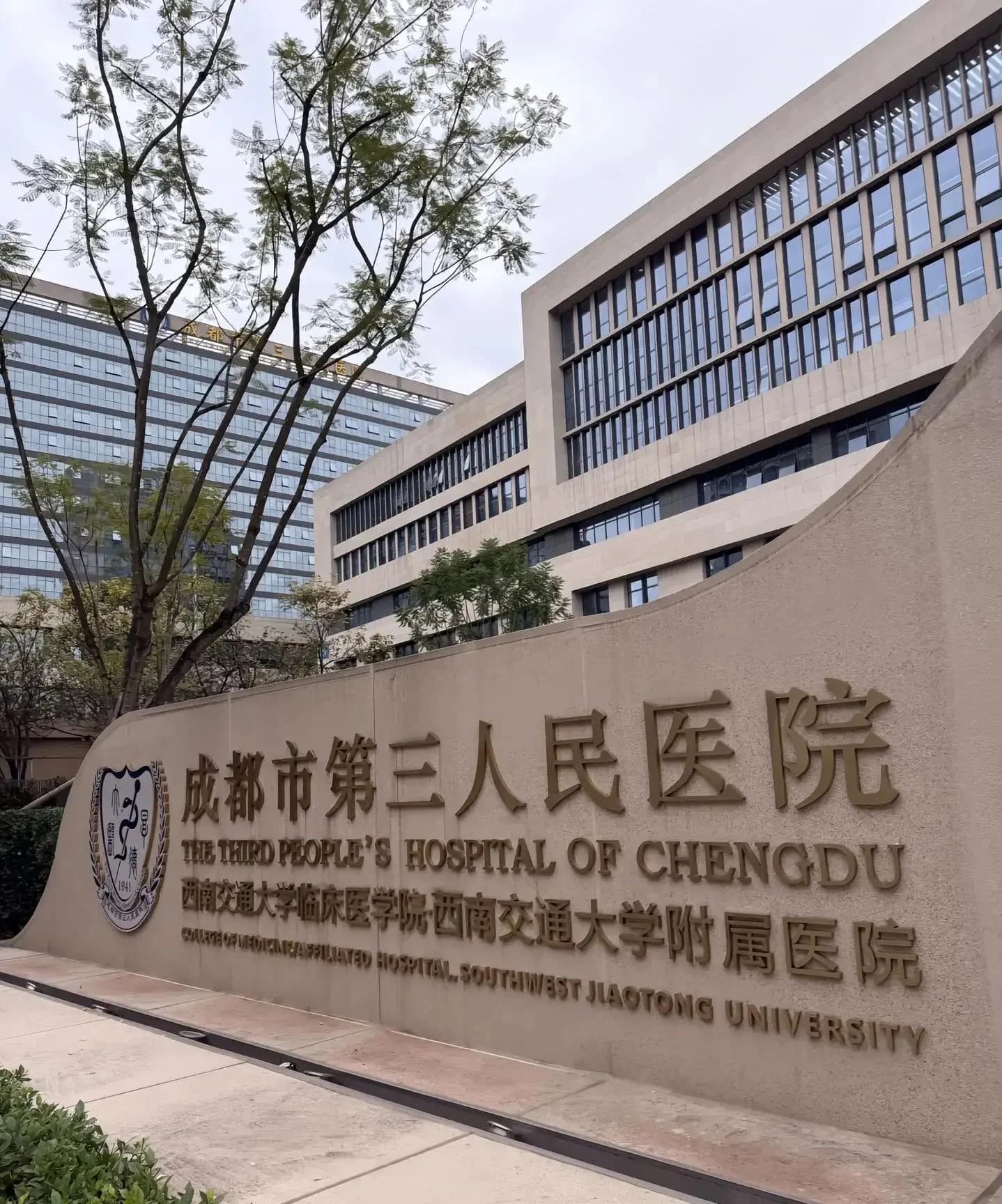
Grade III Grade A
Chengdu Third People's Hospital
Chengdu Third People's Hospital traces its history to Chengdu Public Hospital, established in July 1941. It subsequently operated as Sichuan Provincial Hospital, West Sichuan Hospital, Sichuan Provincial People's Hospital, and Chengdu People's Hospital before receiving its current name in 1955. The hospital is now a public-interest medical institution under the Chengdu Municipal Health Commission, providing medical care, teaching, research, prevention, rehabilitation, health services, and public health services. Research institutions affiliated with it include the Chengdu Institute of Cardiovascular Diseases and the Chengdu Institute of Respiratory Health. Public materials on its website identify it as a general Grade III Class A hospital and an important source of medical support for central Chengdu. Materials published by the hospital show that it has established a relatively complete clinical, medical technology, and acute and critical care system. Its disciplinary development spans cardiovascular medicine, respiratory and critical care medicine, gastroenterology, neurology, oncology, and related fields. The materials list National Clinical Key Specialty development projects, provincial Clinical Key Specialties, provincial Medical Key Specialties and Disciplines, municipal Medical Key Disciplines, and multiple municipal medical quality-control centers. The hospital also operates research institutes for cardiovascular diseases, neurological diseases, respiratory health, oncology, and digestive diseases. It has built multidisciplinary platforms for chest pain, atrial fibrillation, heart failure, cardiac rehabilitation, and advanced stroke care and undertakes regional medical quality control and specialty collaboration. In teaching, the hospital provides clinical education with Southwest Jiaotong University, Chongqing Medical University, Southwest Medical University, and other institutions and has a standardized residency training base. Research and professional development proceed through academician and expert workstations, a postdoctoral innovation practice base, and national collaborative clinical research networks for respiratory, digestive, and geriatric diseases. The hospital's historical account and official documents together show its gradual development from an urban general hospital into a comprehensive medical center that gives equal weight to medical care, teaching, and research and serves Chengdu and the wider Sichuan region.
Established
1941-07-01
Official website
www.cd3hospital.com/
Snapshot
Active departments
24 active departments available in this language.
Hospital tag
Grade III Grade A
Care planning
Need help comparing departments or travel logistics?
Carevia can help you assess department fit, shortlist hospitals across cities, and coordinate translation, appointments, and post-visit travel planning.
Departments
Clinical departments at Chengdu Third People's Hospital
24 department profiles are available for review.
Ophthalmology
The Department of Ophthalmology grew out of the Department of Five Senses established in the 1940s and became an independent department in 1994. It now integrates outpatient services, inpatient wards, and operating rooms. The department is responsible for ophthalmology quality control in Chengdu and is a provincial key discipline and a key clinical specialty development program. It has two wards, one for day care and one for general inpatient care, with 33 open beds and 7 independent operating rooms.
Ophthalmology
Orthopaedic Surgery
The Department of Orthopaedic Surgery became an independent department in 1976 and was designated a Chengdu municipal key medical discipline in 2005. It was among the earlier departments to perform anterior cervical decompression and fusion, replantation of severed limbs and digits, and total hip and knee replacement. It now has more than 60 medical staff and organizes clinical care, teaching, and research across three subspecialty areas. In 2013, the department established a China-US spine training center to train specialists and support international academic collaboration in spine surgery.
Orthopaedic Surgery
Urology
The Department of Urology was established in 1975. It is a provincial and municipal key clinical specialty and a Chengdu municipal key discipline. It also undertakes work for Chengdu's urological medical quality control, the specialty center for pelvic floor dysfunction, and the robotic minimally invasive surgery center. The department provides diagnosis and treatment of urinary system diseases, multidisciplinary collaboration for tumors, and training in minimally invasive techniques.
Urology
Cardiovascular Surgery
The Department of Cardiovascular Surgery was founded in the 1960s and was among the earlier departments to perform open-heart surgery with cardiopulmonary bypass, prosthetic heart-valve replacement, and coronary artery bypass grafting. It later introduced off-pump coronary artery bypass grafting, mitral valve repair, radiofrequency ablation Maze procedures, and other procedures, forming a clinical, teaching, and research team for cardiac and major vascular surgery. The department is a municipal key discipline. It began performing valve replacement in 1981 and coronary artery bypass grafting in 1992.
Cardiothoracic Surgery
Neurosurgery
The Department of Neurosurgery was founded in 1975 and is now a key clinical department integrating healthcare, teaching, research, and preventive care. It is responsible for neurosurgical medical quality control in Chengdu and work related to the Institute of Neurological Diseases. It also participates in development of the National Advanced Stroke Center and standardized surgical residency training. The department has three subspecialty groups for tumors, cerebrovascular disease, and functional neurological disorders, as well as a neurosurgical intensive care unit for critically ill patients.
Neurosurgery
Otolaryngology–Head and Neck Surgery
After more than 70 years of development, the Department of Otolaryngology–Head and Neck Surgery has become a municipal key discipline and key clinical specialty integrating clinical care, teaching, and research. It has 6 subspecialty groups covering otologic surgery; rhinology, nasal skull-base, and naso-orbital conditions; head and neck surgery; laryngology and voice; pediatric otolaryngology; and related areas. It also trains postgraduate students. The department offers specialty clinics for snoring, vertigo, voice disorders, and desensitization, providing tiered diagnosis and treatment for sleep-related breathing disorders, vestibular disorders, and allergic diseases.
Otolaryngology
Dentistry
The Department of Dentistry has 66 comprehensive dental treatment chairs and equipment for dental cone-beam computed tomography, 3D printing, digital panoramic tomography, dental X-ray imaging, oral microscopy, digital scanning, implantation, and laser treatment. The department provides clinical dental care, conducts research projects, and delivers national, provincial, and municipal continuing-education programs. Its subspecialties include endodontics, periodontics, oral mucosal diseases, oral and maxillofacial surgery, prosthodontics, implant dentistry, orthodontics, and pediatric dentistry. It also serves as the lead institution of the Chengdu Dental Care Quality Control Center.
Dentistry
Anesthesiology
The Anesthesia and Operating Room Center is a first-level clinical department integrating perioperative anesthesia and nursing, monitoring and treatment of urgent and critical illness, management of comfort-focused diagnostic and therapeutic services, specialty teaching, and research. It safeguards surgical safety and operating-platform services. It is also a national standardized anesthesiology residency training base, a provincial key specialty, and an institution involved in Chengdu anesthesiology quality control.
Anesthesiology
1/3