Back to Hospitals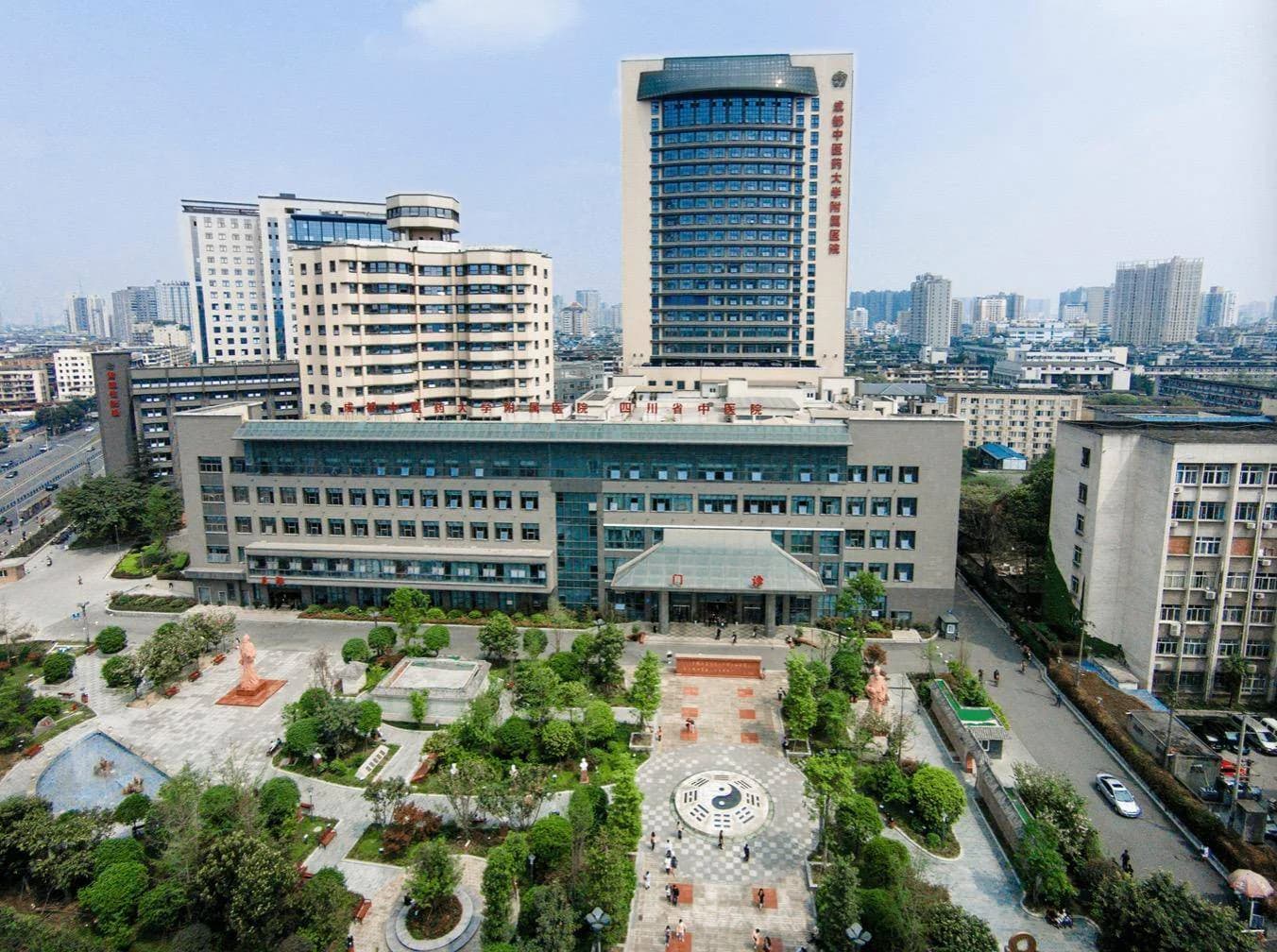
Grade III Grade A
Affiliated Hospital of Chengdu University of Traditional Chinese Medicine
Affiliated Hospital of Chengdu University of Traditional Chinese Medicine, also known as Sichuan Provincial Hospital of Traditional Chinese Medicine, was founded in 1957. It was among the first affiliated hospitals of higher education institutions of traditional Chinese medicine established in the People's Republic of China and is affiliated with a university included in the national Double First-Class initiative. Over decades of development, it has formed a Grade III Class A traditional Chinese medicine hospital system coordinating medical care, teaching, research, prevention, health services, wellness, and rehabilitation. Its responsibilities include national clinical research in traditional Chinese medicine, clinical trials of Chinese medicines, training of high-level traditional Chinese medicine professionals, standardized residency training, and international cooperation. The current introduction on its website lists 3,000 authorized beds, more than 2,300 open beds, 45 specialty outpatient clinics, 105 disease-specific outpatient clinics, and six multidisciplinary joint clinics. In 2025, it recorded approximately 3,782,000 outpatient and emergency visits and approximately 92,500 inpatient admissions. The hospital has been approved to develop multiple National Regional Traditional Chinese Medicine Specialty Diagnosis and Treatment Centers, National Clinical Key Specialties, and National Traditional Chinese Medicine Advantage Specialty projects. It also serves as a national clinical base for traditional Chinese medicine ophthalmology, emergency conditions, and infectious diseases treated with traditional Chinese medicine or integrated Chinese and Western medicine. It leads multiple specialty alliances that extend traditional Chinese medicine services to regional member institutions. In pharmacy services, the hospital has developed an intelligent Chinese pharmacy and a full-process quality traceability system, has strong capabilities in developing and dispensing in-house preparations, and offers online diagnosis and treatment, medication purchasing, and medical insurance payment through its internet hospital. Its disciplines are led by National Key Disciplines including acupuncture and tuina, traditional Chinese medicine ophthalmology and otolaryngology, and traditional Chinese medicine gynecology, forming a cluster that also includes National Administration of Traditional Chinese Medicine Key Disciplines and emerging interdisciplinary fields. The hospital is a National Clinical Research Base for Traditional Chinese Medicine and a drug clinical trial institution. It operates provincial Clinical Research Centers for endocrinology and metabolism, cardiovascular and cerebrovascular diseases, oncology, and other fields, as well as platforms for evidence-based medicine and standardized research translation in traditional Chinese medicine. It has received an A+ rating in the national performance assessment of Grade III public hospitals for consecutive years, reflecting its comprehensive strength in integrating distinctive traditional Chinese medicine care, teaching and professional inheritance, and modern clinical research.
Snapshot
Active departments
20 active departments available in this language.
Hospital tag
Grade III Grade A
Care planning
Need help comparing departments or travel logistics?
Carevia can help you assess department fit, shortlist hospitals across cities, and coordinate translation, appointments, and post-visit travel planning.
Departments
Clinical departments at Affiliated Hospital of Chengdu University of Traditional Chinese Medicine
20 department profiles are available for review.
Emergency Medicine and Classical Medicine Ward
The Emergency Department was founded in 1984. It is the National Traditional Chinese Medicine Emergency Medical Center, a National TCM and Integrative Emergency Clinical Base, a National Key Clinical Specialty in TCM emergency medicine of the National Health Commission, a National Regional TCM Emergency Diagnosis and Treatment Center, and a Key Discipline in TCM Emergency Medicine of the National Administration of Traditional Chinese Medicine. It also encompasses the National Key Specialty Disease of Stroke and National Key Specialty Emergency Encephalopathy, is a vice-chair institution of the Chinese TCM Emergency Specialty Medical Consortium and its Sichuan chair institution, chairs the Western China TCM Emergency Alliance, and serves as the Sichuan Clinical Medical Research Center for TCM Cardiovascular and Cerebrovascular Diseases and chair institution of the Sichuan Hospital Management Association's Integrative Prehospital Emergency Care Committee. Its Party branch is among the Ministry of Education's third cohort of National Model Party-Building Branches. The department has 1 National TCM Master, 1 inaugural National Famous TCM Physician, 2 of Sichuan's Top Ten Famous TCM Physicians, 4 Sichuan Famous TCM Physicians, 1 National Expert with Outstanding Contributions, 2 experts receiving State Council special allowances, 2 national TCM technical-inheritance mentors, and 3 Sichuan academic and technical leaders. Its 69 current medical and nursing staff include 3 doctoral supervisors, 5 master's supervisors, 5 chief physicians, 3 associate chief physicians, 8 attending physicians, and 7 residents. After nearly 40 years, it has become a comprehensive nine-part department comprising prehospital emergency care, emergency outpatient care, an emergency ward, an emergency intensive care unit (EICU), an emergency medicine teaching and research section, an Institute of TCM Emergency and Critical Care, a classical medicine clinic, a classical medicine ward including an MICU, and studios of nationally recognized TCM physicians. It provides emergency care for acute, critical, and complex neurologic, respiratory, digestive, and cardiovascular diseases and all types of trauma.
Emergency Medicine
Cardiology
The Department of Cardiology is a Sichuan-school TCM specialty integrating healthcare, teaching, research, prevention, and rehabilitation. It is also one of the largest cardiovascular centers with the most complete subspecialties and highest comprehensive technical level in the TCM systems of southwestern China and Sichuan. It has become a China Chest Pain Center, China Heart Failure Center, China Atrial Fibrillation Center, Hypertension Attainment Center, China Cardiac Rehabilitation Center, National Cardiogenic Stroke Prevention and Treatment Base, National TCM Heart Failure Collaboration Center, National Cardiovascular New-Drug Clinical Trial Base, National TCM Cardiovascular Disease Clinical Research Subcenter, and Coronary Physiology Diagnosis and Treatment Center, among other national and provincial key platforms. It is a key discipline for heart failure of the Sichuan Administration of Traditional Chinese Medicine and leads the Sichuan TCM-system cardiovascular quality-control center. Its complete structure comprises a cardiology specialty clinic, inpatient ward, coronary care unit (CCU), cardiac rehabilitation center, interventional operating room, functional examination room including noninvasive cardiac-function and bedside cardiac ultrasound, and outpatient TCM treatment room, all with advanced equipment. Its integrated Chinese-Western team includes 1 expert receiving a State Council special allowance, 1 cardiovascular academic leader, 1 doctoral and 6 master's supervisors, 1 overseas visiting scholar, 1 former Ministry of Health medical-aid expert to Africa, and 4 Sichuan Famous TCM Physicians. The team includes 14 cardiovascular-intervention experts, 23 specialists, and 29 nursing staff, combining extensive clinical experience and strong research capabilities.
Cardiology
Respiratory Medicine
The Department of Respiratory Medicine, one of the hospital's earliest departments, was founded in 1986 and took shape in 1994. In 2007 it became a Sichuan key TCM respiratory specialty and specialty-disease program. It awards master's and doctoral degrees in respiratory TCM internal medicine and integrative internal medicine, having admitted master's students since 2000 and doctoral students since 2006. In 2004 it was certified by the national drug regulator as the respiratory specialty of a National New-Drug Clinical Trial Institution, and in 2013 it became a national standardized respiratory residency training base. Its 30 full-time medical and nursing staff include 2 experts receiving State Council special allowances, 3 National Outstanding TCM Clinical Talents, 3 Sichuan Famous TCM Physicians, 4 master's or doctoral supervisors, 1 Changjiang Scholar special-position scholar, and 1 National Advanced Individual in Fighting COVID-19. Physicians include 5 chief, 2 associate chief, 4 attending, and 2 resident physicians. The 17 specialty nursing personnel include 1 with a senior title, 2 nurse supervisors, 22 senior nurses, 18 nurses, 6 specialty-nurse certificate holders, and 3 holders of university teaching credentials. The department teaches TCM Diagnostics, TCM Internal Medicine, Diagnostics, and Internal Medicine for diploma, undergraduate, and postgraduate education at Chengdu University of TCM and provides internships and continuing education for advanced trainees and international students. It has 90 open beds, 9 specialty consulting rooms, a pulmonary-function laboratory, TCM treatment room, respiratory endoscopy center, and respiratory treatment room. Equipment includes invasive and noninvasive ventilators, defibrillators, sputum-clearance and oscillometry systems, FeNO and blood-gas analyzers, electronic bronchoscopes, argon plasma coagulation, cryotherapy and vibratory sputum-clearance devices, diaphragm pacers, a German Jaeger pulmonary-function system, and other distinctive TCM diagnostic and therapeutic equipment supporting accurate diagnosis and effective treatment.
Respiratory Medicine
Gastroenterology
The Department of Spleen and Stomach Diseases was founded in 1957 by renowned medical educator Professor Li Sichi and renowned specialists Professors Pu Fuzhou and Ran Pinzhen, and was further developed by doctoral supervisor Professor Wang Zaimo. It is one of the hospital's earliest departments. It was among the first master's and doctoral degree-awarding sites in TCM and integrative internal medicine and became an authorized master's site in gastroenterology in 2011. It is a national GCP gastroenterology base, a Sichuan key TCM spleen and stomach specialty development institution, a Chengdu and university key-discipline development institution, a Sichuan provincial-municipal collaborative key specialty and disease inheritance institution, chair institution of the Sichuan TCM Association Spleen and Stomach Disease Branch, standing-member institution of the China Association of Chinese Medicine Spleen and Stomach Disease Branch, standing council institution of the World Federation of Chinese Medicine Societies Gastroenterology Branch, and standing-member institution of the Chinese Association of Integrative Medicine committees for digestive diseases and digestive endoscopy. Its 35 medical and nursing staff include 12 physicians: 4 chief physicians, professors, or provincial famous doctors; 2 provincial-administration academic and technical leaders or reserve leaders; 3 associate chief physicians or associate professors; and otherwise attending physicians. Its 16 nurses include 1 chief nurse, 1 associate chief nurse, and 6 nurse supervisors. It has 70 beds with utilization at or above 100%, 7 outpatient rooms, one 13C/14C urea-breath-test laboratory, and 1 distinctive TCM treatment room. A major Chinese clinical, teaching, and research base for TCM spleen and stomach diseases, it has recently undertaken more than 10 international evidence-based medicine registrations, National Natural Science Foundation projects, National Administration of TCM standardization research on common-disease guidelines, and other provincial and ministerial projects. It has held Sichuan continuing-education courses on syndrome differentiation and treatment and participated in standardized research for national TCM clinical pathways and guidelines.
Gastroenterology
Nephrology
The Department of Nephrology is a National Key Specialty integrating clinical care, teaching, and research; a Ministry of Education master's and doctoral degree site in integrative clinical internal medicine; a National Administration of TCM key specialty and integrative-medicine discipline; a key-disease development department of the National Clinical Diabetes Research Base; a national drug-regulator GCP base; a core member of the National Clinical Research Center for Chronic Kidney Disease; a standing council institution of the China TCM Hemodialysis Alliance; a national blood-purification training base for county hospitals; the Sichuan Center for TCM Prevention and Treatment of Chronic Kidney Disease; chair institution of the Sichuan Association of Integrative Medicine Nephrology Committee and Sichuan Association of Chinese Medicine Nephrology Committee; and the Sichuan TCM Nephrology Quality Control Center. In 1985 it was included in the Directory of Chinese Research Institutions and, with approval of the State Science and Technology Commission, became an important platform for consultation and exchange on urgent, critical, difficult, and severe internal diseases treated with TCM and integrative medicine in China and abroad. Founded by renowned TCM and integrative nephrology expert Professor Ye Chuanhui, it has a highly skilled, experienced team. It has 3 experts receiving State Council special allowances, 2 Sichuan academic and technical leaders, 6 Sichuan Famous TCM Physicians, 1 Sichuan reserve academic and technical talent, 1 Health Department reserve academic and technical talent, 3 Sichuan Administration of TCM academic and technical leaders, 3 mentors and 3 inheritors in the National Famous Senior TCM Physician inheritance program, 2 mentors in Sichuan's fifth inheritance cohort, 1 third-cohort Sichuan Chief Health Expert, 4 doctoral and 7 master's supervisors, 9 chief physicians, 6 associate chief physicians, 10 attending physicians, 4 residents, 15 doctorate and 9 master's degree holders, 1 associate chief nurse, 29 nurse supervisors, and 32 senior nurses.
Nephrology
Endocrinology and Diabetes Center
The Department of Endocrinology and Diabetes Center is western China's leading TCM institution and clinical, teaching, research, and training base for prevention and treatment of endocrine and metabolic diseases. It was among China's first authorized master's and doctoral sites and GCP centers in TCM endocrinology and served as chief or associate-chief editor institution for national higher-education TCM textbooks and the Ministry of Health's Twelfth Five-Year Plan textbooks. A postdoctoral station in TCM endocrinology was established in 2003. The hospital became a development institution for the National TCM Clinical Research Base for Diabetes in 2008. In 2009 the department became a National Administration of TCM key discipline in TCM endocrinology and the Sichuan TCM Diabetes Prevention and Treatment Center; in 2010, a Sichuan key medical discipline; in 2011, a National Administration of TCM Twelfth Five-Year Plan key specialty and a Chinese Medical Doctor Association osteoporosis diagnosis and treatment collaboration base; and in 2013, a national Ministry of Health Key Clinical Specialty and a Sichuan university innovation team for TCM prevention and treatment of diabetes and its complications. In 2017 it became a Sichuan Clinical Medical Center and an inaugural National Famous Endocrinology and Diabetes Department of the Chinese Association for Research and Advancement of Chinese Medicine. In 2018 it became the lead institution for the national pilot integrative clinical collaboration project on major difficult diseases, specifically diabetes and its complications. Since 2018 it has annually been named a Best Research Specialty among Chinese TCM hospitals. In 2019 it led implementation of the Healthy China 2030 Sichuan Diabetes Prevention and Control Plan, and in 2020 it established a standardized TCM metabolic-disease prevention and treatment center. The discipline began in the late 1970s with a TCM endocrinology group. Academic leader Professor Zhang Farong began research on wasting-thirst disorder, advocated prioritizing prevention while integrating prevention and treatment, moved beyond the traditional three-wasting syndrome theory, and emphasized treatment from the spleen and kidney.
Endocrinology
Neurology
The Department of Neurology is a National Administration of TCM key discipline in mental and consciousness disorders; the diabetic cerebrovascular-disease group of a National Clinical Research Base; a development institution for the National Advanced Cognitive Impairment Diagnosis and Treatment Center and Memory Disorder Prevention and Treatment Center; a Sichuan Twelfth Five-Year Plan key specialty; a member of the Sichuan Stroke Association Stroke Alliance, Western Parkinson Disease Prevention and Treatment Alliance, Institute of Integrated Translational Research on TCM Encephalopathy Drugs, and Stroke 120 Sichuan Special Action Group. Its 32 medical and nursing staff include 3 professors and chief physicians, 4 associate professors and associate chief physicians, and 11 with intermediate titles. It has 1 Sichuan academic and technical leader, 3 Sichuan Famous TCM Physicians, 1 Sichuan Expert with Outstanding Contributions, 1 National Administration of TCM Outstanding TCM Talent, 3 Sichuan Administration of TCM academic and technical leaders and 3 reserve candidates, 1 leader of a Chinese medical team to Africa, 1 National Advanced Individual in Overseas Medical Aid, 2 doctoral supervisors, and 4 master's supervisors. The department emphasizes core-talent and workforce development and has 8 doctorate and 9 master's degree holders. Members serve as vice-chair of the Chinese Medical Doctor Association Integrative Neurology Committee; standing member of the Chinese Association of Integrative Medicine Neurology Committee; vice-chair of the China Association of Chinese Materia Medica Drug Evaluation Encephalopathy Committee; vice-chair of the Chinese Association for the Promotion of Traditional Chinese Medicine Encephalopathy Committee; vice-chair of the China Association of Chinese Medicine Psychosomatic Medicine Committee; standing member of the Sichuan Medical Association Neurology Committee; chair of the Sichuan Association of Chinese Medicine Encephalopathy Committee; vice-chair of the Sichuan Association of Integrative Medicine Neurology Committee; and standing member of the Sichuan Stroke Specialty Alliance, giving it substantial professional influence and academic standing.
Neurology
Rheumatology and Immunology
The Department of Rheumatology was founded in 1985 and is one of southwestern China's earlier rheumatology specialties. It is a Sichuan key specialty; a master's and doctoral site in TCM internal medicine and integrative clinical rheumatology at Chengdu University of TCM; a drug clinical-trial base approved by the national food and drug regulator; a council institution of the Southwest Rheumatology Alliance; and a rheumatology specialty integrating healthcare, teaching, and research. Its independent ward has 48 designated beds, and it operates 4 specialty clinics. Its clinical team includes 5 chief physicians and professors, 3 associate chief physicians and associate professors, 4 attending physicians, and 3 residents, including 2 Sichuan Famous TCM Physicians. It has 2 doctoral and 4 master's supervisors and has trained nearly 100 master's and doctoral rheumatology students. The department performs immunologic testing and has joint-ultrasound and multiple physiotherapy systems. It integrates Chinese and Western medicine and internal and external treatments. Distinctive therapies include oral herbal medicine, herbal steaming, acupuncture, acupoint application and injection, and topical herbal treatment, emphasizing regulation of organ function, yin and yang, qi and blood, and meridians to treat both root cause and manifestations. Hospital-developed medicines including Wuma Rheumatism Tablets, Bujin Tablets, Sanqi Analgesic Tablets, and Tongfengning Oral Liquid provide good efficacy with few adverse effects. The department achieves good outcomes for systemic lupus erythematosus, rheumatoid arthritis, ankylosing spondylitis, gout, systemic sclerosis, systemic vasculitis, Behçet disease, osteoarthritis, polymyositis, and dermatomyositis. It has an outstanding reputation in rheumatology research and specialist treatment and provides high-quality, satisfactory care.
Clinical Immunology
1/3