Allergic rhinitis
Allergic rhinitis is a chronic, noninfectious inflammation of the nasal mucosa, predominantly mediated by specific IgE after an atopic person encounters a relevant allergen. Typical features are paroxysmal sneezing, watery rhinorrhea, nasal itching, and nasal obstruction, sometimes with ocular symptoms; infectious and nonallergic rhinitis must be distinguished.
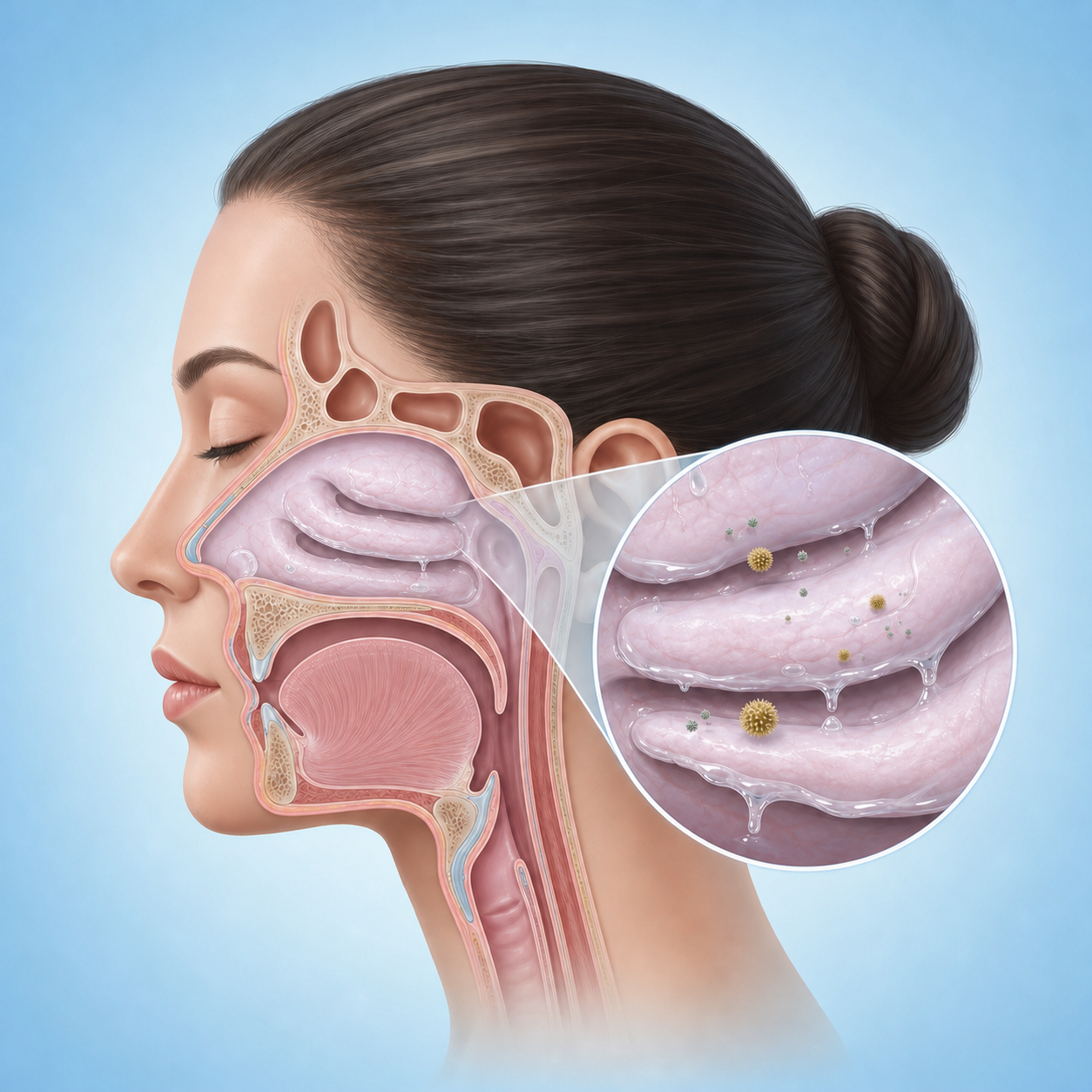
Common Symptoms
Recognizing Allergic rhinitis
Focus on the most useful decision cues first: common symptoms, the patients or situations that usually prompt review, and any signs that need faster assessment.
Common Symptoms
Signs patients often notice before evaluation
Paroxysmal sneezing, watery nasal discharge, nasal itching, and nasal obstruction
Itchy or watery eyes or conjunctival redness
Reduced sense of smell, disturbed sleep, and reduced daytime concentration
Symptoms related to pollen, dust mites, animals, or a specific environmental exposure
When to Seek Evaluation
Typical patients and situations that warrant review
People with a personal or family history of allergic disease
People exposed to dust mites, pollen, animals, or occupational allergens
Children and adults
People with asthma, atopic dermatitis, or allergic conjunctivitis
Recurrent nasal itching, sneezing, and watery discharge affecting sleep, work, or study
Persistent nasal obstruction or reduced smell requiring distinction from sinusitis and structural disease
Planned allergen immunotherapy or poor response to previous treatment
Prompt specialist assessment for marked wheeze or breathlessness, progressive unilateral obstruction, recurrent nosebleeds, periorbital swelling, or visual change
Urgent Assessment
Nasal symptoms accompanied by marked wheeze, chest tightness, or difficulty breathing require assessment for an acute asthma exacerbation. Periorbital swelling, loss of vision, severe headache, neurologic symptoms, or unilateral bloody discharge requires timely emergency or ENT assessment.
Treatment Approaches
Treatment Directions for Allergic rhinitis
Use feasible measures to reduce relevant allergen and irritant exposure and provide correct medicine-use education
Select options such as an intranasal corticosteroid or second-generation antihistamine according to severity
Assess allergen immunotherapy for eligible people seeking long-term disease modification
Manage comorbid asthma, conjunctivitis, sinusitis, and sleep problems
What usually shapes the treatment plan
Clinical Assessment
Key Assessments for Allergic rhinitis
These are the main areas doctors usually review first. If you already have relevant test or imaging reports, bring them to speed up the assessment. They are helpful but not required, and the same workup can also be completed in China.
Relationship of symptoms to season, place, and specific exposure
Symptom duration and severity and effects on sleep and function
Nasal examination, smell, and the presence of polyps or a structural abnormality
Skin-prick or serum-specific IgE results and their clinical relevance
Previous nasal medicines, decongestant use, adherence, and technique
Concurrent asthma assessment when cough, wheeze, or breathlessness is present
Before You Travel
How to Prepare
Record the season and place of symptoms and pet and bedroom exposures
Bring skin-prick or specific-IgE reports
Bring current nasal sprays so that technique can be checked
Record the duration of continuous decongestant use and any asthma-like symptoms
Planning Notes
Pre-Assessment Required
Prepare a symptom-exposure timeline, nasal examination findings, and allergen-test results. Persistent unilateral symptoms, bleeding, marked loss of smell, or orbital or neurologic symptoms must not be managed as ordinary allergy alone.
Remote Pre-Assessment
Symptom pattern, exposures, testing, and nasal-spray technique can be screened remotely. Unilateral bleeding, periorbital or visual symptoms, or marked breathlessness requires in-person assessment.
Multidisciplinary Assessment
Medical History Important
Asthma, sinusitis, nasal polyps, rhinitis medicamentosa, pregnancy, and previous allergen immunotherapy directly affect the plan.
Ready to Explore Treatment for Allergic rhinitis?
Let Carevia help you connect with the right specialists, compare hospitals, and plan your medical trip to China.