Back to Hospitals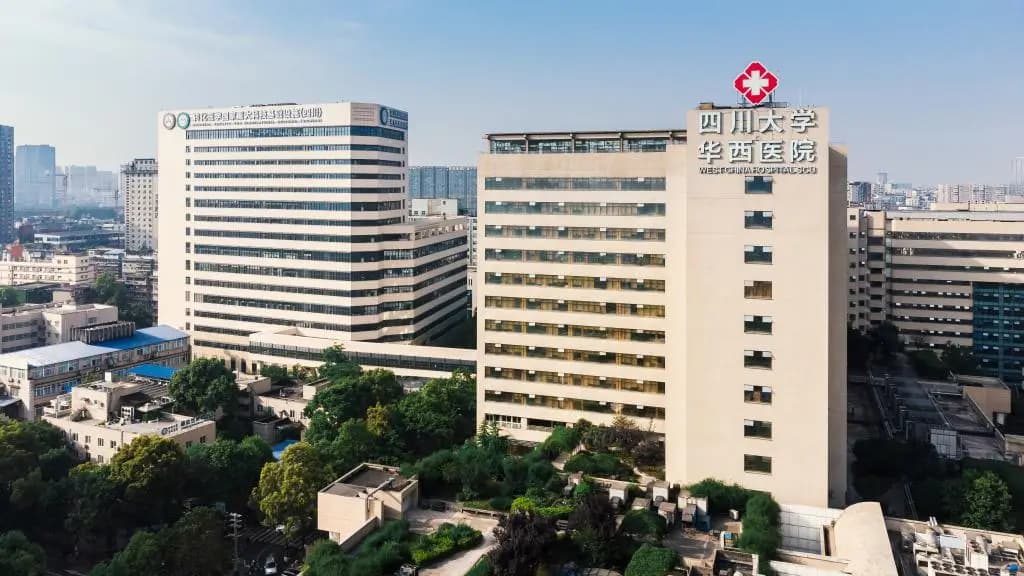
Grade III Grade A
West China Hospital of Sichuan University
West China Hospital of Sichuan University was founded in 1892, and the West China School of Clinical Medicine of Sichuan University originated from the medical school of West China Union University in 1914. It has now grown into a national-level center for the diagnosis and treatment of complex, critical, and severe illnesses in western China, a renowned higher medical institution in China, and a national-level base for first-class medical scientific research and technological innovation, with comprehensive strength ranking among the top in China and advanced internationally. It was among the first batch of national medical center construction units and a pilot hospital for high-quality development jointly built by the national and provincial governments. It houses the National Medical Center for Mental Illness and two national regional medical centers. The school boasts strong comprehensive academic strength, with its clinical medicine ranking among the top in the world (top 0.271‰ globally) according to ESI. In the latest round of discipline evaluation by the Ministry of Education, clinical medicine ranked A, nursing and medical technology ranked A+, and integrated traditional Chinese and Western medicine ranked B+. It currently has 9 national key disciplines and 2 key cultivation disciplines under the Ministry of Education. In terms of leading talents, there are a total of 144 national-level high-level talents (195 person-times), including 1 academician of the Chinese Academy of Sciences, 50 national-level leading talents, 86 national-level young talents, and 42 experts who are chairpersons/vice chairpersons of national-level academic societies/associations.
Established
1905-03-06
Official website
www.wchscu.cn/index.html
Snapshot
Active departments
57 active departments available in this language.
Hospital tag
Grade III Grade A
Care planning
Need help comparing departments or travel logistics?
Carevia can help you assess department fit, shortlist hospitals across cities, and coordinate translation, appointments, and post-visit travel planning.
Departments
Clinical departments at West China Hospital of Sichuan University
57 department profiles are available for review.
Plastic Surgery/Burn Surgery
The Department of Cosmetic, Plastic and Burn Surgery at West China Hospital of Sichuan University was established in 1963, making it one of the earliest hospitals in China to establish a specialized department in cosmetic, plastic and burn surgery. After more than 50 years of development, the department has become a comprehensive center integrating medical treatment, teaching, and research, encompassing both cosmetic and burn surgery. It boasts a strong team of experts, advanced equipment, and multidisciplinary collaborations, working extensively with domestic and international specialists in cosmetic and burn surgery. It is authorized to grant doctoral and master's degrees and serves as a medical teaching center in Southwest China, training and supplying the nation with a large number of high-level professionals in cosmetic and burn surgery. Currently, the department has 3 doctoral supervisors, 2 external doctoral supervisors, 3 master's supervisors, 6 professors, 10 associate professors, 18 attending physicians, 5 physicians, and 7 postdoctoral fellows. The vast majority of the department's doctors hold doctoral degrees or higher. In recent years, the department's experts have co-authored numerous publications and serve on the editorial boards of journals such as the *Chinese Journal of Surgery*, *Chinese Journal of Trauma*, *Chinese Journal of Burns*, *Chinese Journal of Reparative and Reconstructive Surgery*, *Practical Journal of Cosmetic and Plastic Surgery*, *West China Medical Journal*, *Western Medical Journal*, *Sichuan Medical Journal*, and *Journal of Sichuan University*. In the past five years, the department has published over 200 papers in core domestic and international journals, including over 60 SCI-indexed papers. The department comprehensively performs various cosmetic and plastic surgery procedures and corrective surgeries for failed plastic surgeries, handling nearly 10,000 surgeries annually, placing it at a leading level in China. Simultaneously, the department treats a large number of complex plastic surgeries each year, such as organ reconstruction, repair of refractory wounds, diagnosis and treatment of superficial tumors, giant vascular tumors, and congenital malformations, also at a leading level in China. The department's experts regularly participate in the review and supervision of medical aesthetic institutions nationwide and provincially, making significant contributions to improving the level of cosmetic and plastic surgery in Sichuan Province. The Cosmetic and Plastic Surgery Center of West China Hospital of Sichuan University recruits doctoral and master's students year-round, with a 100% employment rate for graduates. It also receives visiting physicians from all over the country. The department not only cultivates and supplies a large number of highly qualified personnel to society but also promotes the progress and development of medical aesthetic professionals across the country, making a significant contribution to the training of medical aesthetic professionals in my country. As a national research hub, the West China Center for Cosmetic and Plastic Surgery at Sichuan University undertakes numerous national, provincial, and municipal research projects annually, achieving fruitful results. In recent years, experts from the department have co-authored several books and serve on the editorial boards of journals such as the *Chinese Journal of Surgery*, *Chinese Journal of Trauma*, *Chinese Journal of Reparative and Reconstructive Surgery*, *Practical Journal of Cosmetic and Plastic Surgery*, *West China Medical Journal*, *Western Medicine Journal*, *Sichuan Medical Journal*, and *Journal of Sichuan University*. In the past five years, over 200 papers have been published in domestic and international core journals, including over 60 SCI-indexed papers, promoting the development of cosmetic and plastic surgery. Simultaneously, as a burn treatment center in Southwest China, the department actively fulfills its social responsibility. In recent years, our expert team has actively participated in rescue and treatment efforts following the Wenchuan earthquake, the Ya'an Lushan earthquake, the Panzhihua mine disaster, the Yibin bus explosion, the Kunshan burn incident, and the Nepal earthquake, demonstrating the responsibility and commitment expected of West China Medical Center members.
Plastic Surgery
Department of Integrated Traditional Chinese and Western Medicine
The Department of Integrated Traditional Chinese and Western Medicine at West China Hospital was established in 1956. It is currently a key discipline recognized by the State Administration of Traditional Chinese Medicine, a national key clinical specialty (Traditional Chinese Medicine Surgery) designated by the National Health Commission, a postdoctoral research station designated by the Ministry of Human Resources and Social Security, a doctoral degree-granting unit for integrated traditional Chinese and Western medicine, a national regional TCM specialty treatment center (Traditional Chinese Medicine Surgery), a key specialty of the State Administration of Traditional Chinese Medicine (Traditional Chinese Medicine Lung Diseases), a national clinical research base for pharmaceuticals (Traditional Chinese Medicine), a national demonstration unit for TCM work in comprehensive hospitals, the Sichuan Provincial Center for Integrated Traditional Chinese and Western Medicine Prevention and Treatment of Acute Pancreatitis, and a key specialty of the Sichuan Provincial Administration of Traditional Chinese Medicine (Traditional Chinese Medicine Proctology). It ranks among the top in the national first-level discipline evaluation by the Ministry of Education. The department currently has 60 physicians and 112 nurses, including 30 senior professionals, 5 doctoral supervisors, and 8 renowned TCM doctors in Sichuan Province. It has 218 authorized beds, with 113 in the main campus and 105 in the Shangjin branch. It offers five clinical subspecialties: integrated traditional Chinese and Western medicine in gastroenterology, respiratory medicine, acupuncture, proctology, and oncology. There are 15 outpatient clinics and treatment rooms. As the largest TCM clinical department in a national affiliated hospital of a Western medicine university, it enjoys a high reputation for its distinctive clinical characteristics and advantages in integrating TCM and Western medicine. The TCM-Western medicine digestive specialization primarily treats severe acute pancreatitis and intestinal obstruction. It has innovatively proposed the "Theory of Febrile Diseases," which systematically summarizes the pathogenesis and syndrome types of severe acute pancreatitis, and the "Yi Huo Qing Xia" therapy under its guidance. It employs a variety of TCM treatment methods, including acupuncture and medication, combined with oral and external application of Chinese medicine, and oral and enema administration, combined with Western medical treatment techniques and academic advancements, forming a comprehensive TCM-Western medicine integrated treatment plan. It is the national leading unit for the TCM-Western medicine collaboration on major and difficult diseases by three ministries. It treats over 2,000 patients with acute pancreatitis annually, making it the world's largest treatment center with internationally leading efficacy, and is recognized as a model for TCM treatment of critical and severe illnesses. It has won numerous provincial and ministerial-level first and second prizes for scientific and technological progress. It has established extensive and in-depth international cooperation with world-class pancreatology centers in the UK, USA, and New Zealand. The Department of Integrative Medicine in Respiratory Diseases has innovatively proposed theories and methods for the prevention and treatment of Chronic Obstructive Pulmonary Disease (COPD) and asthma, establishing a new comprehensive TCM approach to prevention and treatment. This approach compensates for the limitations of single-method treatments in Western medicine and significantly reduces the mortality rate of pulmonary heart disease and pulmonary encephalopathy. It treats over 800 COPD and asthma patients annually and has received four provincial and ministerial-level awards, including the First Prize of Sichuan Provincial Science and Technology Progress Award. Acupuncture treatment is widely used in various clinical departments, with particularly significant efficacy in the diagnosis and treatment of cerebrovascular diseases and perioperative complications of surgery, treating over 100,000 patients annually. It also offers three specialized acupuncture clinics: one for paralysis, one for TCM orthopedics, and one for weight loss. The Department of Integrative Medicine in Proctology, based on the principles of "minimally invasive, painless, and highly effective," has pioneered domestically leading surgical methods for treating hemorrhoids and fistulas, such as "segmental resection for circumferential mixed hemorrhoids" and "resection with seton and muscle fixation suture for high-level complex anal fistulas." It performs surgery on over 2,000 patients annually. The department has developed a staged treatment plan combining traditional Chinese and Western medicine for malignant tumors. It employs treatment principles such as "clearing heat and detoxifying," "promoting blood circulation and removing blood stasis," "resolving phlegm and dissipating nodules," "strengthening the spleen and supporting the body's resistance," "tonifying qi and warming yang," and "strengthening the body's resistance and consolidating its foundation," reducing patient suffering, improving quality of life, and prolonging survival. Several traditional Chinese medicine compound formulas have been developed and obtained national patent certificates. Guided by the spirit of "inheriting the essence, upholding the correct path and innovating," the department follows the development laws of traditional Chinese medicine, adheres to the principle of equal emphasis on both traditional Chinese and Western medicine, takes "learning from both Chinese and Western medicine and combining innovation" as its motto, and upholds the tenet that "medicine is a benevolent art," wholeheartedly providing patients with high-quality and efficient medical and nursing services. Currently, it has established an Integrated Traditional Chinese and Western Medicine Center, which includes a Pancreatitis Center, an Integrated Traditional Chinese and Western Medicine Internal Medicine Department, and an Integrated Traditional Chinese and Western Medicine Surgery Department.
Integrative Medicine
Intensive Care Unit
The Department of Critical Care Medicine at West China Hospital of Sichuan University was established on May 12, 1992. It has now become a comprehensive critical care monitoring, treatment, and nursing center with 8 intensive care wards and over 20 subspecialty medical groups. It is a new type of department operating collaboratively across multiple hospital campuses, wards, and disciplines. The department has a total of 268 beds and over 800 medical staff. It possesses world-class organ function monitoring, support, and treatment equipment, complete clinical research and teaching facilities, and an excellent team of medical, nursing, and respiratory therapists, as well as various clinical treatment groups. It treats over 10,000 critically ill patients annually, with a cure rate exceeding 95%. It undertakes classroom and clinical practice teaching for undergraduate, 8-year program, and graduate students, and is the largest and most comprehensive critical care medicine clinical and teaching base in China. It is among the first batch of national key clinical specialties, a national standardized training base for resident physicians/specialists in critical care medicine, the Sichuan Provincial Critical Care Quality Control Center, and the Sichuan Provincial ICU specialist nurse training base. In the past five years, the department has undertaken more than 50 projects funded by the National Natural Science Foundation of China, the Ministry of Health, the Chinese Medical Association, the Provincial Health Department, and the Provincial Science and Technology Department, applied for more than 70 patents, and secured research funding exceeding 30 million yuan. It has published more than 500 papers in core journals, including more than 150 SCI papers. The department has received 6 national and Sichuan provincial science and technology awards, and 1 Asian Hospital Management Gold Award. In 2021, the department ranked first in China's Hospital Science and Technology Evaluation (STEM) for Critical Care Medicine, and third nationwide in the Fudan University Best Hospital Rankings for Critical Care Medicine.
Critical Care Medicine
Pancreatic Surgery
The Department of Pancreatic Surgery at West China Hospital of Sichuan University is a national key discipline and a key discipline of the Ministry of Health. The department's scope of diagnosis and treatment includes surgical treatment and laparoscopic surgery for diseases of the liver, biliary tract, pancreas, spleen, duodenum, and retroperitoneal tumors, and it is also responsible for basic research on related diseases. The department currently has 21 doctors, including 7 professors and 5 associate professors, 3 doctoral supervisors, and 4 postgraduate supervisors. Many doctors have studied or trained at renowned universities in the United States, Japan, Switzerland, Germany, and other countries. There are 34 nursing staff, many of whom have obtained postgraduate or undergraduate degrees. As a model ward for high-quality nursing care, the Department of Pancreatic Surgery provides high-quality nursing services to patients while actively exploring ways to provide more specialized care. Currently, the department has specialized nurses for wound care, intravenous therapy, and pain management. The Department of Pancreatic Surgery performs more than 3,600 surgeries annually involving the liver, biliary tract, pancreas, and spleen, possessing rich clinical experience. In recent years, the department has actively innovated and improved its surgical treatment of pancreatic cancer, chronic pancreatitis, and severe pancreatitis. As a participant in national-level pancreatic cancer research projects, including the National Eleventh Five-Year Plan Major Scientific Research Project and the Ministry of Health's Public Welfare Industry Fund, the department has achieved advanced domestic and international levels in the prevention and treatment of pancreatic cancer. As the drafting unit of the guidelines for the diagnosis and treatment of chronic pancreatitis, the department is a leader in the diagnosis and treatment of chronic pancreatitis in China. For severe acute pancreatitis, the department has proposed innovative concepts such as combining traditional Chinese and Western medicine, selecting appropriate surgical timing and methods, which have become the standard for diagnosis and treatment in the industry and have reached international leading levels. In recent years, the pancreatic surgery department has made significant progress in the field of minimally invasive surgery, and its laparoscopic surgery techniques are now among the leading in China. Currently, the department is proficient in performing various laparoscopic hepatobiliary, pancreatic, and splenic surgeries. It has successfully performed total laparoscopic hemihepatectomy, bile duct exploration and stone removal with T-tube drainage, total laparoscopic right posterior lobe resection without obstructing hepatic hilar blood flow, laparoscopic right hemihepatectomy, laparoscopic pancreaticoduodenectomy, laparoscopic distal pancreatectomy with spleen preservation, laparoscopic total/partial splenectomy, and surgical-assisted laparoscopic pancreatic neck, body, and tail resection with splenectomy, among other highly complex surgeries.
Surgery
Ophthalmology
The history of the Ophthalmology Department at West China Hospital can be traced back to the Cunren Eye, Ear, Nose and Throat Specialist Hospital established in 1894 by the American and British Christian Church. Today, it has developed into one of the most powerful ophthalmology departments in my country in terms of medical treatment, scientific research, and teaching. The department boasts a large number of renowned ophthalmologists both domestically and internationally, with comprehensive subspecialties, advanced equipment, and a strong commitment to scientific research that integrates clinical practice and translational capabilities. The ophthalmology team currently has over 200 medical, technical, and nursing staff, including 15 senior-level professionals, 18 associate senior-level professionals, and over 40 intermediate-level professionals. It has established subspecialties such as cataract, fundus diseases, glaucoma, corneal and ocular surface diseases, orbital diseases, pediatric ophthalmology, oculoplastic surgery, lacrimal duct diseases, and neuro-ophthalmology, and also has separate refractive surgery and optometry centers. Equipped with a full range of advanced modern diagnostic and treatment equipment, it can perform a variety of ophthalmic surgeries, including routine and complex procedures. Clinical service capabilities have been steadily increasing. In 2024, the ophthalmology department saw 454,600 outpatient visits, performed 45,700 surgeries, and admitted 22,600 patients. Seventeen new national and provincial-level research projects were initiated. The department established the first medical technology optometry specialty in China, achieving a top-ranked A+ in the Shanghai Ranking for two consecutive years. It spearheaded the establishment of the National Medical Technology Optometry Alliance, strengthening cooperation and connections with other universities across the country. The ophthalmology medical, technical, and nursing staff at West China Hospital adhere to a patient-centered approach, serving patients' vision and health with a humanistic philosophy of care and service.
Ophthalmology
Thoracic Surgery
The Department of Thoracic Surgery at West China Hospital was established in 1954, making it one of the earliest thoracic and cardiovascular surgery specialties in China. It was among the first to be authorized to grant Master's degrees in Clinical Medicine in 1978 and Doctoral degrees in Clinical Medicine in 1993. In 1994, it founded the *Chinese Journal of Thoracic and Cardiovascular Surgery*, and in 1997, it founded the *Chinese Journal of Lung Cancer*. In 2006, it became a training base for thoracic surgeons under the Ministry of Health; in 2007, it was designated a "National Key Discipline"; and in 2011, it was recognized as a National Key Clinical Specialty by the Ministry of Health. The Department of Thoracic Surgery at West China Hospital not only boasts a distinguished history but also maintains its unique characteristics. In the 1980s, it pioneered surgical treatment for locally advanced lung cancer in China (superior vena cava replacement, partial left atrial resection, and partial pulmonary artery/aortic resection under cardiopulmonary bypass), achieving a leading position domestically and reaching international advanced levels. It also pioneered the layered esophageal anastomosis technique for esophageal cancer, significantly reducing the incidence of anastomotic leakage and reaching international leading levels. Its intrathoracic esophagogastric semi-mechanical anastomosis technique is also at an internationally advanced level. Especially in the last decade or so, the thoracoscopic techniques pioneered by our department, such as unidirectional thoracoscopic lobectomy, thoracoscopic suction-assisted hemostasis, and thoracoscopic en bloc lymph node dissection, have greatly promoted the popularization and application of complex thoracoscopic surgery in China. Currently, the proportion of minimally invasive thoracoscopic lung, esophageal, and mediastinal surgeries in thoracic surgery exceeds 60%, with some medical groups reaching over 90%. The department also pioneered successful off-pump sequential lung transplantation in China. The Department of Thoracic Surgery currently has 14 senior professional and technical personnel, 78% of clinical physicians hold doctoral degrees, 5 doctoral supervisors, and 8 master's supervisors. Many hold key positions in national industry associations. One person received a special allowance from the State Council, three were named academic and technical leaders of Sichuan Province, and three were named academic and technical leaders by the Sichuan Provincial Health Department. The Department of Thoracic Surgery currently has 148 approved general beds and 4 ICU beds. Currently, there are 9 medical teams, with more than 46,000 outpatient visits and nearly 3,400 surgeries per year.
Thoracic Surgery
Cardiac and Vascular Surgery
West China School of Clinical Medicine/West China Hospital of Sichuan University is composing a new chapter in building a world-class medical school/hospital.
Cardiothoracic Surgery
Pediatric Surgery
The Department of Pediatric Surgery at West China Hospital of Sichuan University (formerly the First Affiliated Hospital of West China Medical University) was established on October 1, 1960, founded by Professor Hu Tingze, a nationally renowned pediatric surgeon. It is one of the earliest established pediatric surgical centers in China. Through the tireless efforts of four generations of pediatric surgeons over more than 60 years, the department has become a regional (Southwest) pediatric surgical medical center integrating medical treatment, teaching, and research. It is a national key clinical specialty and the chair unit of the Pediatric Surgery Committee of the Sichuan Provincial and Chengdu Medical Associations. Its comprehensive strength and academic influence rank among the top in the country. Currently, the Department of Pediatric Surgery at West China Hospital of Sichuan University has 10 professors, 12 associate professors, and over 100 medical and nursing staff. The department has 167 beds, with wards located in Building 2, Jinjiang Campus, Sichuan University, on the following floors: 9th Floor, Area B (Pediatric Orthopedics); 8th Floor, Area B (Pediatric General Surgery/Thoracic Surgery); 8th Floor, Area A (Pediatric Urology); and 6th Floor, Building 2 (Pediatric Surgical ICU). The department implements a unified, standardized "integrated management" system. Subspecialties include: pediatric general surgery, pediatric oncology, pediatric orthopedics, pediatric urology, pediatric thoracic surgery, neonatology, and pediatric ICU. The annual outpatient volume exceeds 100,000 visits, and 10,000 general anesthesia surgeries are performed annually. The department performs pediatric liver transplantation, kidney transplantation, scoliosis surgery, pulmonary and airway malformations, urogenital malformations, bone and joint deformities, pediatric solid tumors, and minimally invasive da Vinci robotic surgery. Furthermore, the Department of Pediatric Surgery at West China Hospital of Sichuan University has established extensive exchanges and collaborations with relevant institutions in the United States, Australia, Japan, Hong Kong, and other countries and regions. It prioritizes interdisciplinary studies and translational medicine as key directions for the department's development, striving to align with international standards, further improve clinical practice, and benefit pediatric patients in Southwest China and throughout the country. The Department of Pediatric Surgery at West China Hospital of Sichuan University was one of the first six approved master's and doctoral programs in pediatric surgery in China, and has trained nearly 100 doctoral and master's students. The Department of Pediatric Surgery at West China Hospital of Sichuan University became one of the first national training bases for pediatric surgeons designated by the Ministry of Health in 2006. In 2007, it was awarded the title of National Key Discipline of Pediatrics by the Ministry of Health, along with the Department of Pediatrics at West China Women and Children's Hospital of Sichuan University. In 2012, it established the West China Children's Medical Center of Sichuan University together with the Department of Pediatrics at West China Women and Children's Hospital of Sichuan University. In 2014, it was awarded the title of "Youth Civilization Unit" by the Chengdu Municipal People's Government. In 2018, it became a designated unit of the National Congenital Structural Malformation Fund. In 2019, it became a training base for thousands of pediatric medical staff in western China under the "Chasing Dreams Firefly" program of the Ai You Foundation and Shanghai Pudong Development Bank. In 2021, it was approved as a national key clinical specialty project. The nursing team, the Pediatric Surgery Nursing Group, is a national-level Youth Civilization Unit. With "caring service" as its guiding principle, it consistently aims for "child safety and parental satisfaction," providing a series of high-quality nursing services to children. Adhering to the traditions of seeking truth and being pragmatic, and saving lives, the team respects science, strives for excellence, and continuously updates its knowledge and improves its technical level. It has accumulated rich clinical nursing experience in pediatric urology, general surgery, general thoracic surgery, orthopedics, and neonatal care. Actively aligning with international nursing standards, the team has conducted a series of minimally invasive thoracic, abdominal, and retroperitoneal surgeries, provided liver transplant care, and established the nation's first nurse-led clinic for pediatric anorectal malformations consultation, education, and examination. It was also among the first in the province to conduct nurse-led pediatric urodynamic examinations. The team also provides long-term specialized pediatric nursing services including: 1. Home care for pediatric enterostomies; 2. Pediatric wound care; 3. Pediatric intravenous therapy care; 4. Pediatric pain assessment care; 5. Community screening and care for common pediatric diseases; 6. Pediatric urinary continence clinic and care; 7. Pediatric anorectal malformation clinic and care. The team comprises nursing professionals with postgraduate degrees and extensive teaching experience. They regularly train pediatric surgical interns, provide standardized training, and offer continuing education to external nurses, making positive contributions to supplying professional nursing talent to the Southwest region. They have successively obtained nursing research projects from the Provincial Health Department and the Provincial Science and Technology Department, published several articles in core and statistical source journals, and obtained multiple utility model patents. Their research strength ranks among the leading positions in the field of pediatric surgical nursing in Southwest China.
Pediatric Surgery
1/8