Back to Hospitals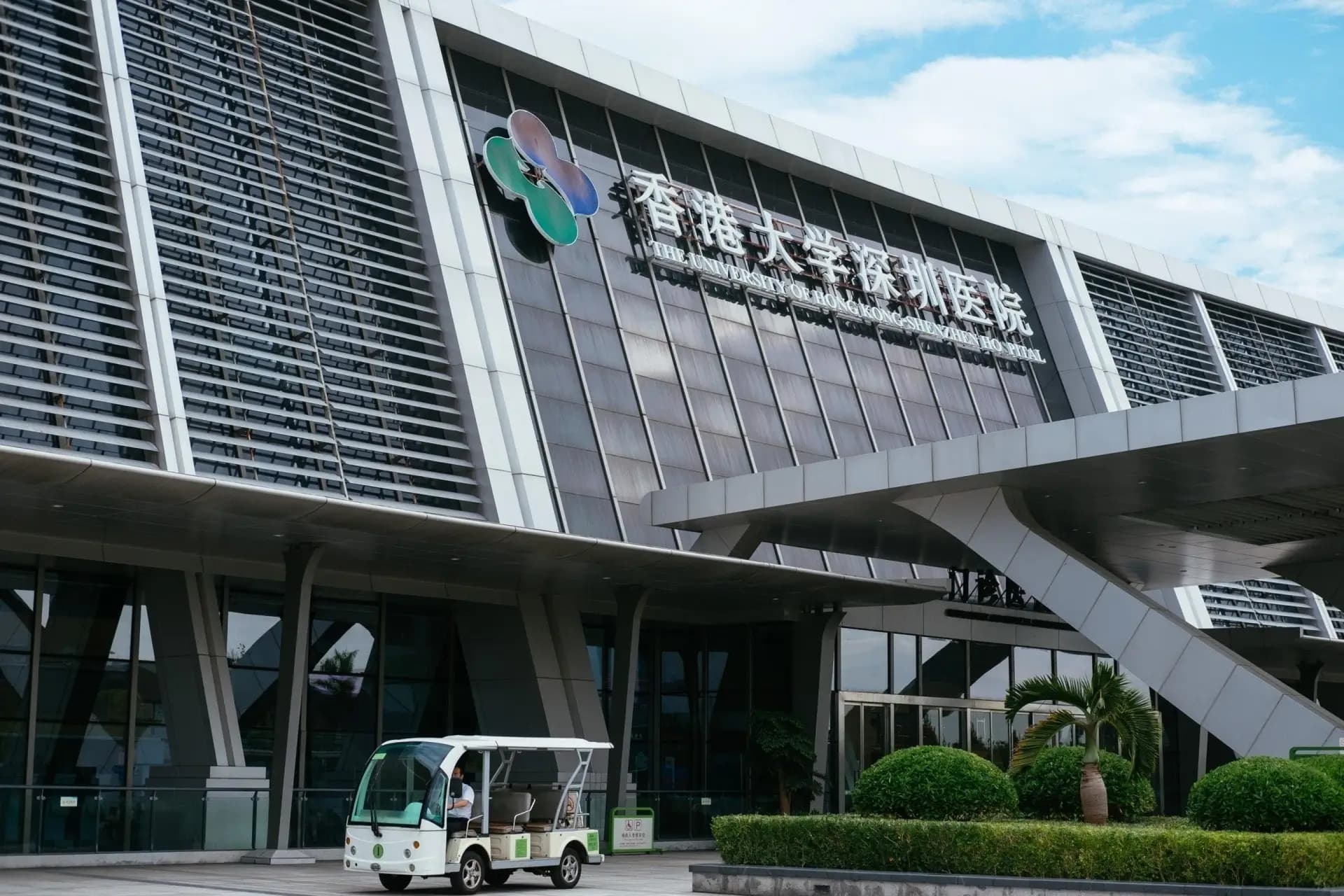
Grade III Grade A
The University of Hong Kong-Shenzhen Hospital
The University of Hong Kong-Shenzhen Hospital is a large-scale comprehensive public hospital fully funded by the Shenzhen Municipal Government and managed using the modern management model of the University of Hong Kong. The hospital has a total investment of approximately RMB 4 billion, covering an area of 192,000 square meters and a total building area of 367,000 square meters, with 2,000 beds. Phase II construction has commenced, and the number of beds will increase to 3,000 in the future. Taking advantage of the Shenzhen-Hong Kong cooperation, the hospital opened on July 1, 2012, fully introducing the University of Hong Kong's world-class disciplines and advanced hospital management experience and medical technology to provide high-quality medical services to the public. The hospital prioritizes the development of centers of excellence, including a cardiovascular medicine center, an oncology medicine center, an orthopedic medicine center, and a reproductive and prenatal diagnostic medicine center. Simultaneously, the hospital has established an international medical center to provide advanced international medical and health management services, and a Huawei community health center to provide primary healthcare services, meeting the diverse and personalized medical service needs of Shenzhen residents, Hong Kong and Macao residents, and expatriates.
Established
1905-07-04
Official website
www.hku-szh.org/
Snapshot
Active departments
51 active departments available in this language.
Hospital tag
Grade III Grade A
Care planning
Need help comparing departments or travel logistics?
Carevia can help you assess department fit, shortlist hospitals across cities, and coordinate translation, appointments, and post-visit travel planning.
Departments
Clinical departments at The University of Hong Kong-Shenzhen Hospital
51 department profiles are available for review.
Medical Examination Center
The Department of Health Management and the Medical Examination Center at the University of Hong Kong-Shenzhen Hospital adheres to the concept of "green healthcare," based on evidence-based medicine and utilizing modern health management concepts to improve the health of the general population. This includes pre-examination risk assessment, screening, and post-examination health guidance and follow-up. Service Features and Advantages: The Department of Health Management comprises two main sub-departments: the "High-End Health Management Department" and the "Medical Examination Center." It boasts a team of experienced medical professionals who provide patient-centered medical examination and health management services with a rigorous work ethic and professional service level. The Medical Examination Center implements a one-stop medical examination process and is equipped with color Doppler ultrasound, digital X-ray imaging, mammography, fundus cameras, tonometers, etc., in conjunction with the hospital's dual-energy X-ray absorptiometry, large-scale fully automated biochemical analyzers, and chemiluminescence analyzers, providing convenient and comfortable medical examination services to the public.
Laboratory Medicine
Occupational Therapy Department
The Occupational Therapy Service at the University of Hong Kong-Shenzhen Hospital is a professional service that draws inspiration from Hong Kong's rehabilitation therapy model and features modern rehabilitation technology. Our occupational therapy team has extensive clinical experience and expertise in hand injury rehabilitation, spinal cord injury rehabilitation, hemiplegia rehabilitation due to cerebrovascular accidents/traumatic brain injuries, cognitive assessment and training, and assessment and training of activities of daily living (ADL). We also have rich clinical experience in assessing and training hand function, ADL, sensory processing, and cognitive function in children with developmental delays, cerebral palsy, high-risk premature infants, neonatal brachial plexus injuries, autism, and attention deficit hyperactivity disorder (ADHD), as well as in training and guiding children with writing/reading disorders. Our professional treatment team provides treatments such as pressure garments for hypertrophic scars, orthotic fabrication, and assistive device fitting to help patients improve their daily living abilities and achieve reintegration into their families and society. Service Features and Advantages: Our department's pressure garment therapy and orthotic therapy both adopt a "one-on-one measurement and personalized customization" service model. We provide training spaces for daily living activities, including lift kitchens, to improve patients' daily living self-care abilities. We use restricted induced movement therapy (CIMT) in one-on-one and small group sessions to help patients achieve the best use and treatment results.
Occupational Medicine
Speech Therapy Department
The Department of Speech Therapy at the University of Hong Kong-Shenzhen Hospital provides professional services to outpatients and inpatients with communication and swallowing disorders, adhering to modern rehabilitation treatment concepts. It boasts advantages such as high technical expertise and service quality, a comprehensive range of services, and advanced rehabilitation equipment. Service Features and Advantages: The department offers one-on-one services, providing professional and comprehensive care. Its specialties include the assessment and treatment of voice disorders and infant swallowing disorders. Key areas of focus include the assessment and treatment of swallowing disorders caused by neurological diseases, post-radiotherapy and chemotherapy, aphasia, dysarthria, and children's speech and language impairments. The department also participates in the development of multidisciplinary outpatient clinics for nasopharyngeal carcinoma, high-risk infants, and cleft lip and palate. Children's intelligence assessment services are expected to be offered in the second half of 2022.
Radiation Oncology
Physical Therapy Department
The Physiotherapy Department of the University of Hong Kong-Shenzhen Hospital was established in January 2013, offering rehabilitation services based on the Hong Kong model. Initially, it consisted of only one physiotherapist from Hong Kong. Under his leadership, it has grown into a team of approximately twenty experienced physiotherapists with professional training both domestically and internationally, providing high-quality rehabilitation services. Service Features and Advantages: The Physiotherapy Department at the University of Hong Kong-Shenzhen Hospital currently provides rehabilitation services to patients from various departments within the hospital, including orthopedics, neurosurgery, cardiology, respiratory medicine, oncology, and pediatrics. It also provides professional and high-quality rehabilitation services to patients from both domestic and international locations at the International Medical Center. We believe that physiotherapy helps patients achieve better mobility and quality of life, and by introducing high-efficiency rehabilitation equipment and developing new treatment technologies, we aim to improve the effectiveness of patient rehabilitation. Equipment and Facilities Overview: The department is equipped with over a hundred sets of professional rehabilitation treatment equipment, including the first rehabilitation hydrotherapy pool in Guangdong Province with modern laminar flow resistance exercise, a gait analysis laboratory, rehabilitation robots for adults and children, a cardiopulmonary exercise testing device, a BTEprimusRS assessment system, a dynamic and static balance testing and training system, and a ceiling-mounted weight-reduction walking training track, providing a high-quality rehabilitation treatment platform.
Physical Injury (Environmental)
Department of Nutritional Medicine
The Department of Clinical Nutrition at the University of Hong Kong-Shenzhen Hospital provides nutritional education and support services to outpatients and inpatients. The department operates in accordance with the Australian Council for Healthcare Standards (ACHS) and the standards for top-tier hospitals in China. The department consistently adheres to the hospital's patient-centered philosophy. The main areas of care provided by the Clinical Nutrition outpatient department include: nutritional therapy for chronic non-communicable diseases such as diabetes, chronic kidney disease, obesity, coronary heart disease, hypertension, hyperlipidemia, hyperuricemia, and oncology; perinatal nutritional guidance including pre-pregnancy, pregnancy, and postpartum weight management, gestational nutritional status assessment and guidance, and gestational diabetes; and nutritional therapy for patients with malnutrition, nutritional anemia, postoperative rehabilitation, and those requiring home tube feeding. The hospital conducts nutritional risk screening for every inpatient. The Department of Clinical Nutrition develops individualized nutritional support plans based on clinical needs and adjusts these plans and methods promptly according to changes in the patient's condition. Nutritionists develop relevant dietary plans for hospitalized patients with different diseases and provide individualized dietary energy meal plans for different patients. In order to help patients combine diet with clinical treatment to achieve the best treatment results, nutritionists will provide dietary guidance to discharged patients as needed.
Women's Nutrition
Department of Ultrasound Medicine
The department currently has 46 doctors, 1 nurse, 24 resident physicians, and 20 medical support staff. The department director is Professor Xu Xiaohua, and the deputy director is Professor Liu Li. The team consists of 4 chief physicians, 12 associate chief physicians, 23 attending physicians, and 7 resident physicians. Many key physicians hold academic positions on various professional committees of the Chinese Medical Association, the Chinese Society of Ultrasound in Medicine and Engineering, the Ultrasound Branch of the Chinese Research Hospital Association, the Ultrasound Branch of the Guangdong Medical Association, and the Ultrasound Branch of the Shenzhen Medical Association. Three staff members are qualified master's degree supervisors. With the development of high-level hospitals in recent years, the department has made significant progress in medical care, education, research, and management. The department management team adheres to the concept of green healthcare, focusing on the quality of medical services and continuously improving patient satisfaction. The number of ultrasound medical services has increased year by year over the past five years, reaching nearly 370,000 visits in 2023. The ultrasound medicine resident training base recruits 6-9 resident physicians annually, ranking among the top in the hospital's secondary disciplines. To date, dozens of resident physicians have successfully graduated and are mainly serving in tertiary hospitals. As a postgraduate training base for Shenzhen University and Jinan University, several postgraduate students have successfully graduated. The Department of Ultrasound Medicine, as a key member of the Department of Medical Imaging, received the 2022 Hospital Excellent Team Silver Award and the 2023 Hospital CQI Silver Award. In recent years, research projects have included one National Natural Science Foundation of China project, several provincial, municipal, and hospital-level research projects, and multiple academic papers published annually in national core journals. In the past five years, the department has hosted several provincial and municipal professional academic conferences annually, including the provincial continuing education programs "Hong Kong University-Shenzhen Hospital Musculoskeletal Ultrasound Summit Forum" and "Hong Kong University-Shenzhen Hospital Interventional Ultrasound Precision Diagnosis and Treatment Seminar," as well as the Shenzhen Ultrasound Medical Engineering Society's "Boying Pengcheng" series of salons, enjoying a certain influence in the Greater Bay Area. The department regularly sends doctors to high-level hospitals in China for further study.
Diagnostic Ultrasound
Department of Radiology
The Department of Radiology at the University of Hong Kong-Shenzhen Hospital was established in 2012 and is part of the Department of Medical Imaging. It currently has 31 physicians (3 consultant physicians, 3 associate consultant physicians, 13 senior physicians, and 12 resident physicians), 44 technicians, and 5 nurses. It is equipped with multiple high-end medical devices: 3 64-slice CT scanners, 2 ultra-high-end CT scanners, 3 MRI scanners (1 1.5T and 2 3T), 2 digital gastrointestinal machines, 2 digital mammography machines, 8 DR systems, 4 small C-arm MRI machines, 5 mobile DR systems, and 1 EOS (Electronic Radioscopy) system. The Department of Radiology provides 24/7 medical services and currently offers all routine and many specialized examinations: general digital X-ray, CT, and MRI scans of all parts of the body; digital mammography; CT angiography, perfusion imaging, interventional guidance, and surgical navigation; MRI cardiac and vascular imaging (atrial and ventricular structures, myocardium, valves, and pericardium, etc.); MRI functional imaging (BOLD, MRS, DWI, SWI, DTI, cardiac MRI functional imaging); and MRI perfusion imaging. Among these, MRI cardiac examinations are specialized services and are at the forefront in Shenzhen. The Department of Radiology at the University of Hong Kong-Shenzhen Hospital is a standing committee member of the Medical Imaging and Artificial Intelligence Committee of the Chinese Research Hospital Association; a member unit of the Chinese Geriatric Radiology Branch; a member unit of the Cardiovascular Magnetic Resonance Imaging Branch of the China Medical Promotion Association; a member unit of the Magnetic Resonance Imaging Branch of the China Medical Equipment Association; a vice-chairman unit of the Medical Imaging Branch of the Guangdong Medical Industry Association; a vice-chairman unit of the Thoracic Imaging Committee of the Guangdong Thoracic Disease Society; a standing committee member of the Radiology Committee of the Guangdong Medical Association; a standing committee member of the Radiology Branch of the Guangdong Clinical Medicine Association; a fifth standing committee member of the Medical Imaging Center Management Committee of the Guangdong Hospital Association; a second standing committee member of the Tumor Imaging Committee of the Guangdong Anti-Cancer Association; a vice-chairman unit of the Shenzhen Radiology Committee; a vice-president unit of the Radiology Branch of the Shenzhen Medical Association; a vice-chairman unit of the Shenzhen Abdominal Tumor MDT Committee; and a member unit of the Guangdong Radiology Physicians Branch. In the past five years, the department has conducted and participated in numerous research projects, including two National Natural Science Foundation of China (NSFC) projects, three Guangdong Provincial Natural Science Foundation projects, three Shenzhen Science and Technology Innovation Commission projects, six Shenzhen Health Commission projects, and nine in-hospital research cultivation projects.
Radiation Sickness
Interventional Department
The interventional clinic focuses on image-guided precision and minimally invasive treatment, covering multiple areas including general interventional procedures, interventional oncology, interventional procedures for hemangiomas and vascular malformations, central venous access maintenance, and interventional procedures for portal hypertension. The scope of services includes puncture biopsy, drainage and stent placement, embolization and ablation of solid tumors, treatment of hemangiomas and vascular malformations, interventional hemostasis for emergency bleeding, peripheral vascular stenosis repair, interventional treatment of portal hypertension complications, and management of access points such as infusion ports/CVCs/arteriovenous fistulas. The department's strengths lie in its minimally invasive, precise, repeatable, and rapid recovery procedures. It has extensive experience, particularly in interventional diagnosis and treatment of hemangiomas, interventional treatment of liver cancer and metastases, and complex interventional procedures such as TIPS for portal hypertension. Equipped with advanced equipment and a high-level expert team, the department can provide patients with integrated interventional medical services from diagnosis to treatment.
Interventional Radiology
1/7