Back to Hospitals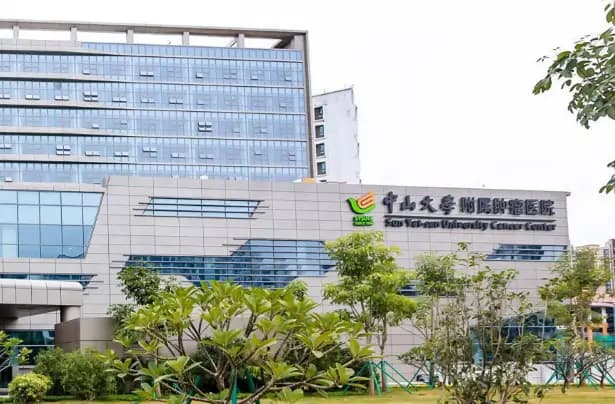
Grade III Grade A
Sun Yat-sen University Cancer Center
Sun Yat-sen University Cancer Center (Sun Yat-sen University Cancer Hospital, Sun Yat-sen University Cancer Institute), established in March 1964, is one of the four earliest cancer hospitals established in New China. It is one of the largest and most academically robust oncology bases in China, integrating medical treatment, teaching, research, and prevention. It undertakes the important task of national cancer prevention and control, playing a leading role in cancer prevention and control work nationwide, especially in South China and Hong Kong, Macao, and Taiwan. Its academic standing and comprehensive strength are among the best in the country. Sun Yat-sen University Cancer Center currently has a national key discipline (oncology), a national key laboratory for the prevention and treatment of malignant tumors in South China, a key laboratory of the Ministry of Education, a national clinical trial research center for new drugs (anti-tumor drugs), and a collaborative innovation center for cancer medicine jointly established by the province and the ministry. It is also the supporting unit of the Guangdong Provincial Cancer Center and the Guangdong Provincial Esophageal Cancer Institute. The center publishes the English-language academic journal *Cancer Communications*, which has been repeatedly selected as one of the "Top 100 Outstanding Chinese Academic Journals" and one of the "Most Internationally Influential Academic Journals in China." It was indexed by SCI in 2014 and currently has an impact factor of 24.9 (JCR 2024), ranking in Q1 of the JCR oncology classification and first among Asian comprehensive oncology journals.
The center attracts and gathers talent through its excellent culture, building a high-level medical, educational, and research team. It currently has 334 master's supervisors and 231 doctoral supervisors; it boasts 3 academicians of the Chinese Academy of Sciences, 3 academicians of the Chinese Academy of Engineering, and 47 national-level talents.
The center currently has two campuses, Yuexiu and Huangpu, with a total of 2,245 beds (1,571 in Yuexiu and 674 in Huangpu). It handles 2.558 million outpatient and emergency visits and 222,000 inpatient admissions annually, ranking among the top oncology hospitals in China in terms of medical volume. With leading medical technology, the hospital boasts a top-tier radiotherapy center in Asia, offering advanced hardware and software, and performing minimally invasive robotic surgeries in multiple specialties. In 1998, it pioneered the implementation of a chief expert responsibility system for single-disease oncology nationwide, organizing the development of multidisciplinary comprehensive treatment plans for various diseases. In the past five years, over 92 research findings from the front lines of clinical practice have gained international recognition and have been adopted by global oncology treatment standards and guidelines. The hospital provides personalized, high-quality medical services to a wide range of cancer patients.
Established
1964-01-01
Official website
www.sysucc.org.cn/home
Snapshot
Active departments
31 active departments available in this language.
Hospital tag
Grade III Grade A
Care planning
Need help comparing departments or travel logistics?
Carevia can help you assess department fit, shortlist hospitals across cities, and coordinate translation, appointments, and post-visit travel planning.
Departments
Clinical departments at Sun Yat-sen University Cancer Center
31 department profiles are available for review.
General Affairs Department
The Department of Integrated Medicine was established in the early 1980s at the beginning of China's reform and opening up, and is one of the key departments of Sun Yat-sen University Cancer Center. Currently, the department has three wards (60 beds in total), 21 doctors (including 2 senior physicians, 7 associate senior physicians, 3 attending physicians, and 9 resident physicians), and 55 highly qualified nurses with rich clinical experience, providing holistic care and the highest quality medical and nursing services to patients.
Medical Oncology
Intensive Care Unit
Established in 1986, the Department of Critical Care Medicine has developed into a comprehensive ICU integrating clinical practice, teaching, and research in critical care. It is one of the largest and most comprehensive departments of oncology critical care medicine in China. The department has three wards with a total of 52 beds, admitting 7,000 patients annually, with a critical care success rate exceeding 98%. Currently, there are 21 full-time physicians and 107 nurses, including 3 chief physicians, 6 associate chief physicians, 1 associate chief nurse, 30 head nurses, and 4 master's degree supervisors.
Critical Care Medicine
Department of Traditional Chinese Medicine
The Department of Traditional Chinese Medicine (TCM) is a clinical department integrating medical treatment, teaching, and research, specializing in the prevention and treatment of tumors using TCM and integrated TCM and Western medicine. It currently has 14 physicians, including 1 chief physician, 7 associate chief physicians, 3 attending physicians, and 3 resident physicians. It also boasts one renowned physician from Sun Yat-sen University (Zhang Bei) and one renowned TCM doctor from Guangdong Province (Zhang Bei). In recent years, the Department of TCM has continuously grown and developed. In August 2006, with the approval of the China Association of Integrated Traditional and Western Medicine, the hospital became the only "China Integrated Traditional and Western Medicine Tumor Center" in the country. In 2007, it was awarded the title of "National Demonstration Unit of TCM in Comprehensive (Specialized) Hospitals" by the Ministry of Health and the State Administration of Traditional Chinese Medicine. In 2015, it passed the review again with high marks and represented the hospital at the national conference held by the State Administration of Traditional Chinese Medicine to present its experience (one of five representative units nationwide). Currently, the department houses the Zhang Bei National Renowned Veteran Traditional Chinese Medicine Expert Inheritance Studio (granted by the State Administration of Traditional Chinese Medicine) and the Zhang Bei Guangdong Provincial Renowned Traditional Chinese Medicine Expert Inheritance Studio. It is a vice-president unit of the Guangdong Provincial Association of Integrated Traditional and Western Medicine (Zhang Bei serves as vice-president) and the chair unit of two of the most important provincial-level specialized committees in the field of integrated traditional and Western medicine in cancer prevention and treatment in Guangdong Province (the Oncology Professional Committee of the Guangdong Provincial Association of Integrated Traditional and Western Medicine and the Traditional Medicine Professional Committee of the Guangdong Anti-Cancer Association, with Zhang Bei serving as chair). The Department of Traditional Chinese Medicine has been recommended as one of the "Strongest Departments in Guangdong Hospitals - Traditional Chinese Medicine Department of Western Medicine Hospitals" for three consecutive terms. The Zhang Bei National Renowned Veteran Traditional Chinese Medicine Expert Inheritance Studio and the Zhang Bei Renowned Traditional Chinese Medicine Expert Studio were both approved by the State Administration of Traditional Chinese Medicine and the Guangdong Provincial Administration of Traditional Chinese Medicine, respectively. The studio team comprises clinicians, pharmacists, and medical information system technicians, covering three generations (old, middle-aged, and young), with an optimized structure considering both knowledge and age, resulting in a well-structured talent pool. The department receives visiting doctors from all over the country and accepts undergraduate students for clinical internships every year. The studio currently has inheritors of provincial-level renowned TCM physicians' apprenticeship programs, inheritors of national-level academic experience inheritance programs for veteran TCM experts, and young talents with doctoral degrees in TCM and clinical postdoctoral degrees. They have presided over multiple national and provincial-level research projects and published over one hundred papers. For many consecutive years, the team has applied for and hosted national continuing education programs, actively participating in science popularization and cancer prevention free clinics. They have conducted free clinics in Zhaoqing City, Guangdong Province, Fengqing City, Yunnan Province, and Huizhou City, Guangdong Province, among other places. Their achievements have been reported by media outlets such as China News Network and Xuexi Qiangguo (Study the Great Nation). The studio will conduct research-based inheritance work on the clinical experience of renowned TCM physician Zhang Bei in treating tumors using integrated TCM and Western medicine. This will involve compiling and analyzing clinical data from Zhang Bei's experience in treating tumors using integrated TCM and Western medicine, and continuing to cultivate clinical and research talents in the field of integrated TCM and Western medicine for tumor treatment. Integrated TCM and Western Medicine Research Center
Traditional Chinese Medicine
Radiology Department
The Department of Radiology at Sun Yat-sen University Cancer Center, equipped with state-of-the-art medical equipment, benefits a wide range of cancer patients with its numerous tumor imaging diagnostic and treatment programs, advanced diagnostic and treatment technologies, and excellent medical services. The department currently has 124 medical, nursing, and technical staff, including 4 senior physicians, 12 associate senior physicians, 3 doctoral supervisors, and 6 master's supervisors. There are also 50 technical staff, 29 nurses, and 11 registration desk staff. The department is equipped with a CT room, an MRI room, a routine X-ray radiology diagnostic room, and a molecular imaging diagnostic laboratory. It handles over 300,000 imaging diagnostic examinations annually, achieving significant social and economic benefits in tumor imaging diagnosis, early tumor diagnosis, staging, treatment evaluation, and molecular imaging diagnostic research.
Medical Imaging
Pancreatic and biliary surgery
The Department of Pancreatic and Biliary Surgery is one of the earliest established pancreatic and biliary tumor specialties in China. It is the leading unit for the diagnosis and treatment of pancreatic and biliary tumors within the Pan-Central and Southern China Oncology Specialty Alliance, and the supporting unit for the chairman of the Biliary Tract Tumor and Pancreatic Cancer Committee of the Guangdong Provincial Anti-Cancer Association. Located at the Huangpu Campus of Sun Yat-sen University Cancer Center, the department boasts advanced equipment, a comfortable environment, and strong capabilities. Currently, the department has 10 doctors (including 3 chief physicians/doctoral supervisors and 1 associate chief physician), 15 nurses, and 44 beds.
Surgery
Hematology and Oncology Department
Sun Yat-sen University Cancer Center (Sun Yat-sen University Cancer Hospital, Sun Yat-sen University Cancer Institute), established in March 1964, is one of the four earliest cancer hospitals established in New China. It is one of the largest and most academically robust oncology bases in China, integrating medical treatment, teaching, research, and prevention. It undertakes the important task of national cancer prevention and control, playing a leading role in cancer prevention and control work nationwide, especially in South China and Hong Kong, Macao, and Taiwan. Its academic standing and overall strength are among the best in the country.
Medical Oncology
Thoracic
The Department of Thoracic Surgery at Sun Yat-sen University Cancer Center is one of the earliest established thoracic oncology surgical departments in my country. It is a crucial component of the national key discipline and national key laboratory of oncology. After years of development, it has become the most comprehensive and powerful thoracic oncology surgical center in South China, wielding significant influence nationwide. Currently, the Department of Thoracic Surgery serves as the affiliated unit of the Vice Chairman of the Oncology Branch of the Chinese Medical Association, the Executive Vice President of the Thoracic Surgery Branch of the Chinese Medical Doctor Association, the Vice Chairman of the Esophageal Cancer Committee of the Chinese Anti-Cancer Association, the Chairman of the Esophageal Cancer Committee of the Guangdong Provincial Anti-Cancer Association, and the Sun Yat-sen University Lung Cancer Research Center. In 2011, it was also designated a "National Key Clinical Specialty" by the Ministry of Health.
Thoracic Surgery
Gastric Surgery
As a renowned large-scale specialized medical institution integrating medical treatment, scientific research, and teaching, the Department of Gastric Surgery at Sun Yat-sen University Cancer Center has always adhered to the medical philosophy of "patient-centered, technology-based, and individualized treatment." It has maturely carried out advanced technologies such as robotic radical gastrectomy and laparoscopic radical gastrectomy, and vigorously developed a new treatment model of "big data + artificial intelligence + robotics." It is a benchmark for standardized treatment of gastric cancer in South China and even East Asia, and is at an international first-class level in the field of comprehensive gastric cancer treatment.
Surgery
1/4