Back to Hospitals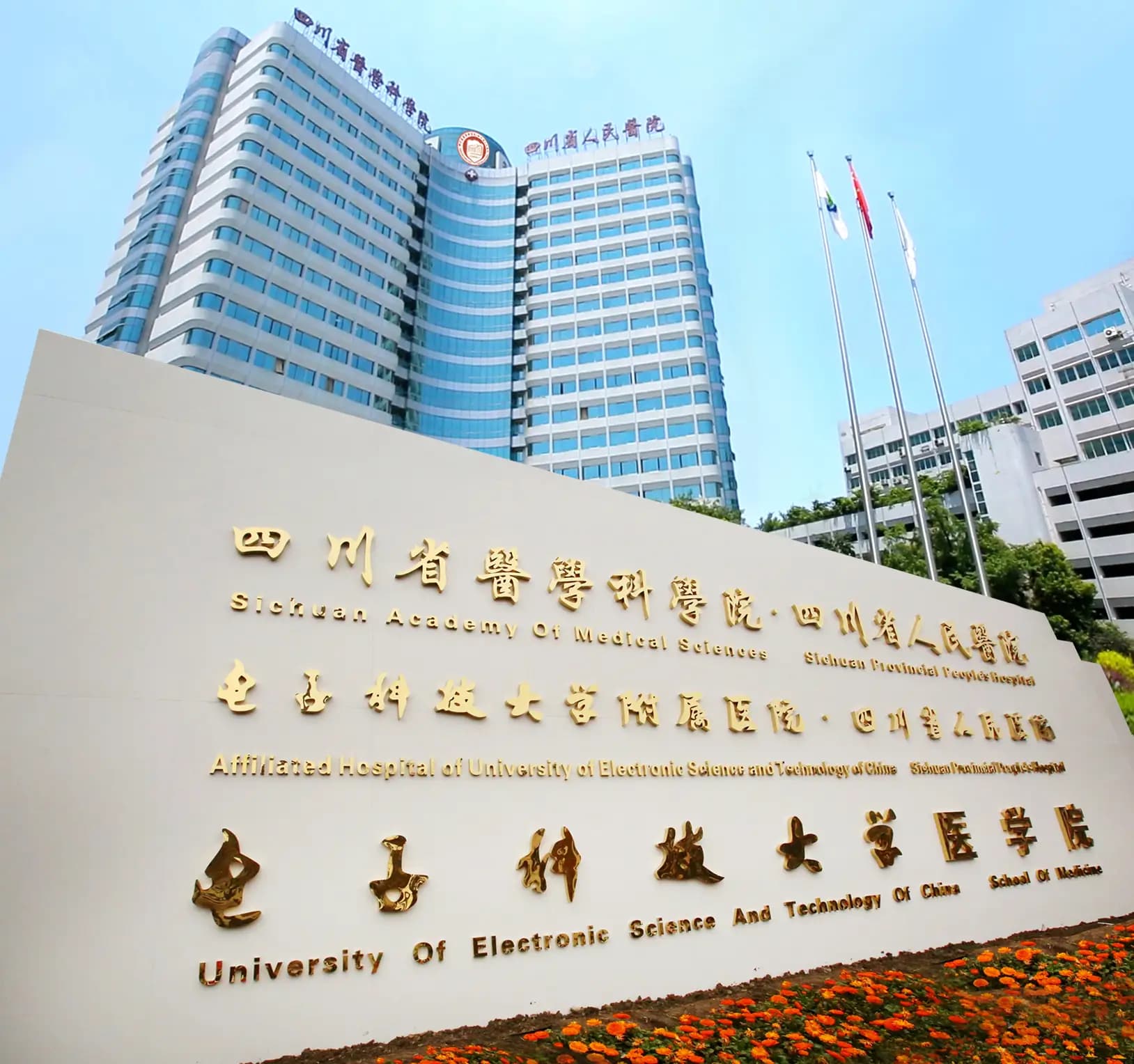
Grade III Grade A
Sichuan Academy of Medical Sciences & Sichuan Provincial People's Hospital
Located on the banks of the Huanhua River and next to Qingyang Palace in Chengdu, the Sichuan Academy of Medical Sciences & Sichuan Provincial People's Hospital was founded in 1941. Its predecessor, the "Sichuan Provincial Public Hospital," was an affiliated hospital of the former National Central University Medical School. It was renamed Sichuan Provincial People's Hospital in 1952 and was among the first batch of national Grade III Class A hospitals in 1989. In 2002, it merged with the Sichuan Academy of Medical Sciences (formerly the Sichuan Branch of the Chinese Academy of Medical Sciences) to become the Sichuan Academy of Medical Sciences & Sichuan Provincial People's Hospital. In 2013, it partnered with the University of Electronic Science and Technology of China to jointly establish a medical school, becoming an affiliated hospital of the University of Electronic Science and Technology of China. The hospital currently has 4,500 beds and multiple treatment and teaching/research units. The hospital comprises: Qingyang Campus (main campus, Sichuan Provincial Geriatric Medical Center, Sichuan Provincial Skin Disease Hospital/Institute of Dermatology and Venereology), Wenjiang Campus (Sichuan Provincial Mental Health Center, Wenjiang Research Base), Longquan Campus (East Campus), Gaoxin Campus (Zhonghe and Jianyang Research Platforms/Drug Innovation and Transformation Research Center, Institute of Experimental Animals), University of Electronic Science and Technology of China School of Medicine (co-constructed), and Chengdu Railway Health School, forming a development pattern with the main campus as the core, integrating clinical medical care, healthcare, teaching, and scientific research. It has successively won honors such as National Civilized Unit, Top 100 Hospitals in China, Advanced Collective of the National Health System, Advanced Unit of National Health Culture, National Heroic Collective in Earthquake Relief, and Advanced Collective in the Fight Against COVID-19. In recent years, adhering to the development philosophy of "one hospital, multiple campuses, coordinated development; comprehensive advancement, highlighting key points; revitalizing the hospital through science and education, and strengthening the hospital through talent," the hospital has benchmarked against modern hospital management systems, learned from the advanced practices of high-level hospitals both domestically and internationally, and continuously improved its discipline construction and comprehensive influence. It ranked A+ in the national performance evaluation of tertiary public hospitals and ranked 67th in the national hospital science and technology value ranking, becoming one of the fastest-improving hospitals in the country. The hospital currently has over 7,000 employees, including 1,108 senior professionals and over 200 individuals with provincial or ministerial-level talent titles. Among them are 1 academician of the Chinese Academy of Sciences, 33 national-level talents, 3 outstanding young and middle-aged experts recognized by the Ministry of Health, 45 recipients of the State Council Special Allowance, 33 Sichuan Provincial Academic and Technical Leaders, 27 members of the "Tianfu Emei Plan," 30 members of the "Tianfu Qingcheng Plan," and 3 current or incoming chairpersons of the Chinese Medical Association. In recent years, the hospital has vigorously attracted high-level medical talent from both domestic and international sources, and continuously recruits discipline leaders, research principal investigators, outstanding PhDs, and urgently needed PhDs globally.
Established
1905-04-24
Official website
www.samsph.cn/
Snapshot
Active departments
53 active departments available in this language.
Hospital tag
Grade III Grade A
Care planning
Need help comparing departments or travel logistics?
Carevia can help you assess department fit, shortlist hospitals across cities, and coordinate translation, appointments, and post-visit travel planning.
Departments
Clinical departments at Sichuan Academy of Medical Sciences & Sichuan Provincial People's Hospital
53 department profiles are available for review.
Reproductive Medicine Center
The Reproductive Medicine Center of Sichuan Academy of Medical Sciences & Sichuan Provincial People's Hospital is the first medical center in Sichuan Province's tertiary-level Class A comprehensive hospitals to conduct human assisted reproductive technology. It is the Sichuan Provincial Reproductive Medicine Center, designated by the Sichuan Provincial Organization and Establishment Commission, and a Class A key discipline in Sichuan Province. It also serves as the Sichuan Provincial Human Assisted Reproductive Technology Quality Management Center, responsible for the province-wide quality inspection, assessment, evaluation, quality management training, and business guidance of human assisted reproductive technology. Currently, it has two clinical areas: No. 32, West Second Section of First Ring Road, Chengdu (Main Campus) and No. 585, Honghe North Road, Damian, Longquanyi District, Chengdu (East Campus).
Reproductive Medicine and Infertility
Health Management Center
The Health Management Center and Health Examination Center of Sichuan Provincial People's Hospital is the first large-scale professional health examination institution in Sichuan Province's tertiary-level Class A hospitals to engage in health examinations, pioneering a new "separation of medical treatment and examination" health examination model in Sichuan Province.
Occupational Health Surveillance
Hospital Infection Control Center
The Hospital Infection Control Center of Sichuan Provincial People's Hospital, established in 1989 (formerly known as the Hospital Infection Management Office), boasts a professional team of personnel specializing in hospital infection control. Currently, it has 12 full-time staff members, including 5 with senior professional titles, 6 with intermediate professional titles, and 1 with a junior professional title. Their professional backgrounds encompass clinical medicine, nursing, and statistics and epidemiology. For over 30 years, the center has been conducting hospital infection control work in accordance with national laws, regulations, standards, and guidelines concerning hospital infection prevention and control, publishing over 50 academic papers and undertaking more than 10 research projects, accumulating rich experience. In 2011, the Sichuan Provincial Hospital Infection Quality Control Center was established within the Hospital Infection Control Center of Sichuan Provincial People's Hospital, officially commencing its work on hospital infection management and quality control across all medical institutions in the province, as well as hospital infection surveillance throughout the province. The hospital infection management department and its dedicated personnel are specifically responsible for the management and operational work related to hospital infection prevention and control. The main responsibilities include: (i) inspecting and guiding the implementation of relevant regulations and systems for the prevention and control of hospital infections; (ii) monitoring, analyzing, and providing feedback on hospital infections and related risk factors, proposing control measures and guiding their implementation; (iii) investigating and statistically analyzing the occurrence of hospital infections, and reporting to the hospital infection management committee or the head of the medical institution; (iv) providing guidance on hospital cleaning, disinfection and sterilization, isolation, aseptic techniques, and medical waste management; (v) providing guidance on hospital infection control for infectious diseases; (vi) providing guidance on occupational health and safety protection for medical personnel related to the prevention of hospital infections; (vii) reporting and investigating hospital infection outbreaks, proposing control measures, and coordinating and organizing relevant departments to handle them; (viii) providing training to medical personnel on the prevention and control of hospital infections; (ix) participating in the management of the clinical application of antimicrobial drugs; (x) reviewing relevant certificates for disinfection drugs and equipment and disposable medical devices and instruments; and (xi) organizing and carrying out scientific research on the prevention and control of hospital infections. (xii) Perform other tasks assigned by the hospital infection control committee or the head of the medical institution. (Updated 2021.9.14)
Traditional Chinese Medicine
Institute of Dermatology and Venereology (Dermatology Department)
The Department of Dermatology at Sichuan Provincial People's Hospital was established in the late 1940s. Through more than half a century of continuous development, it has achieved fruitful results in clinical care, teaching, and scientific research. In 2005, after the merger of Sichuan Provincial People's Hospital and Sichuan Academy of Medical Sciences, the Department of Dermatology and the Sichuan Provincial Institute of Dermatology and Venereology were historically integrated and collectively referred to as the "Institute of Dermatology and Venereology." Currently, it is one of the largest and most professionally competent dermatology and venereology departments in Southwest China. The outpatient clinic of the Department of Dermatology at Sichuan Academy of Medical Sciences/Sichuan Provincial People's Hospital enjoys a high reputation both within and outside the province. The number of outpatient visits has been increasing year by year, exceeding 600,000 visits annually. The large number of cases and the wide range of diseases treated are among the best in the province. The clinic operates 7 days a week without rest and has a 24-hour emergency room. To improve the quality of medical care and support the research work of various laboratories and groups, we have established multiple subspecialty and specialized outpatient clinics, including those for atopic dermatitis/eczema, actinic dermatitis, immunological herpes, acne, hair loss, hereditary skin diseases, skin tumors, sexually transmitted diseases, laser therapy, ultraviolet therapy, and dermatological surgery. Associate chief physicians and above hold 6-10 specialized outpatient clinics per week, with an average of over 20 experts available for consultation each half-day. In addition, our department has established specialized functional laboratories for medical mycology, sexually transmitted disease testing, dermatopathology, immunopathology, allergen testing, and photosensitivity testing, capable of conducting over 40 professional tests. This has improved the quality of medical care and met the needs of patients from the city and the southwest region. The inpatient department has 48 beds and admits patients with various complex and critical illnesses, supported by a highly skilled and responsible medical and nursing team. For many years, the department has implemented a patient-centered holistic medical and nursing service system, diligently fulfilling its mission of "care and service." It adheres to a multi-level ward round system involving the department director, chief physician, attending physician, resident physician, and head nurse, providing a fundamental guarantee for accurate diagnosis, treatment, and care for patients, and earning high praise from patients. The ward is equipped with advanced instruments and equipment, and all staff members conscientiously implement various rules, regulations, and operating procedures. It treats over 1,500 patients with various skin diseases annually, with a particular strength in the diagnosis and treatment of complex and severe cases. Weekly case discussions are held to promptly resolve various problems, resulting in a cure and improvement rate of over 90%. Training dermatology professionals for medical units at all levels throughout the province and city is one of the department's main tasks. To date, over 100 trainees have received advanced training, and the department is responsible for teaching dermatology to students at Sichuan Medical University, North Sichuan Medical College, Chengdu University of Traditional Chinese Medicine, and several nursing schools in the province and city. In 2005, our department became one of the first master's degree programs in the hospital. In 2008, it was approved by the Sichuan Provincial Health Commission as one of the first training bases for general specialist physicians. Currently, it is the Department of Dermatology and Venereology, School of Medicine, University of Electronic Science and Technology of China, Chengdu. Over the past decade, more than 100 staff members have attended various international and domestic academic conferences, including the World Congress of Dermatology, the Sino-Japanese Conference on Dermatology, the National Congress of Dermatology and Venereology, and the Annual Meeting of Chinese Dermatologists. Our staff has edited and co-edited professional books such as *Diagnosis and Treatment of Common Skin Diseases and Venereological Diseases*, *Cosmetic Dermatology*, *Practical Treatment of Dermatology and Venereology*, and *Dermatological Surgery*. Furthermore, our staff at all levels have applied for nearly 100 national, provincial, and hospital-level grants in recent years and published numerous academic papers in domestic and international SCI journals. During the devastating Wenchuan earthquake of May 12, 2008, medical staff at all levels worked tirelessly on the front lines, treating 60 earthquake victims. The entire department provided treatment, nursing care, and psychological support to the injured for over a month, successfully completing the earthquake relief mission assigned by higher authorities. The department was recognized as an "Advanced Unit in Earthquake Relief" by the Dermatology and Venereology Committee of the Chinese Association of Integrative Medicine and the Dermatology and Venereology Committee of the Sichuan Provincial Association of Integrative Medicine. During the COVID-19 pandemic, all medical staff actively participated in various anti-epidemic activities, volunteering to support Wuhan's fight against the epidemic, assisting fever clinics, and participating in triage and screening. In the early stages of the pandemic, the entire department collectively wrote a book, "Skin Injuries Caused by Medical Protective Equipment and Their Treatment," which received widespread acclaim within the industry. Their anti-epidemic work was fully recognized by the hospital and the Chinese Medical Association, earning them honors such as "Advanced Individual in the Fight Against the Epidemic." The subspecialty of dermatological surgery is an interdisciplinary field combining dermatology, plastic surgery, and cosmetic medicine. It utilizes surgical procedures, phototherapy, injections, and minimally invasive treatments to treat skin diseases and perform cosmetic procedures. Established in 2001, the Department of Dermatology is one of the earliest established dermatology departments in China. In 2002, it began its development as a key discipline by the Sichuan Provincial Health Commission, passed the key discipline construction acceptance in 2006, and was awarded the title of Sichuan Provincial Key Medical Discipline (Grade A). In 2017, it passed the dynamic management defense for key disciplines in Sichuan Province. The department is the chief editor of the first authoritative monograph in the field, *Dermatological Surgery* (1st and 2nd editions). Its overall clinical and research level is among the best in Southwest China and enjoys a high reputation nationwide, making it one of the leading teams in the field of dermatological surgery in China. The department is composed of experts from multiple disciplines, including dermatology, plastic surgery, and laser medicine. The department's founders are Professor Dai Gengwu, a nationally renowned expert in dermatology and dermatological surgery, and Professor Pan Ning, an expert in plastic surgery. Professors Yang Jianing and Chen Mingyi, along with other highly educated young and middle-aged experts with overseas study backgrounds, have also made significant progress in clinical work and academic fields, forming a strong core talent team for succession. Currently, the Department of Dermatology has over 20 medical and nursing staff, including 7 senior physicians and 4 intermediate physicians. Some experts also serve as master's degree supervisors at universities such as the University of Electronic Science and Technology of China School of Medicine, Southwest Medical University, and Chengdu University of Traditional Chinese Medicine. The Department of Dermatology currently comprises two wards: the main campus of the provincial hospital and the provincial dermatology research institute. It includes a dermatology operating room, an inpatient surgical team, and a laser treatment center. The department is equipped with advanced optoelectronic equipment and sophisticated dermatological surgical instruments, including fractional lasers, endovenous radiofrequency ablation, semiconductor lasers, CO2 pulsed lasers, and photodynamic therapy devices. The main treatments offered by the Department of Dermatology include: 1. Comprehensive treatment of malignant skin tumors, including basal cell carcinoma, squamous cell carcinoma, malignant melanoma, and fibrosarcoma protuberans. The department also organizes a hospital-wide multidisciplinary team (MDT) for rare malignant skin tumors, providing weekly consultations with experts for patients with complex skin tumors, offering comprehensive, continuous, and precise treatment plans. 2. Comprehensive treatment of various skin scars, including complex keloids, facial and neck acne scars, and minor blemish scars. 3. Surgical treatment and cosmetic repair of various pigmented nevi, birthmarks, benign skin growths, and superficial masses. 4. Comprehensive treatment of cosmetically unsightly skin diseases, such as acne, xanthelasma, syringomas, flat warts, and common warts. 5. Minimally invasive and systemic treatment of vascular abnormalities, such as radiofrequency, laser, and injection treatments for varicose vein syndrome and hemangiomas of the lower extremities. 6. Various cosmetic skin surgeries, including minimally invasive and radical axillary osmidrosis removal, facial rejuvenation, local deformity correction, double eyelid surgery, and eye bag removal. 7. Autologous fat grafting, microneedling, hyaluronic acid and botulinum toxin injections. Laser Medical Aesthetics Center: Our hospital's laser cosmetic treatment began in 1997 with the introduction of the American Candela 755nm alexandrite laser and 585nm pulsed dye laser. We were among the first in the country to perform laser treatment for pigmented and vascular...
Dermatology
Pathology Department
The Department of Pathology (Main Campus), Sichuan Academy of Medical Sciences & Sichuan Provincial People's Hospital, was established in 1951. It has evolved from a simple pathology diagnostic room into a department integrating medical treatment, teaching, and research, and is the chair unit of the Pathology Committee of the Sichuan Medical Association. The department undertakes clinical pathology diagnosis and autopsy diagnosis for the entire hospital. It is a standardized training base for pathology specialists in Sichuan Province, a master's degree program in pathology, and the Department of Pathology Teaching and Research of the Clinical Medical College of the University of Electronic Science and Technology of China. For many consecutive years, it has ranked fourth in the hospital specialty reputation rankings in Southwest China. Departmental Structure: The department includes a histological diagnostic room, a cytological diagnostic room, a routine technology room, an immunomolecular laboratory, a molecular pathology laboratory, and a mailroom. Staff Structure: The department currently has 46 employees, including 22 doctors, with 1 appointed chief physician, 2 associate chief physicians, 1 senior technician, and 1 associate researcher. There are 3 PhDs and 19 master's degree holders. There are 3 master's degree supervisors. In addition, there is 1 re-employed chief physician. Facilities and Equipment: The department's routine technical rooms are primarily equipped with imported equipment and facilities, including embedding cassette and slide printers, fully automated staining and mounting machines, automated special staining machines, automated immunohistochemical staining machines, and AI-powered computer-assisted diagnostic systems, achieving full-process information management. An independent molecular pathology laboratory is also available, equipped with next-generation sequencers, utilizing histological and blood samples to perform molecular pathology testing such as FISH, PCR, and high-throughput sequencing. In addition to multiple multi-head microscopes and slide scanners, the department has a digital image acquisition and analysis system for teaching and research. Departmental Services (Medical, Educational, and Research): (I) Medical Services: 1. Histological Examination Items (including frozen section and autopsy): Subspecialties include gastrointestinal ESD, liver biopsy, lymphoma, bone marrow biopsy, breast cancer, etc., with an annual external examination volume of 80,000 cases and a total of 250,000 slides per year. 2. Cytological examination items: (Fine needle) fine needle aspiration, cell blocks, general exfoliative cytology, liquid-based and non-gynecological liquid-based cytology, Hc2 test, E6, E7 test, etc., with an annual examination volume of 130,000-140,000 cases. 3. Immunohistochemistry and molecular detection: Immunohistochemistry is routinely performed, and molecular pathology detection includes multiple items such as FISH, PCR, and real-time quantitative PCR (including companion diagnostics), with an annual examination volume of over 110,000 items. (II) Teaching: It is a standardized training base for pathology specialists in Sichuan Province and a master's degree program in pathology, accepting more than 10 resident trainees and visiting scholars each year. It is also the Department of Pathology of the Clinical Medical College of the University of Electronic Science and Technology of China, undertaking the teaching tasks for undergraduate and graduate students majoring in pathology at the Clinical Medical College of the University of Electronic Science and Technology of China. (III) Scientific research: In recent years, it has undertaken 1 National Natural Science Foundation of China project, 1 provincial/ministerial-level project, 11 departmental/bureau-level projects, and 7 institute-funded projects. (Updated 2021.10.8)
Pathology
Medical Records Statistics Department
The Department of Medical Records and Statistics at Sichuan Provincial People's Hospital is primarily responsible for medical record management and statistics. Utilizing big data concepts, the department provides strategic decision-making support for hospital management through data analysis and mining, promoting hierarchical medical services, medical three-tier supervision, DRGs payment for medical insurance, refined hospital management, performance reform, disease management, key discipline development, and standardized residency training base construction. This also advances public hospital reform, fosters harmonious doctor-patient relationships, and reflects the hospital's public service nature. Daily work includes medical record information management, medical record quality management, and medical statistics; data analysis and medical record information mining; submitting relevant data to health administrative departments; providing core materials for scientific research, teaching, and clinical research; and meeting various medical record service needs. The Department of Medical Records and Statistics at Sichuan Provincial People's Hospital is both the leading unit of the Sichuan Provincial Medical Record Quality Control Center and the president unit of the Medical Records Management Branch of the Sichuan Hospital Association. Its team has extensive experience in the International Classification of Diseases (ICD), medical record information collection, quality control, analysis, and utilization. Through years of continuous exploration and development, the department has successively developed a medical record homepage management system, a medical record quality review system, and a medical record microfilm digitization system. In recent years, the hospital has taken the lead in the province in implementing refined management of Diagnosis Related Groups (DRG) hospitals, hospital performance evaluation and assessment, clinical discipline capacity building, medical quality monitoring, and the application of medical big data and evidence-based medicine research, continuously promoting the development of its disciplines and striving to align with world-class standards. (Updated 2021.10.8)
Pathology
Clinical Nutrition Department
The Department of Clinical Nutrition at Sichuan Academy of Medical Sciences & Sichuan Provincial People's Hospital was established at the hospital's founding in 1941. In 1999, it created the first professional nutrition and nursing team in Sichuan Province and even nationwide. In 2011, it was recognized as one of the first "National Clinical Nutrition Demonstration Units" by the Chinese Nutrition Society. In 2018, it became the affiliated unit of the Sichuan Provincial Preventive Medicine Association's Hospital Clinical Nutrition Branch, and received honors such as "Excellent Collective" from the Chinese Association of Integrative Medicine, "Pilot Department for Nutritional Diet Therapy" from the Chinese Association of Integrative Medicine, and "Excellent Collective for Medical Diet" from the Sichuan Provincial Clinical Nutrition Quality Control Center. In 2019, a nutrition management studio was established, and in the same year, it took on the nutrition management work for the ERAS standard ward for the liver, gallbladder, and pancreas. In 2021, it established the hospital's first nutrition and nursing management specialty alliance, which currently has 19 members. In 2021, the Clinical Nutrition Department's staff canteen carried out a pilot project for the creation of a nutrition and health canteen, and was successfully recognized as a "Pilot Construction Unit for Nutrition and Health Canteens in Sichuan Province" and a "Chengdu 2021 National Food Safety Demonstration City Creation Unit". In 2022, it was designated a pilot unit for the "National Clinical Nutrition Department Construction" by the National Health Commission's Institute of Medical Administration. In 2023, it was recognized as a demonstration unit for the construction of clinical nutrition departments by the National Health Commission's Institute of Medical Administration (demonstration direction: clinical nutrition promotion under the DRG framework). In 2024, led by Deputy Director Zhou Xue, it successfully applied for the National Health Commission's "2024 Food Safety and Nutrition Health High-Quality Development Consultation Project" and received an "Excellent" rating. In the same year, it was approved as a "2025 Medical Nutrition Weight Loss Teaching Unit" by the Clinical Nutrition and Health Branch of the China International Exchange and Promotion Association for Medical and Health Care. In 2025, it successfully obtained approval for the Sichuan Province 2025 Major Reform and Innovation Project in the Field of Disease Control. The Clinical Nutrition Department is currently headed by Deputy Director Zhou Xue and has a professional nutrition team composed of nutrition physicians/technicians, nutrition nurses, and nutrition chefs. The department has a total of 128 staff members, including 15 nutrition physicians/technicians (5 with doctoral degrees, 1 currently pursuing a degree) and 9 with master's degrees; among them, 2 hold associate senior professional titles and 3 hold intermediate professional titles; 16 nutrition nurses, including 1 with a senior professional title, 1 with an associate senior professional title, and 3 hold intermediate professional titles; and 97 kitchen staff and meal preparers. The department currently serves as the chair unit of the Clinical Nutrition Branch of the Sichuan Provincial Preventive Medicine Association and the Nutritional Support Nursing Committee of the Sichuan Provincial Nursing Association. In terms of information technology, the department has basically achieved interconnection and interoperability between its HIS system, nursing system, and nutrition diagnosis and treatment system. Department Leader: Zhou Xue, Party Branch Secretary/Deputy Director of the Clinical Nutrition Department, Director of the Department of Medical Nutrition, Sichuan Provincial People's Hospital. Selected as a key young and middle-aged talent in Sichuan Province's "Health and Wellness Talents Program," Wang Jing currently serves as a member of the 15th Committee of the Sichuan Provincial Youth Federation, Deputy Secretary-General of the Medical and Health Sector, Standing Committee Member of the Special Medical Purpose Formula Food Application Professional Committee of the China Nutrition and Health Food Association, Member of the Nutrition and Food Safety Branch of the Chinese Geriatrics Society, Vice Chairman and Secretary-General of the Sichuan Provincial Nutrition Society, Deputy Director of the Youth Committee of the Parenteral and Enteral Nutrition Professional Committee of the Sichuan Provincial Medical Association, Deputy Director of the Hospital Clinical Nutrition Branch of the Sichuan Provincial Preventive Medicine Association, Member of the 3rd Sichuan Provincial Food Safety Expert Committee, Expert of the Expert Committee of the Sichuan Provincial Clinical Nutrition Quality Control Center, Member of the Expert Group for the Construction of Nutrition and Health Canteens (Restaurants) in Sichuan Province, and one of the first batch of experts appointed by the Sichuan Provincial 0-3 Years Old Infant Care Standardization Construction and Training Guidance Center. Wang Jing is also the Deputy Director of the Department of Clinical Nutrition and a Master's Supervisor at Southwest Jiaotong University. She currently serves as the Deputy Director of the Parenteral and Enteral Nutrition Professional Committee of the Sichuan Medical Association and the Deputy Director of the Clinical Nutrition Branch of the Sichuan Nutrition Society. [Business Operations] The Department of Clinical Nutrition currently focuses on clinical nutrition diagnosis and treatment along the "screening-assessment-diagnosis-treatment" framework. It actively undertakes nutritional support and treatment for various clinical departments and patients undergoing special, complex, and critical surgeries. Nutrition nurses are responsible for hospital-wide nutritional assessments and the distribution of nutritional preparations. The department also operates staff and nutrition canteens, providing meals for all hospital staff and patients. Currently, it offers a comprehensive nutrition clinic, a specialized medical nutrition weight loss clinic, actively participates in multidisciplinary team (MDT) clinics, and a weight management (multidisciplinary collaboration) clinic. It also offers specialized therapeutic diets for chronic diseases such as diabetes, kidney disease, and pulmonary nodules. The comprehensive nutrition clinic provides guidance on the use of various enteral nutrition preparations and nutritional supplements for patients with chronic diseases (such as diabetes, hyperlipidemia, fatty liver, and kidney disease); patients with poor appetite, malnutrition, or those needing to gain weight due to surgery, cancer, or radiotherapy/chemotherapy; individuals in various sub-health states; and students, pregnant women, breastfeeding mothers, the elderly, and other groups with special nutritional needs. It also provides personalized nutritional consultations and improvement suggestions. Specialized Medical Nutrition Weight Loss Clinic: This clinic conducts precise assessments of individuals seeking weight loss through body composition analysis (muscle, fat, water percentages), metabolic rate testing, chronic disease screening, and dietary and lifestyle habit analysis. Based on each patient's specific situation, personalized medical nutrition prescriptions are developed (e.g., energy-restricted diets, high-protein diets, 5+2 intermittent fasting, 16+8 intermittent fasting, ketogenic diets, etc.) and appropriate exercise recommendations. Comprehensive tracking and management are implemented, establishing weight loss nutrition management files, with regular follow-up visits to monitor body indicators and dynamically adjust the plan to ensure weight loss effectiveness and improve metabolic status. Multidisciplinary Team (MDT) Clinic: This clinic participates in the comprehensive treatment of refractory respiratory failure, comprehensive nutritional assessment and intervention for elderly patients, menstrual disorders and infertility, gestational diabetes, diabetic nephropathy, cardiorenal metabolism, obesity and diabetes, inflammatory bowel disease, and other multidisciplinary clinics. Specialized Therapeutic Diets: Specialized therapeutic diets are offered, including energy bowls, low-fat meals, diabetic diets, nephropathy (dialysis) diets, nephropathy (non-dialysis) diets, and low-fat soft meal sets. [Scientific Research and Teaching] The Department of Clinical Nutrition currently undertakes the training of master's students from the University of Electronic Science and Technology of China and Southwest Jiaotong University, as well as clinical nutrition professionals from the group hospitals; it serves as an internship and teaching base for graduates of food hygiene and nutrition, health service and management majors from Sichuan University, Southwest Medical University, and Chengdu University of Traditional Chinese Medicine; it is also an off-Beijing clinical practice base for nutrition specialist nurses of the Chinese Nursing Association and a provincial training base for nutrition specialist nurses; it undertakes the training of public nutritionists for the Sichuan Base of the Chinese Nutrition Society in Sichuan Province and the training of health managers for the Sichuan Provincial Health Management Association; as the chairman unit of the Clinical Nutrition Branch of the Sichuan Provincial Preventive Medicine Association and other academic societies, it has successfully organized many nutrition-related academic conferences. In the past 5 years, it has published more than 30 academic journal papers, including SCI papers, and presided over 1 National Natural Science Foundation of China project, 2 provincial science and technology department projects, 1 Chengdu Science and Technology Bureau project, 4 provincial health commission projects, 1 general project of the State Administration of Traditional Chinese Medicine, 2 hospital research fund youth talent funds, and hospital doctoral youth funds, hospital clinical research and transformation funds, and Chinese Nutrition Society projects. It has also participated in several national-level scientific research projects, including national key research and development projects. 【Public Service】1. Popular Science Education (1) Nutrition Free Clinic: Regularly participate in large-scale hospital free clinics, "Diabetes Day" free clinics, community free clinics, etc. (2) Popular Science Publicity in News Media: Publish popular science articles and popular science videos through multiple platforms such as the Nutrition Department WeChat official account (357,000 followers), Sichuan Famous Doctors, Sichuan Observation, and Cover News; participate in the popular science programs "Doctors Are Here" and "Doctors Are Here, Food Will Bring Good Fortune" on Sichuan TV News Channel; Deputy Director Zhou Xue was invited to participate in CCTV's "Healthy China Travels the World" in April 2025.
Women's Nutrition
Department of Transfusion Medicine
The Department of Transfusion Medicine at Sichuan Academy of Medical Sciences & Sichuan Provincial People's Hospital houses the Sichuan Provincial Clinical Transfusion Quality Control Center and is also responsible for the transfusion quality management of the Sichuan Provincial Clinical Laboratory Center. The department currently has 28 professional and technical personnel, including 2 professors, 2 associate researchers, and 11 senior technicians; 1 attending physician, 1 physician, and 11 registered physicians; 2 doctoral students (including 1 postdoctoral fellow), and 9 master's students. One staff member serves as a reviewer for the National Natural Science Foundation of China (NSFC) and one member serves on the Research and Academic Working Committee of the International Association for Blood Groups and Genomics (IAAG). There are 2 master's degree supervisors and 1 academic and technical leader from the Sichuan Provincial Health Commission.
Emergency Medicine
1/7