Back to Hospitals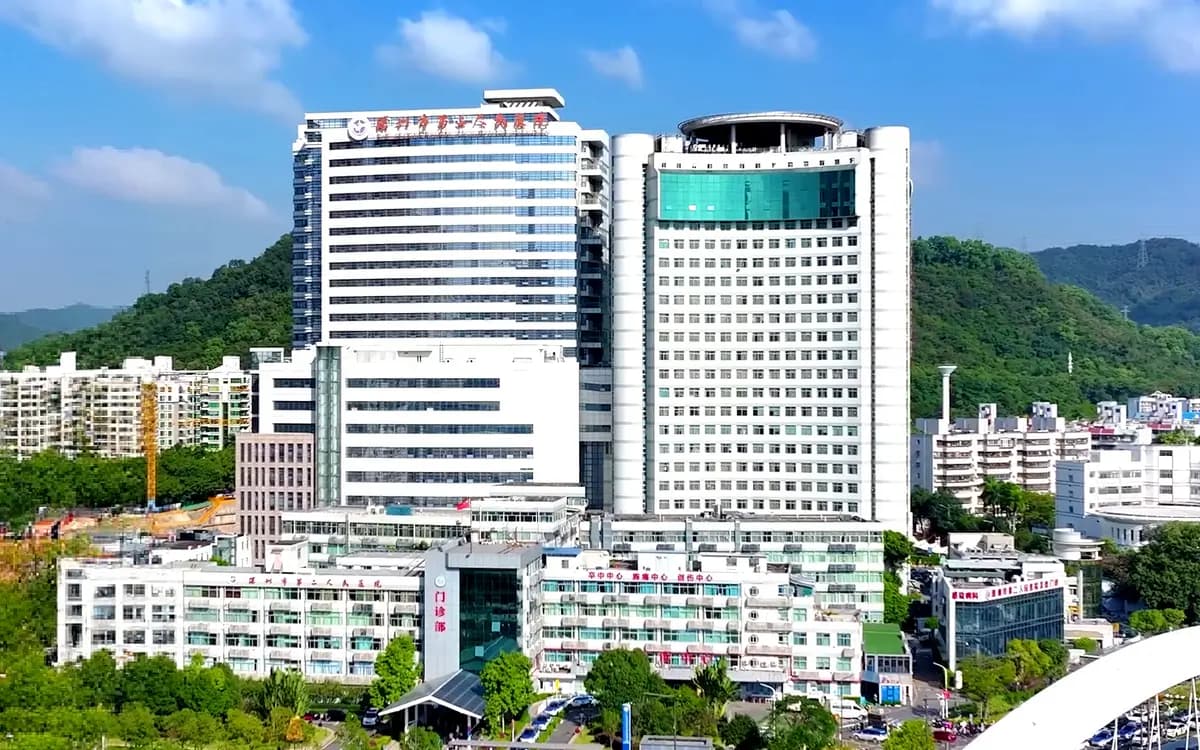
Grade III Grade A
Shenzhen Second People's Hospital
Shenzhen Second People's Hospital (the First Affiliated Hospital of Shenzhen University) was founded in 1980 and became a national "Grade A Tertiary" hospital in 1996, one of the first two "Grade A Tertiary" hospitals in Shenzhen. In 2008, it was approved by the Ministry of Education to become the "First Affiliated Hospital of Shenzhen University." The hospital has successively won honors such as "National Advanced Health Unit," "National May 1st Labor Medal," "Advanced Collective of the Shenzhen World University Games," and "Demonstration Hospital for Improving Medical Services."
In 2017, it spearheaded the establishment of Shenzhen's first closely integrated medical consortium—the Shenzhen Dapeng New Area Medical and Health Group—connecting community health centers, district-level hospitals, and municipal hospitals. In 2018, it was selected as a key construction unit for high-level hospitals in Guangdong Province. In 2019, the Shenzhen Translational Medicine Research Institute was established, focusing on building a city-wide resource sharing and service platform for translational medicine research. In 2022, the Shenzhen Second People's Hospital Medical Innovation Technology Transformation Center was established in the Shenzhen-Hong Kong Science and Technology Innovation Cooperation Zone in Hetao. In the same year, it was selected as a demonstration hospital for the reform and high-quality development of public hospitals in Guangdong Province. In three years, the First Clinical Medical College of Shenzhen University was selected as one of the first batch of high-level clinical medical colleges in Guangdong Province (the only one in the city) and was approved as the first unit in the city's medical and health system to independently recruit postdoctoral fellows. In 2024, the Longhua Hospital of Shenzhen Second People's Hospital was officially put into use, and was managed vertically by Shenzhen Second People's Hospital. Through the development of "one hospital with multiple campuses" with the same quality, integration, digitalization, and specialization, it promoted the downward flow of high-quality medical resources and created a high-level hospital with "strong specialties and large comprehensive" focusing on neurological diseases. In 2025, it was selected as a "flagship" hospital for the integration of traditional Chinese and Western medicine in Guangdong Province. From 2018 to 2023, it was rated A+ in the national performance evaluation of tertiary public hospitals for six consecutive years, and consistently ranked among the top 10 of the 1,588 tertiary general hospitals that participated in the evaluation nationwide.
Established
1980-01-01
Official website
www.szrch.com.cn/szsph.html
Snapshot
Active departments
52 active departments available in this language.
Hospital tag
Grade III Grade A
Care planning
Need help comparing departments or travel logistics?
Carevia can help you assess department fit, shortlist hospitals across cities, and coordinate translation, appointments, and post-visit travel planning.
Departments
Clinical departments at Shenzhen Second People's Hospital
52 department profiles are available for review.
Foot and ankle surgery and hand surgery
The Foot, Ankle and Hand Surgery Department was established in 2015, comprising two specialties: Foot and Ankle Surgery and Hand Surgery. The Foot and Ankle Surgery department filled a gap in the field in Shenzhen. After several years of development, its clinical diagnostic and treatment techniques have advanced rapidly, reaching a leading level in South China and even nationwide. The department is currently a National Key Clinical Specialty, a Guangdong Provincial Key Clinical Specialty, a Shenzhen Municipal Key Clinical Specialty, an Education Base of the Chinese Medical Association Foot and Ankle Academy, a core unit of the National Clinical Research Center for Orthopedics and Sports Rehabilitation, and a National Health Commission Capacity Building and Continuing Education Center. Specialty Features: The Foot, Ankle and Hand Surgery outpatient clinic has one consultation room, offering two specialties: Foot and Ankle Surgery and Hand Surgery. Specialty features include sub-specialty clinics for flatfoot screening, ankle joint sports injuries, hallux valgus, clubfoot, limb nerve entrapment, and hand deformity correction. With a focus on the diagnosis and treatment of foot and ankle diseases and fractures, as well as hand surgery and wrist injuries, the department has developed into a specialized clinic for treating foot and ankle trauma, deformities, sports injuries, severe limb deformities and nerve entrapment, and injuries to the ankle, wrist, and elbow joints. Its medical capabilities extend throughout South China, with an average annual outpatient volume approaching 20,000 visits and an average annual surgical volume exceeding 2,500. As an important component of the Shenzhen Trauma Emergency Center, it also undertakes the treatment of severe trauma in multiple areas of Shenzhen. The department's current specialty projects, including "Robot-guided Minimally Invasive Treatment of Talc Cartilage Injuries," "Arthroscopic-Assisted Minimally Invasive Treatment of Scaphoid Fracture Reduction and Fixation," and "Interphalangeal Arthroscopy," have reached international and domestic leading levels and have been presented at international conferences for technical promotion. Other advanced techniques, such as "Ankle Replacement and Facet Joint Replacement," "Correction of Severe Limb Deformities and Replantation of Devastated Limbs," "Facet Arthroscopy," "Selective Band Branch Transposition and Reconstruction Techniques for Brachial Plexus Injuries," and "Minimally Invasive Release Techniques for Nerve Entrapment," have also reached leading positions in China. Every year, we regularly hold wrist and ankle arthroscopy training courses, attracting students from all over the country and training hundreds of professional and technical personnel. In the prevention and treatment of flat feet in adolescents, we conduct foot disease screenings for primary and secondary school students in Shenzhen, guide functional exercises and minimally invasive surgical treatments. For complex and difficult surgeries on adults with flat feet, we combine 3D printing, weight-bearing CT, and other artificial intelligence and gait analysis to make forward-looking plans from basic to clinical practice, reducing surgical errors and complications, and achieving significant clinical results. Our talent pool includes a high-quality professional team of 10 physicians, including 3 with senior professional titles, 1 with an associate senior professional title, 1 with a doctoral degree, 9 with master's degrees, and 1 postdoctoral researcher. We also have 20 nurses, including 2 chief nurses, 10 head nurses, and 8 nurses. In 2017 and 2023, we were twice recruited through Shenzhen's "Three Famous Projects" for medical and health services, including the foot and ankle surgery team of Professor Tang Kanglai from the First Affiliated Hospital of Army Medical University and the hand surgery team of Professor Tian Wen from Beijing Jishuitan Hospital. We also have one high-level talent in Shenzhen. The department currently has one member of the Chinese Medical Association's Hand Surgery Branch and Sports Medicine Branch, one vice chairman of the Guangdong Medical Association's Microsurgery Branch, one chairman of the Youth Committee of the Guangdong Medical Association's Microsurgery Branch, one chairman of the Shenzhen Medical Association's Traumatology Professional Committee, and four other members of various societies. It also has one editorial board member for the *Chinese Journal of Microsurgery*, two editorial board members for the national "13th Five-Year Plan" postgraduate textbook *Sports Traumatology*, and one editorial board member for the *Electronic Journal of Foot and Ankle*. Regarding teaching, the department relies on the National Orthopedic Specialized Training Program teaching base. Professor Li Wencui, the department's academic leader, serves as the director of the major orthopedic teaching base and represented the hospital at the China Medical Doctor Association's Standardized Residency Training Summit Forum, where she gave a special presentation. The department currently has four master's degree supervisors and has recruited 14 postgraduate students and 2 postdoctoral fellows in the past three years. It undertakes undergraduate teaching tasks for students from Sun Yat-sen University, Shenzhen University, Guangzhou Medical University, Nanhua University, and Shantou University. Postgraduate students trained by the department have published papers that have won awards such as the journal's annual excellent article award and the 2023 Excellent Resident Physician Award. The department regularly conducts simulation teaching courses for orthopedic residents annually. In 2021, a full-scale orthopedic simulation course was conducted; in 2022, a microsurgical vascular suturing simulation course was conducted; in 2023, forearm and hand tendon suturing simulation courses and upper limb fracture internal fixation simulation courses were conducted; and in 2024, a second round of microsurgical vascular suturing simulation courses was conducted. In terms of scientific research and innovation, the department ranked 35th nationally in the Science and Technology Evaluation Metrics (STEM) in 2023, and has ranked first in Shenzhen in terms of total STEM evaluation metrics over the past five years. In the past five years, the department has participated in one National Key Research and Development Program project, obtained approval for five national-level projects, and more than ten other provincial and municipal-level projects. It has published 53 articles, 44% of which are SCI-indexed (CAS Q2 or higher). Seven clinical trials of drugs and medical devices have been conducted, including four multi-center trials in China. Four authorized invention patents have been granted. The individual has participated in the development of nine expert consensus documents and clinical guidelines, including an expert consensus document co-authored in 2022 that was recognized as one of the "2022 TOP300 Guidelines/Consensus Documents." The individual also received the third prize of the Guangdong Provincial Science and Technology Award. Physician Introductions: Li Wencui, Department Director & Chief Physician; Liu Jianquan, Department Deputy Director & Chief Physician; Zhao Zhe, Deputy Chief Physician; Tao Xu, Chief Physician; Cheng Xiangyu, Attending Physician; Li Yongsheng, Deputy Chief Physician; Li Jiabei, Attending Physician; Chen Xiaoqiang, Attending Physician; Yin Jianwen, Deputy Chief Physician; Wang Guanghui, Attending Physician; Wang Tianyu, Physician; Guo Jiawei, Physician; Zhang Yiran, Physician; Liu Wei, Physician.
Surgery
Intensive Care Unit
The Department of Critical Care Medicine is a national standardized residency training base and currently serves as a master's degree program for Shenzhen University, Anhui Medical University, and Guangxi University of Chinese Medicine. It has one doctoral supervisor and three master's supervisors. In the past five years, it has trained 39 doctoral and master's students, recruiting 4-5 residents annually and training over 200 residents. Many medical staff participate in teaching at the Clinical Medical College of Shenzhen University. In terms of scientific research and innovation, the Department of Critical Care Medicine has consistently ranked among the top 100 in the nation in STEM (Science, Technology, Engineering, and Mathematics) rankings in recent years. From 2019 to 2023, its overall STEM ranking was 76th nationally. Since 2017, it has successfully secured 35 national, provincial, and municipal projects; conducted 43 clinical trials, including 15 drug clinical trials; published 85 SCI papers, including 62 JCR Q2 or higher papers, with the highest impact factor being 38.637; and 36 Chinese journal papers (including 23 core journal papers). It has also edited or co-edited 8 monographs. We have been granted 6 national invention patents, applied for 15 invention patents, and obtained 65 authorized utility model patents. We have produced corresponding research results or industry standards: participated in the formulation of 4 industry standards; published 3 expert consensus statements; and carried out 30 new technology and new project initiatives. Adhering to the scientific motto of "Specialized Expertise, Compassionate Dedication," we are committed to continuously improving our professional level and humanistic care, providing comprehensive medical services to every patient with a scientific work style, superb medical technology, and high-quality service. Our mission is: to strive for excellence, heal the wounded and save lives, and wholeheartedly safeguard the health of every patient. Our vision is to make a greater contribution to the health of the general public and build a highly skilled and compassionate medical institution.
Critical Care Medicine
Oncology
Department of Oncology: The Department of Oncology is a comprehensive clinical department integrating clinical practice, teaching, and research, specializing in the comprehensive treatment of malignant tumors. It boasts a strong and experienced team of physicians, including 2 chief physicians, 5 associate chief physicians, and 4 attending physicians, among whom are 3 postdoctoral fellows, 7 PhDs, and 4 Master's degree holders. Many staff members hold important positions in national, provincial, and municipal oncology academic organizations. Currently, it has 50 beds and is a model unit for standardized cancer pain treatment and vomit-free wards in Guangdong Province. The Department of Oncology has implemented various tumor treatment methods, including molecular targeted therapy, immunotherapy, chemotherapy, endocrine therapy, microwave ablation therapy, and photodynamic therapy, accumulating rich clinical experience in the comprehensive diagnosis and individualized treatment of various malignant tumors. It can provide precise individualized treatment based on each patient's specific condition, comprehensively utilizing various therapies. The department has obtained national GCP clinical trial base qualification, and all physicians and nurses are qualified for clinical trials, conducting multiple investigator-initiated clinical studies and Phase I, II, and III clinical trials (including multiple preclinical studies of cell immunotherapy). Multiple oncology multidisciplinary teams (MDTs) have been established to provide optimal diagnosis and treatment plans based on evidence-based medicine for patients with complex cases. The department undertakes teaching tasks for undergraduate, master's, doctoral, and postdoctoral students from several universities across China, and also undertakes standardized residency training tasks for national training bases. In the past three years, the department has undertaken 7 national, provincial, and municipal research projects, published over 40 high-level professional papers, and co-authored over 10 monographs. The department boasts a high-level oncology nursing team, which has been awarded the title of Shenzhen Municipal Women's Civilized Post. The team consists of 1 chief nurse, 2 associate chief nurses, and 8 head nurses. There are 12 specialist nurses (5 oncology nurses, 1 intravenous therapy nurse, 2 palliative care nurses, 1 nutrition nurse, 1 international ostomy therapist, 1 diabetes nurse, and 1 pain management nurse) providing professional and high-quality nursing services to patients in clinical practice. The department pioneered central venous access technology in 2004, avoiding damage to patients' peripheral veins caused by chemotherapy drugs and meeting various infusion needs. It has successfully implanted arm infusion ports or PICC lines for over 4,000 patients. A palliative care ward and "Lion's Love Home" have also been established. Physician Introduction: Tian Geng, Department Director, Chief Physician; Xiao Liang, Deputy Department Director, Associate Chief Physician; He Yan, Chief Physician; Li Meixiang, Chief Physician; Liu Aixue, Associate Chief Physician; Liang Wenli, Associate Chief Physician; Lin Lin, Associate Chief Physician; Tan Shuyu, Attending Physician; Pang Xionghao, Attending Physician; Xu Haixia, Attending Physician; Lin Zhihuan, Attending Physician; Dong Lin, Physician; Luo Yawen, Resident Physician; Yang Yunting, Resident Physician.
Medical Oncology
Department of Integrated Traditional Chinese and Western Medicine
This department, established in March 2002, is a national flagship department of integrated traditional Chinese and Western medicine, a key specialty of traditional Chinese medicine oncology in Guangdong Province, and a supporting department of the Shenzhen Municipal Medical and Health "Three Famous Projects". It was the first integrated traditional Chinese and Western medicine department in a public hospital in Shenzhen, specializing in the integrated diagnosis and treatment of malignant tumors. It is a national flagship department of integrated traditional Chinese and Western medicine, a key specialty of traditional Chinese medicine oncology in Guangdong Province, a key specialty of traditional Chinese medicine oncology in Shenzhen, the supporting department of the Chen Keji Academician Integrated Traditional Chinese and Western Medicine Team of the Shenzhen Municipal Medical and Health "Three Famous Projects", a national drug clinical trial (GCP) base, a member of the Lingnan Traditional Chinese Medicine Oncology Alliance, a national demonstration unit of traditional Chinese medicine in comprehensive hospitals, the affiliated unit of the Traditional Chinese Medicine Teaching and Research Office of the First Affiliated Hospital of Shenzhen University, and the host unit of the Oncology Professional Committee of the Shenzhen Association of Integrated Traditional and Western Medicine. Currently, the department boasts strong technical capabilities, with 28 medical and nursing staff, including 3 with senior professional titles, 6 with associate senior professional titles, 5 with doctoral degrees, and 8 with master's degrees. In 2017, the department spearheaded the introduction of the integrated traditional Chinese and Western medicine team of Academician Chen Keji, a master of traditional Chinese medicine from the Xiyuan Hospital of the China Academy of Chinese Medical Sciences, as part of the "Three Famous Projects". The current department director is Jin Yu, Vice President of the Integrated Traditional Chinese and Western Medicine Branch, and the head nurse is Li Qingqin, Deputy Chief Nurse. The department has an outpatient clinic and an inpatient ward. The inpatient ward has 40 beds and offers outpatient services in oncology (including subspecialties such as breast cancer, lung cancer, colorectal cancer, brain tumors, precancerous lesions, sarcoidosis, and TCM-featured nursing), a "Three Famous Project" clinic, and a TCM physiotherapy center. The department's main clinical focus is on TCM rehabilitation for tumors and prevention of recurrence and metastasis. It also has unique therapeutic effects on common and complex internal medicine diseases. The department has extensive experience in the diagnosis and treatment of malignant diseases such as solid tumors, breast cancer, lung cancer, colorectal cancer, brain tumors, nasopharyngeal carcinoma, lymphoma, liver cancer, gastric cancer, pancreatic cancer, ovarian cancer, and cervical cancer. It also has unique therapeutic effects on common, frequently occurring, and complex diseases of various internal medicine systems. Currently, the department offers dozens of TCM-based oncology therapies, including: millimeter wave therapy for tumors, moxibustion therapy for tumors to enhance immunity, external application of herbal diuresis, herbal hot compress therapy, umbilical patch therapy, intradermal needle therapy, auricular acupuncture for sleep, Du moxibustion, TCM five-element sound therapy, herbal fumigation therapy, thread embedding, small needle knife therapy, air pressure wave therapy, ultrasound transdermal drug delivery therapy, and wax therapy. The department has also developed four TCM-specific herbal plaster formulas (Xuanfei Sanjie Gao, Xiaoying Sanjie Gao, Tongru Sanjie Gao, and Yangxue Shengfa Gao), which have been well received by patients.
Integrative Medicine
Center for Preventive Medicine
Established in 2010, the Center for Disease Prevention and Control is a key discipline of the hospital. After more than a decade of development, it has become a demonstration pilot unit of Guangdong Provincial Traditional Chinese Medicine Health Project, an advanced unit of Guangdong Provincial Sub-health Academic Activities, an advanced unit of Shenzhen Municipal Health Education, a training base for Shenzhen Municipal Traditional Chinese Medicine Disease Prevention and Control and Appropriate Traditional Chinese Medicine Technologies, a sleep assessment service base for Shenzhen's "100 Cities, 1 Million Sleep Health Big Data Public Welfare Activity," and a "Sino-US Joint Construction Sleep Health Project Clinical Research Base." It is a key hospital-level specialty construction unit integrating teaching, research, and clinical practice, specializing in integrated traditional Chinese and Western medicine treatment, prevention, health care, and health management. The Center's outpatient department currently has 4 consultation rooms and 24 beds, with five subspecialties: constitution conditioning, cardiovascular, insomnia, neck, shoulder, waist and leg, and women's health care. The Center boasts a high-quality professional team of 5 physicians, including 1 senior professional, 1 associate senior professional, 1 PhD, and 1 Master's degree holder. The department is the chair unit of the Shenzhen Acupuncture Society's Disease Prevention and Control Professional Committee. The department currently has one vice chairman of the External Treatment Committee of the Guangdong Provincial Association of Traditional Chinese Medicine, one chairman of the Disease Prevention and Control Committee of the Shenzhen Acupuncture and Moxibustion Association, and one deputy director of the Shenzhen Traditional Chinese Medicine Massage Medical Quality Control Center. It also has one vice chairman of the Cosmetic and Anti-aging Committee of the Guangdong Provincial Association of Acupuncture and Moxibustion, one standing committee member of the Geriatrics Committee and Pain and Depression Committee of the Guangdong Provincial Association of Acupuncture and Moxibustion, and one standing committee member of the Disease Prevention and Control Committee of the Shenzhen Acupuncture and Moxibustion Association. The Disease Prevention and Control Center serves as a clinical internship base for undergraduate medical students of Shenzhen University, completing 8 batches of over 100 students annually, conducting 4 clinical lectures, and demonstrating TCM acupuncture and other external treatment techniques more than 10 times. In response to the national call for TCM to enter schools, our department also teaches primary school students, introducing them to TCM and planting the seeds of TCM in their young minds. In the past 5 years, we have led one municipal-level research project and published five articles as first author in SCI and Chinese core journals. Our specialty is based on the concept of "prevention before disease occurs, prevention of disease progression, and prevention of recurrence after recovery," offering services to healthy individuals, those in a sub-healthy state, those prone to disease, patients with chronic illnesses, and those recovering from illness. We provide services including TCM constitution identification, TCM health guidance, and traditional Chinese medicine and non-drug therapies (such as acupuncture, moxibustion, bone setting and massage, cupping, topical application, fire needling, fire dragon moxibustion, and Qihuang acupuncture). We are committed to providing our patients with a scientific work ethic, excellent medical technology, and high-quality service, making a greater contribution to the health of the general public! Physician Introduction: Pan Litao, Department Director & Chief Physician; Li Zhuang, Associate Chief Physician; Wang Yadong, Acupuncture and Massage Physician; Wang Guokai, Attending Physician; Chen Zhuo, Acupuncture and Massage Physician.
Geriatric Medicine
Acupuncture and Tuina Department
Established in 1986, the Department of Acupuncture and Moxibustion at Shenzhen Second People's Hospital became the only comprehensive hospital in Shenzhen to be approved as a "Shenzhen Specialty Department of Traditional Chinese Medicine Acupuncture" in 2018. It is the deputy director unit of the Shenzhen Acupuncture Medical Quality Control Center, the deputy director unit of the Traditional Chinese Medicine Rehabilitation Medical Quality Control Center, and the deputy director unit of the Traditional Chinese Medicine Moxibustion Medical Quality Control Center. It is also the chairman unit of the Shenzhen Acupuncture Society's Disease Prevention and Control Professional Committee. In 2023, the Department of Acupuncture and Moxibustion received the hospital's "Medical Quality and Safety" award. The Department of Acupuncture and Moxibustion at Shenzhen Second People's Hospital is also the supporting unit for the Shenzhen Municipal Government's "Three Famous Projects" in medical and health care—the Clinical Research Team on the Meridian Effects of Acupuncture Points of Professor Liang Fanrong of Chengdu University of Traditional Chinese Medicine. This team is a key discipline of acupuncture and moxibustion under the State Administration of Traditional Chinese Medicine, the chief scientist of the National Qihuang Project, and a unit of the National Famous and Veteran Traditional Chinese Medicine Experts Inheritance Studio. Core members of this team provide weekly guidance in outpatient clinics, ward rounds, research, and teaching at the Department of Acupuncture and Moxibustion. The Department of Acupuncture and Moxibustion is also the leading unit of the "National Famous and Veteran Traditional Chinese Medicine Experts Inheritance Studio," responsible for the important work of academic inheritance, promotion, and application of national famous and veteran traditional Chinese medicine experts. Specialized Features: The Acupuncture and Moxibustion Department has an outpatient area of 1069 square meters and 20 beds. The department focuses on key conditions such as neck, shoulder, back, and leg pain, rheumatic pain, post-stroke sequelae, skin diseases, dizziness, insomnia, cough and asthma, gastrointestinal diseases, post-operative and post-chemoradiotherapy/tumor symptoms, dysmenorrhea, menstrual disorders, infertility, and chronic fatigue syndrome. Treatments include ultrasound-guided blade needle acupuncture, floating needle acupuncture, fascia knife therapy, moxibustion, massage, cupping, plum blossom needle acupuncture, electroacupuncture, bloodletting, auricular acupuncture, acupoint application, acupoint injection, acupoint embedding, intradermal needle acupuncture, herbal foot baths, herbal fumigation, fire dragon moxibustion, herbal hot compresses, and computer-controlled intermediate frequency therapy. Significant progress has been made in key clinical research areas such as "combined acupuncture and medication treatment for refractory urticaria," "combined acupuncture and medication treatment for inflammatory bowel disease," and "acupuncture treatment for post-chemoradiotherapy/tumor complications." Talent Team: The Acupuncture and Moxibustion Department boasts a high-quality professional team, currently consisting of 12 physicians, including 4 with senior professional titles, 3 with associate senior professional titles, and 3 with doctoral degrees. Research and Teaching: In the past 5 years, the department has led 8 research projects and published 20 articles. The Acupuncture and Moxibustion Department serves as a clinical internship and observation base for undergraduate medical students of Shenzhen University, completing 8 batches of over 100 students annually, conducting 4 clinical lectures, and demonstrating traditional Chinese medicine acupuncture and other external treatment techniques more than 10 times. Physician Introduction: Pan Litao, Department Director & Chief Physician; Wu Xiangqiong, Chief Physician; Wang Hui, Chief Physician of Traditional Chinese Medicine; Gao Xin, Chief Physician; Peng Feiding, Associate Chief Physician of Traditional Chinese Medicine; Zhang Limei, Associate Chief Physician; Cai Ting, Associate Chief Physician; Xu Qian, Associate Chief Physician; Li Xiaofeng, Associate Chief Physician of Traditional Chinese Medicine; Luo Mochao, Attending Physician; Wu Dinghui, Attending Physician; Luo Dongyi, Rehabilitation Therapist; Xin Kang, Physician; Li Xingjun, Physician.
Dermatology
Department of Sports Medicine
Basic Overview: The Department of Sports Medicine at Shenzhen Second People's Hospital was established in November 2006. To meet the medical needs of Shenzhen's sports population and the demands of medical development, and under the guidance and support of leaders at all levels, the department assembled the hospital's existing orthopedic specialists and technical elites. Initially, it had 24 beds, with Director Lu Wei overseeing its overall operation. Currently, it has developed into a national key specialty platform with 12 specialist doctors and five subspecialties. The department has 30 medical and nursing staff, including 3 senior-level professionals, 4 associate senior-level professionals, 6 with doctoral degrees, and 4 with master's degrees. It has 31 beds and advanced equipment such as an integrated operating room, a high-definition arthroscopy system, orthopedic traction beds, spider arms, and a Biodex isokinetic muscle strength training system. Its services focus on personalized anterior cruciate ligament reconstruction, single-knot two-line bridge rotator cuff suture technique, modified total endoscopic Latarjet technique, hip arthroscopy, and MAI cartilage transplantation, among other limb function reconstruction techniques. It primarily treats various types of sports injuries. Specialty Advantages: Clinical techniques include computer-guided ligament reconstruction, individualized anterior and posterior cruciate ligament anatomical single/double bundle reconstruction, fourth-generation autologous chondrocyte transplantation for cartilage repair, arthroscopic repair of shoulder instability and rotator cuff injuries, hip arthroscopy, meniscus repair and transplantation, and ankle sports injury repair, primarily treating limb dysfunction caused by various sports injuries. Since establishing a joint department with the Institute of Sports Medicine at Peking University Third Hospital in 2009, the department has better served patients in Shenzhen, resulting in a significant increase in surgical volume. Many of the techniques developed by the department have been promoted nationwide, demonstrating its academic influence. In particular, the "arthroscopic modified Latarjet technique," known in the industry as the "Lutarjet" technique, has been promoted as a landmark surgical method in South China. It possesses its own patented equipment, and over 100 hospitals nationwide have implemented the department's surgical methods, benefiting numerous patients. Research and Teaching: The department has the Guangdong Provincial Key Tissue Engineering Laboratory and the Cadavor Clinical Teaching Center for Sports Medicine, among other research and training institutions. Currently, there are 2 doctoral supervisors and 5 master's supervisors. The department trains over 10 graduate students annually. It has secured 8 National Natural Science Foundation of China grants and 55 provincial and municipal grants; published 27 monographs; and published 166 scientific papers, including 62 SCI papers. It has received one national, one provincial, and one municipal science and technology progress award; holds 12 invention patents; and has achieved 6 clinical research results commercializations. The Department of Sports Medicine also undertakes clinical teaching work for the Shenzhen University School of Medicine and serves as a supervisory center for master's and doctoral students in sports medicine at Guangzhou Medical University and Anhui Medical University, as well as for master's students in sports medicine at Shenzhen University and Shantou University. The department is a training base for arthroscopic techniques under the Ministry of Health, the Guangdong Training Center for Shoulder and Elbow Joints of the China Medical Association, the Guangdong Provincial Engineering Technology Research Center for Sports Medicine, and the Shenzhen Municipal Quality Control Center for Sports Medicine. It is responsible for sports medicine training, clinical pathway development, quality control standard formulation, and personnel admission. Over the years, it has trained over 1,000 professionals at various levels and recruits over 50 visiting doctors from across the country annually. Future Development: In accordance with the State Council's documents on the development of sports medicine, including its role in mass sports activities and medical security, we will establish a professional public service platform for clinical medical research, cultivate leading clinical research talents and technical backbones, and focus on organizing large-scale, multi-center, high-quality clinical diagnosis and treatment standardization research. We will conduct clinical evaluation research on new technologies and products, as well as translational medicine research that closely integrates basic and clinical aspects. We will formulate clinical diagnosis and treatment technical standards, establish an effective technology promotion mechanism, and conduct technical training for grassroots health personnel in the region. This will contribute to strengthening the regional sports medicine health and wellness science and technology innovation system and improving the collaborative network layout for disease prevention and control in sports medicine. Over the next three years, the Department of Sports Medicine will continue to expand its influence, actively encourage staff to pursue further education, improve professional skills and update concepts, and actively collaborate with key sports medicine personnel from major hospitals in Shenzhen to formulate and improve sports medicine diagnosis and treatment standards. We will expand cooperation with sports medicine departments in Longgang District, Bao'an District, Yantian District, and Dapeng New District. We will strengthen cooperation with major sports associations in Shenzhen to ensure sports medical security for both professional and general populations. We will strengthen the development of talent within the discipline, strive to increase the annual outpatient volume to 20,000 visits and the annual inpatient arthroscopic surgery to 1,500, continue to deepen the regional radiation and driving role of the specialty, and further enhance the discipline influence of our hospital's sports medicine in South China, the whole country, and the world.
Sports Medicine
Nutrition Department
Established in 1992, the Department of Nutrition is one of the earliest clinical nutrition departments in Shenzhen. Built to the standards of a tertiary-level Class A hospital and national clinical nutrition quality control standards, it adheres to professional and standardized operations. Specialty Features: 1. Nutrition Clinic: Addressing malnutrition, obesity, emaciation, anorexia, nutritional support for diseases (diabetes, kidney disease, hypertension, hyperlipidemia, gout, colitis, stroke, etc.), postoperative nutrition, oncology nutritional support, geriatric nutrition, maternal and infant nutrition, pediatric nutritional support, nutritional support for special occupational groups, as well as nutritional metabolism testing, body composition analysis, and sports nutrition guidance. 2. Inpatient Nutritional Support: Providing enteral nutrition formulations, including over 20 types of enteral nutrition preparations, such as whole protein balanced enteral nutrition preparations, short peptide or free amino acid element enteral nutrition preparations, disease-specific nutrients (tumor, kidney disease, liver disease, etc.), component nutrients, foods for special medical purposes, and individualized complete nutrition homogenates. "Individualized" enteral nutrition therapy can be adjusted according to changes in the patient's condition. To ensure inpatients receive precise, efficient, and safe nutritional support, accelerating their recovery. 3. Standardized nutritional guidance for inpatients: A comprehensive standard clinical pathway has been established, including "nutritional risk screening - nutritional consultation - nutritional intervention - post-discharge follow-up and guidance." This ensures inpatients receive timely and appropriate nutritional support treatment, accelerating recovery, reducing complications, and lowering overall medical expenses. The Nutrition Department currently has 1 chief physician, 2 associate chief physicians, 1 physician, 1 nutrition technician, and 1 nurse. Since its establishment, the Nutrition Department has always focused on serving patients, advocating for excellent technology and high-quality service, and striving to provide the most professional medical services to every citizen visiting the Second Hospital. Simultaneously, the Nutrition Department undertakes hospital nutrition education and research. Currently, it is a national registered dietitian practice base, receiving clinical nutritionists for advanced training and dietitian practice. Physician Introduction: Zhang Maoxiang, Department Director, Chief Physician; Yang Zhiying, Associate Chief Physician; Li Qunzhen, Associate Chief Physician; Mo Li, Physician.
Women's Nutrition
1/7